CHAPTER THIRTEEN INSTRUCTED AND LED OF YAHWEH
In view of the mixed multitude that left with Israel, and as a reminder to Israelites as well, instructions are repeated concerning the status of the firstborn, the celebrating of the Festival of Unleavened Bread, and the significance of various duties the people are called upon to perform. Portion of this chapter is given over to a speech by Moses (vv. 3-16) in which he recapitulates important matters of religious observance. Then, overshadowed by Yahweh, led by a pillar of cloud in the day and protected by a pillar of fire at night, the people make their way through the wilderness of the Red Sea, carrying with them the bones of Joseph.
The Firstborn In Israel To Be Sanctified — vv. 1-2.
The status of the firstborn in Israel is now revealed. It is an important principle, establishing the divine dominion over this people brought forth from Egypt, and providing the means for the true worship of Yahweh.
VERSE 1
"And Yahweh spake unto Moses, saying" — The time, doubtless, when this revelation was given, was the day the Israelites left, as defined in ch. 12:51.
VERSE 2
"Sanctify unto Me all the firstborn"
— By the Passover sacrifice, Yahweh purchased the firstborn of Israel as His own (Num. 8:17). They were consecrated to Him (Num. 3:45; 8:16; Luke 2:23), and, as such, the privileged position of family priest was vested in them (see note Gen. 49:3, Expositor: Genesis). Unfortunately, when Moses was in the mount, all Israel sinned, and, in consequence, as representing the families in Israel, the firstborn were deposed from their position of privilege and the Levites elevated in their place (Num. 3:45). Thus an organised priesthood, exclusive to the tribe of Levi, was established. In Christ, however, the privilege is restored, for believers are accounted as "firstborns" (Heb. 12:23; James 1:18; Rev. 14:4). The deposing of the firstborn taught the principle that the "flesh profiteth nothing" (John 6:63). Under the Law, the status of firstborn could be forfeited through misconduct or incompetency (see IChr. 5:1; 26:10). Both Isaac and Jacob took precedence over their older brothers; Reuben was deposed from his position of eminence (Gen. 49:3-4). Indeed, it was so easy for a more favoured younger son to be appointed firstborn over his older brother, that the Law guarded against its abuse (Deu. 21:17).
Why should Yahweh emphasise the position of Eirstborn to Israel? Because it was His purpose to provide a Son who would assume that position over all other beings. Adam, the older son of God (Luke 3:38), had abused the position of trust committed to him, and through sin, brought tragedy upon the human race. God proclaimed His intention of supplying another Son, called the Seed of the Woman, who would more than restore that which had been lost in Adam, and of elevating him to the position of firstborn. He declared: "I will make him My firstborn" (Psa. 89:24-28). Hence Christ was appointed "firstborn of every creature" (Col. 1:15-19), not because he was before all, in the sense of time, but because he was so in position and status.
However, the title Firstborn applies not only to the Lord, but to all in him — those who have been purchased by the true Passover Lamb, and covered "in him." These in the Age to come, will act as priests on behalf of all humanity (Rev. 5:9-10; 20:6), and inherit the other privileges associated with that exalted position. The firstborn received a threefold benefit: [1] a double portion of inheritance; [2] authority to rule; [3] to act as priest on behalf of the family. Christ inherited all three aspects, and by virtue of this, and because they are "joint heirs with Christ" (Rom. 8:17), so will the Redeemed as they, in turn, reveal Christ to the nations.
The word for "firstborn" is bekowr, in the masculine gender. As the Passover served to remind Israelites of the great Redemption, so also did the sanctification of every male firstborn in the home. Firstborn Israelites keep the 14th Abib as a fast, in commemoration of the miracle wrought for their ancestors.
"Whatsoever, openeth the womb among the children of Israel, both of man and of beast: it is Mine" — The instruction related to every case where a woman's first child was a male. If a sister had been born first, the second child was not offered (Luke 2:23). Antitypically, the Lord Jesus, being elevated to the firstborn, was the offering of Yahweh.
The Passover Memorial Explained — vv. 3-4.
Moses delivers a speech unto the people, explaining again the significance of the important festival they were celebrating, thus emphasising its spiritual lessons.
VERSE 3
"And Moses said unto the people" — His speech continues to v. 16.
"Remember this day, in which ye came out from Egypt, out of the house of bondage" — This address was delivered at the conclusion of the first day's journey at Succoth, constituting a general reminder of the solemnity of the day. The word "Egypt" signifies Oppressors, so that the name is appropriately related to the house of bondage from which the people had been delivered.
"For by strength of hand Yahweh brought you out from this place" — It was not through Israel's own strength or ability that they had escaped, but through the powerful protection afforded them by Yahweh.
"There shall no leavened bread be eaten" — The spiritual lesson is: Endeavour to live in righteousness before Him, avoiding acts of sin.
VERSE 4
"This day came ye out in the month Abib" — Abib signifies green ears of corn, and is suggestive of new life, a reminder to the people of what was expected from them. The barley harvest (the most humble of cereal plants) was ripening at this time (Lev. 23:10).
How To Keep The Passover In The Land — vv. 5-7.
Israel is instructed that they had escaped from Egypt in order to find joyous residence in the Land of Promise, and therefore there was a continuing need to be reminded of their dependence upon Yahweh. For this reason, the Passover was to be kept when in the Land. This instruction is therefore also a prophecy that Yahweh would accomplish His purpose in their deliverance.
VERSE 5
"And it shall be when Yahweh shall bring thee" — A prophetic statement, that Yahweh intended to fulfil His purpose in delivering Israel from Egypt: that the people might reflect His wisdom and goodness to the nations about them. It was, "that they might be unto Me for a people, and for a name, and for a praise, and for a glory" (Jer. 13:11). For the same reason, since Israel failed to honour their calling, the divine invitation is extended to all peoples through the work of Christ (Acts 15:14).
"Into the land of the Canaanites, and the Hittites, and the Amorites, and the Hivites, and the Jebusites, which He sware unto thy fathers to give thee, a land flowing with milk and honey, that thou shalt keep this service in this month" — For the significance of the nations enumerated, see comments on Gen. 15:19-21 in Expositor: Genesis.
For the description of the land itself, see Exo. 3:8. Notice that the people were commanded to keep the Passover when "in the land," and not during the wilderness wanderings. At Sinai, they were specifically ordered to keep it (Num. 9:2-4), but as it was anticipated that they would be in the Land for the next Passover (Deu. 1:2), to keep it in the place not yet revealed (ch. 16:5-6), no instruction was given to celebrate it in the wilderness. It was not kept by the doomed generation during their wanderings. After Sinai, the next occasion that the Passover was held, was at Jericho (Josh. 5:10-11).
The Jews do not keep the true Passover today, but will do so in the future when the temple is restored (Eze. 45:21).
VERSE 6
"Seven days thou shalt eat unleavened bread, and in the seventh day shall be a feast to Yahweh" — The festival continued for seven days, but the first and last days were to be kept especially holy (Exo. 12:16).
VERSE 7
"Unleavened bread shall be eaten seven days" — The repetition of these injunctions was to emphasise the principle of purity from transgression, and to encourage the people to more deeply reflect upon the divine truths.
"And there shall no leavened bread be seen with thee, neither shall there be leaven seen with thee in all thy quarters" — See notes ch. 12:19.
Children To Be Taught Its Significance - vv.8-10.
The whole family was to be taught concerning the divine laws, so that each member might co-operate in upholding the principles of God. This was to commence with the eldest son, typical of the work of the Lord Jesus Christ.
VERSE 8
"And thou shalt shew thy son in that day, saying, This is done because of that which Yahweh did unto me when I came forth out of Egypt" — See comments ch. 12:26-27. The rabbis derived from this verse the law, that every father should relate to his children on the evening of Passover, the story of the deliverance of the people from the land of Egyptian darkness.
VERSE 9
"And it shall be for a sign unto thee upon thine hand, and for a memorial between thine eyes" — The Exodus was to be more than a mere annual celebration of joy because of the nation's deliverance from Egypt. The eternal lessons and spiritual teachings discerned in the memorial were to be ever be before the mind of the Israelite. His labour (hands) and his thoughts (forehead) were to be constantly governed by its principles (Pro. 3:3; 6:21; 7:3).
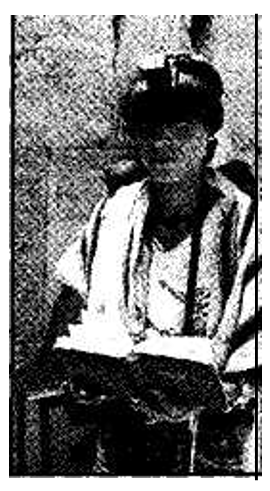
From this verse Jews derive the custom of placing an external "sign" upon the hand, and a similar "memento" between the eyes. The reminders on arm and forehead are called tephillin, signifying "prayers." They are the "phylacteries" of the N.T. Four sections of the Law (Exo. 13:1-10; vv. 11-16; Deu. 6:4-9; 11:13-21) are in the tephillin; and it is claimed that these four sections have been chosen in preference to all other passages of the Law because they embrace the acceptance of the kingdom of God, the unity of the Creator, and the Exodus from Egypt. While there is nothing wrong with such reminders as aids to keeping prominently in view one's responsibilities toward God (infact, Israelites were commanded to place a ribband of blue on their garments
- Deu. 22:12 — and to inscribe their doors with portions of the Law — ch. 6:9
- for the same purpose), the ostentatious display, but lack of performance by the
Jews of his day was condemned by the Lord (Mat. 23:5).
"That Yahweh's law may be in thy mouth" — The things of God should be the constant topic of conversation (Deu. 6:6-7).
"For with a strong hand hath Yah-weh brought thee out of Egypt" — In recalling the past, true Israelites should recognise the strength of Yahweh to help in the present (cp. Phil. 4:13).
VERSE 10
"Thou shalt therefore keep this ordinance in his season from year to year" — The word "season" is mowade, and signifies "appointed time." It was to be a regular feature of the Hebrew life.
The Firstborn To Be Set Apart -vv. 11-16.
Further instructions are given concerning the firstborn, emphasising how important is the provision of Yahweh's Firstborn (the Lord Jesus Christ — Col. 1:15) in the divine purpose with humanity.
VERSE 11
"And it shall be when Yahweh shall bring thee into the land of the Canaan-ites, as He sware unto thee and to thy fathers, and shall give it thee" — There was no doubt of the nation entering the Land, though that particular generation failed because of their infidelity at Kadesh Barnea. Yahweh's purpose is greater than the individual, and He would ensure that the nation would ultimately be redeemed from the wilderness of probation.
VERSE 12
"That thou shalt set apart unto Yahweh all that openeth the matrix" — The Hebrew, as expressed in the margin, is "Thou shalt cause to pass over to Yahweh..." The firstborn in Israel were separated and, in effect, given to the priests, Yahweh's representatives on earth (Num. 18:5-8), to uphold the divine principles in each family. The word "matrix" (Heb. rechem) relates to the womb, and describes the act of giving birth. It is derived from the word racham, meaning "to fondle; thus to love, be compassionate." Therefore that which is the object of the parents' love was to be offered to Yahweh as an act of uniting with Him.
"And every firstling that cometh of a beast which thou hast; the males shall be Yahweh's" — The important law of the firstborn embraced all forms of life, in order to impress Israelites of their own standing with Yahweh, as well as illustrating the redemption He had promised in providing the Seed of the Woman as His firstborn to conquer the ravages of sin and eepthis
VERSE 13
"And every firstling of an ass thou shalt redeem with a lamb" — This commandment actually epitomised Yahweh's scheme of redemption for Israel. The ass became identified with Israel. It was used by Abraham (Gen. 22:3, 5), by Moses (Exo. 4:20), by judges and kings as a symbol of rank (Jud. 5:10; 10:4; 12:14; 2Sam. 16:1-2; IKings 1:33,38).
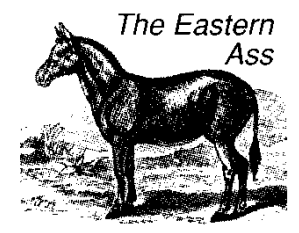
The humble ass, or mule, was despised by Egyptians It is a patient, plodding, Jg hard-working beast, whose very appearance suggests humble submission. It provides a contrast to the horse which was introduced from Egypt, and invariably is used as a symbol of pride and power (Josh. 1 1:6; Psa. 33:17). But the ass can also be a cross-grained, stubborn creature, refusing to perform its owner's will, in spite of punishment.
The Hebrew word for "ass" is chamowr, and signifies "red," from a root chamar, "to boil, ferment, glow." This is appropriate to the ass as a symbol for Israel, describing it as a high-spirited beast, while its reddish colour is suggestive of sin nature (Isa. 1:18). Israel was so identified with the ass, that, according to Josephus, their enemies alleged that the nation worshipped an ass's head (Against Apion, 2:7). Moreover the ass was an unclean animal, apparently the only unclean animal used by the Jews at that time (Exo. 20:17), which again is significant, in view of it being a symbol of Israel. It shows that "the flesh profiteth nothing," and that in nature, Israel was as much in need of redemption as were the Gentiles.
In the case of the ass, it was redeemed "with a lamb," epitomising the purpose of Yahweh to redeem the nation through the Lamb of His providing. So, again, the redemptive work of the Lord Jesus Christ was typically foreshadowed to the people of Israel for them to ponder.
As an unclean animal, the ass was useless for sacrifice. Therefore as Israel was represented by this beast, the Law revealed that it was beyond the nation to provide an acceptable sacrifice, and that it would have to await the Lamb provided of God.
The word "redeem" is padah and signifies "to sever, ransom, release, liberate." It is a different word from that used in Exo. 6:6.
"And if thou wilt not redeem it, then thou shalt break his neck" — The scrupulous observance of the law of redemption in regard to this animal, would prevent the owner losing an ass. However, should it be for some reason that the redemption price could not be paid, the death appointed was breaking the neck of the ass. Why? Because Israel, as the antitypical ass, was not only naturally stiff-necked (Exo. 32:9; 33:3, 5; Deu. 9:6, 13; 10:16), but further "hardened the neck" instead of submitting to Yahweh's requirements (Deu. 31:27; 2Chr. 36:13; Neh. 9:29; Psa. 75:5). The very expressions, "Stiffnecked" and "hardened the neck," suggest the stubbornness of an intractable animal. Yahweh, therefore, adjudged the nation as not being worthy of the Lamb He was prepared to provide. In consequence, the "neck" of national Israel was "broken" in the final judgment of ad70.
"And all the firstborn of man among thy children shalt thou redeem" — They were redeemed, ransomed or purchased by the payment of the specified sum of five shekels (Num. 18:16), five being the number of grace.
VERSE 14
"And it shall be when thy son asketh thee in time to come, saying, What is this? that thou shalt say unto him" — This question is incorporated into the regular Passover celebrations of the Jews. It will be superseded in the future by a more important question, expressed in Jer. 16:14-15.
"By strength of hand Yahweh brought us out from Egypt, from the house of bondage" — The set answer reaffirms Israel's status as "the ecclesia in the wilderness" (Acts 7:38), for the nation was "called out" for Yahweh's purpose. Each year, in the Passover celebrations, there was a recalling of the nation's dependence upon the strength of Yahweh, and its position as having been separated from Gentilism. Likewise, the Passover in Christ, should call to mind the absolute dependence of believers on the divine strength, and their position being separated from the world as "the Israel of God" (Gal. 6:16).
VERSE 15
"And it came to pass, when Pharaoh would hardly let us go" — Rotherham renders this: "Pharaoh had shewed himself too hardened to let us go." At the last interview, Pharaoh had refused to let Israel go with their cattle, and Moses had refused to leave without them (Exo. 10:24, 27).
"That Yahweh slew all the firstborn in the land of Egypt, both the firstborn of man, and the firstborn of beast: therefore I sacrifice to Yahweh all that openeth the matrix, being males; but all the firstborn of my children I redeem" — The word "children" should be rendered "sons." See Interlinear Bible. Redemption in Christ is exclusive to the spiritual "firstborns" (Rev. 14:4; Heb. 12:23, Diaglott).
VERSE 16
"And it shall be for a token upon thine hand, and for frontlets between thine eyes; for by strength of hand Yahweh brought us forth out of Egypt" — See note v. 9. "Frontlets" is totofoth from a root signifying to go around: the phylacteries of the New Testament, which were placed on the forehead and bound around the head.
Yahweh's Careful Supervision of His People — vv. 17-18.
In recognition of the limitations of the people to effectively wage war, God leads them along a route that provides them with some immunity from attack.
VERSE 17
"And it came to pass, when Pharaoh had let the people go, that God led them not through the way of the land of the Philistines, although that was near" — The Philistines were a strongly entrenched and warlike people, who might well cause fear to the unwarlike Israelites. Therefore, with thoughtful and merciful consideration, God led the people in a way that avoided such a people.
The word "led" is nachah, "to guide." The method used is described in v. 21. The long slavery of Israel had so weakened the will of the people to resist, that by the wisdom of God, He enabled them to enable them to escape a military campaign at the very outset of leaving Egypt. The "way of the Philistines" was the shortest route to the Promised Land. The highway ran north, parallel with the Mediterranean Sea, towards Gaza in Philistia, a distance of about 320 kms (200 miles), and could have been covered in about two weeks.
Notice, also, the change in the Deliverer, from the memorial Name of Yahweh, to the manifestation Name of Elohim, seen in the angel who led Israel from Egypt (see notes introducing ch. 14:19).
"For God said, Lest peradventure the people repent when they see war, and they return to Egypt" — The Hebrew for "repent" is nacham, "to sigh, to breathe strongly," and therefore to manifest regret for an action taken, to become dispirited through the difficulties faced.
VERSE 18
"But God led the people about, through the way of the Red Sea" — The Hebrew "led" is a different word from that used in v. 17. Here it is sobab, "to cause to go around, to encompass." The phrase can be rendered, "God took the people in a circuit." He led them to the Land of Promise in a circuitous route, a long way around, through the wilderness of the Red Sea. The word "harnessed" is chamushim from chomesh, "five," and therefore signifies in ranks of five (see margin). Five is the number of grace, and is appropriate to the marching, military order of the men as under divine direction they left Egypt.
They Take The Bones Of Joseph With Them - v. 19.
As requested by Joseph before his death (Gen. 50:25), Moses arranges for the remains of the patriarch to be conveyed with the people as they leave the land of Egypt.
VERSE 19
"And Moses took the bones of Joseph with him" — What a different attitude Moses revealed to that of the Jewish leaders in the time of the Lord! Whereas he did all in his power to bring out the remains of Joseph who so wonderfully typed the Lord, they, on this very day after Passover, did all in their power to prevent the Lord leaving the tomb, even requesting Pilate to seal it up (Mat. 27:62-66).
In taking "the bones of Joseph" with him, Moses brought prominently before the notice of the Israelites the tokens of the death of Joseph, and his faith in the resurrection. They represented the tokens of the death and resurrection of the Lord which spiritual Israelites keep before them during their progress through the wilderness of life.
"For he had straitly sworn the children of Israel, saying, God will surely visit you; and ye shall carry up my bones away hence with you" — Joseph's clear statement of hope is advanced by Paul as an outstanding instance of faith (Heb. 11:22). See also Josh. 24:32.
Yahweh's Protection Of Them - vv. 20-22.
From Succoth the children of Israel move down through the land and encamp in Etham on the edge of the wilderness. They are led by Yahweh in the form of a cloud by day, and a pillar of fire by night. These symbols cause them to be ever conscious of His invisible presence, and of His guidance and protection.
VERSE 20
"And they took their journey from Succoth, and encamped in Etham, in the edge of the wilderness" — Etham, according to the Egyptian derivation of the word, signifies Edge. It was found, appropriately, at the edge of the wilderness. Though we are not specifically told, it would seem that they arrived at this spot on Friday evening.
VERSE 21
"And Yahweh went before them by day in a pillar of a cloud, to lead them the way; and by night in a pillar of fire, to give them light" — In doing this, He revealed Himself to be the Shepherd of Israel (Psa. 80:1; 78:52; 77:20) leading the people as a flock. See the following references: Exo. 14:19, 24; 40:38; Num. 9:15; 10:34;14:14; Deu. 1:33; Neh. 9:12, 19; Psa. 78:14; 95:7; 105:39; ICor. 10:1. And for the future: Isa. 4:5.
"To go by day and night" — Rother-ham renders this: "That they may journey day and night." See Num. 9:21 where again this is specifically stated. They were motivated by a sense of urgency to get away from Egypt; particularly in view of the stubbornness of Pharaoh. The people, therefore, would have covered longer distances than normally. The cloud not only guided them, but also provided a shelter or covering from the fierce heat of the Egyptian sun, and so protected them from undue exhaustion. See Psa. 105:39.
VERSE 22
"He took not away the pillar of the cloud by day, nor the pillar of fire by night, from before the people" — The people of Israel were thus subjected to divine guidance: direct, continuous, unmistakable, infallible. All plans, all routes, all camping, all marching were in accordance with "if the Lord will." It thus impressed the powerful lesson of dependence upon Yahweh, the lesson enforced by James 4:15. To watch the guiding pillar was all that they were required to do. On that guidance they were entirely dependent, and whilst they followed that guidance they were absolutely safe.
It is a powerful lesson for the Israel of God today, in their wanderings through the wilderness of life. They must discern the cloud by day and the fire by night as the divine guidance to be followed, seeking for it in the Word and by communion in Prayer. Their eyes must ever be toward His eyes which are constantly upon them (Psa. 32:8). The journeyings of the nation were "by the commandment of Yahweh" (Num. 33:2), and so also must be those of the Israel of God today. That is the lesson of the pillar of cloud and fire.
Comments