SECOND TABLETS OF LAW SUPPLIED: A NEW VISION AND COMMISSION GRANTED
The fervent and prolonged intercession of Moses has been rewarded by Yahweh pardoning the people's sins. Moreover, their repentance and prayers are accepted as a desire for the renewal of the covenant they have broken. However, it yet remains for Yahweh to confirm it on His part. The first step to this end is the renewing of the tablets containing the ten commandments. To indicate the changed conditions, however, Moses is instructed to hew the new tablets himself, whereas previously they had been prepared by God. Now, with these tablets in his hands, Moses ascends the mount for the seventh time, and Yahweh s glory descends upon it. Sheltered in the cleft rock, Moses is granted a vision of the divine glory, and hears the proclamation of the divine name. He formally seeks a renewal of the covenant, and in granting it, Yahweh proclaims a further name that He superimposes upon Himself, as a warning of the consequence of breaking the covenant again. It is the name of Jealous. Complete and undivided loyalty is demanded of the people in a command even more demanding than that given previously. Then basic principles of the renewed covenant are outlined to Moses.
Moses Again Invited Into The Mount — vv. 1-4.
Moses is commanded to hew two tablets of stone, and to return to the mount; this time entirely on his own.
VERSE 1
"And Yahweh said unto Moses, Hew thee two tables of stone like unto the first" — Yahweh had made the first tablets (Exo. 32:16), but Israel having broken the covenant, the nation, through Moses, had to take steps to restore it. For this purpose, Moses had to return to the people and, on behalf of the people, prepare two tablets of stone.
"And I will write upon these tables the words that were in the first tables, which thou brakest" — The "words" comprised the ten commandments. In Deu. 10:4, these are described as "ten words," for "commandments" in Hebrew is debarim, "words." Psalm 119, which can be described as The Alphabet of Grace, is significantly built upon ten words, all of which are expressive of the ten commandments, and one of each of which is found in every verse of the Psalm, excepting vv. 122 and 132. The ten words are: saying (imrah), word (dabar), testimony, way, judgment, precepts, commandments, law, statutes, righteousness.
VERSE 2
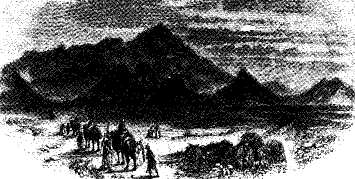
"And be ready in the morning, and come up in the morning unto mount Sinai, and present thyself there to Me in the top of the mount" — This comprised the seventh ascent of Moses.
VERSE 3
"And no man shall come up with thee, neither let any man be seen throughout all the mount; neither let the flocks nor herds feed before that mount" — For this most solemn purpose of renewing the broken covenant, and proclaiming the divine name, God ordered that Mount Sinai be completely separated and isolated as most holy. On this occasion, not even Joshua was to ascend with Moses. The orders given were even more stringent than those issued previously (see Exo. 19:12-13).
VERSE 4
"And he hewed two tables of stone like unto the first; and Moses rose up early in the morning, and went up unto mount Sinai, as Yahweh had commanded him, and took in his hand the two tables of stone" — Moses obeyed to the letter all the directions given him. In the early morning, when all was still, and the light of a new dawn spread abroad from the east, with fresh tokens of the divine presence and goodness, and when everywhere evidence of God's omnipotence could be felt, Moses made his solitary way above into the harsh, craggy heights of Sinai.
The Glory Revealed In The Name — vv. 5-9.
In the mount, Yahweh fulfils the promise He made to Moses. He reveals to His faithful servant some of His glory, and proclaims in greater detail the attributes of His Name. The first is described in the brief statement: "Yahweh passed by before him" (v. 6), and the second is shown to be made up of the two divine principles of goodness and severity. Thus Moses is encouraged to "Behold the goodness and severity of God" (Rom. 11:22). However, in spite of the listing of the latter qualities, Moses still prays that Yahweh would accept the people completely, and permit His presence to be with them during their wilderness wanderings.
VERSE 5
"And Yahweh descended in the cloud, and stood with him there, and proclaimed the name of Yahweh" — The cloudy pillar which stood at the door of the Tent of Meeting (Exo. 33:10), had withdrawn when Moses ascended Sinai, and appeared again upon the mount when he had made his way there. Thus Moses ascended in faith, and Yahweh descended in condescension, so as to meet him at that holy place. Then the voice of the angel of His presence (Isa. 63:9) proclaimed the attributes of the Name as recorded in the verses that follow. These attributes can be classified into two categories: goodness and severity.
Because of the nature of flesh, all the dealings of God with man reveal these two aspects. In fact, the manifestation of divine goodness is impossible without the manifestation also of severity. For example, the goodness shown towards Noah required severity towards a world given over to wickedness; the deliverance of Israel was at the expense of Egypt; the settling of the Israelites in Canaan required the elimination of its inhabitants with their lewd and evil forms of worship, and so forth. God's purpose to establish His glory throughout the earth is only possible by the suppression of flesh, and so will require a blending of goodness and severity.
VERSE 6
"And Yahweh passed by before him" — This was in fulfilment of His promise to allow Moses to view a measure of the divine glory (Exo. 33:22). Moses sheltered in the cleft rock, and Yahweh covered his face as the fulness of glory passed by him. Afterwards, with the hand withdrawn, Moses saw the back of the angel, and so was granted a wondrous vision of divine glory: a vision so bright, radiant and real, that its light settled on his face with such power as to be reflected therefrom. That glory was expressive of the revelation made to the people through Moses, but its fulness was to be manifested in Christ. In Moses was seen only the farther side of the divine glory: the severity of the law; in Christ is revealed its goodness. The apostles saw the glory of Christ on the Mount of Transfiguration, and they also witnessed the fading glory as of Moses (Luke 9:32, 35-36). Of the Lord, John declared: "We beheld his glory, the glory of the only begotten of the Father, full of grace and truth... For the law was given by Moses, but grace and truth came by Jesus Christ" (John 1:14, 17). The glory faded from Moses' face, but there was no fading of the Lord's glory.
"And proclaimed, Yahweh" — See Exo. 3:14. Yahweh is the family name of God, proclaiming His intention to reveal Himself in those whom He will call unto Himself to make them His own.
"Yahweh God" - The word "God" is El and denotes power or strength. Bro. Thomas wrote (Phanerosis, p. 49): "As often as this word ail [el] passed before his [a Jewish mind], the idea of power, might, strength, would stand out in bold relief." "It always," says Gesenius, "presented to the Hebrews the idea of strength and power."
The name Yahweh El signifies: He Who will be Strength, and its fulfilment is revealed in the Lord Jesus who is described as the "Son of Man whom Yahweh made strong for Himself" (Psa. 80:17). Moreover, that Strength flows through Christ to us by the Spirit-Word (John 6:63; Eph. 3:17; Phil. 4:13). The attributes that follow in this declaration to Moses find their perfection in the Lord Jesus Christ. He is their channel to "whosoever" is prepared to ascend to Yahweh through him.
"Merciful" — The Hebrew racham denotes lovingkindness, compassion and tenderness, and therefore relates to one who is easily moved to help another. The word is rendered "mercy" or "merciful" (Deu. 5:10; Neh. 9:17; Psa. 103:8); "compassion" (2Chr. 30:9; Psa. 86:15; 111:4; 112:4). The compassionate character of Yahweh is among His foremost attributes (cp. Rom. 2:4), and therefore is one upon which believers can rely, though they should not presume upon it. John declares that "God is love" (John 4:8), and grammarians declare that the construction of the Greek indicates that this signifies that love is a quality of His very nature. Love is incidental to God, and permeates all His work. Agape love is only derived from Him; it is not a natural characteristic of man. Even chastisement can be a manifestation of His love (Rev. 3:19), for it demonstrates that He is interested in our development and welfare.
"And gracious" — The Hebrew channuwn denotes Yahweh's readiness to condescend to help those in need. It is from a root signifying to stoop, i.e., in kindness so as to assist an inferior. See how Israelites were instructed to manifest this characteristic in their dealings with those not so fortunate as they, on the ground that they are Yahweh's children, and He is gracious — therefore they should manifest such qualities in themselves (Exo. 22:27; 1Pet. 2:3). The use of the word suggests the gracious act of a person of strength coming to the aid of a weaker party who stands in need of it because of his condition or circumstances. We need the merciful help of Yahweh because of our inherent weakness, and He is ready to extend this to those who seek it. A typical expression used to describe such assistance is the formula to find favour in God's eyes: i.e., to acquire His favour, liking, sympathetic interest, benevolence, condescension and understanding.
To do that we need to recognise our weakness, and seek His help in the way appointed.
"Longsuffering" — This is a rendition of two Hebrew words: arech, "long" and aph, a word that comes from a root signifying "to contain; to hold in." In the context of the verse before us, it denotes the Being who, because of His goodness and tenderness, is not easily irritated, but is merciful and kind. Examples of Yahweh's longsuffering are recorded in regard to the antediluvians (1Pet. 3:20); towards Israel in Egypt (Rom. 9:22), and so forth. This divine patience is manifested in recognition of the weakness of humanity. It provides opportunity for repentance and reformation (cp. 2Pet. 3:9, 15). The Lord Jesus Christ is the channel of this longsuffering (1Tim. 1:16). All true children of God should strive to develop this characteristic of God and extend it to others (Col. 1:11; 3:12).
"And abundant in goodness" — The word "abundant" is rab, and signifies "great." "Goodness" is chesed, a word frequently rendered "mercy" in the Psalms, so that the RV translates the phrase here as plenteous in mercy. Dr. Strong, however, gives the meaning as kindness, and others as lovingkindness, which seems more appropriate to the context before us. The attribute of "mercy" as we understand the term signifies forgiveness rather than kindness, whereas chesed relates to the lovingkindness that Yahweh manifests toward His own. John declares that "God is love" (John 4:8). The word is agape, a word unique to Scripture, implying a special kind of love. It denotes a love that is drawn out, not by desire for another, but rather a kindness that seeks the greatest good of others whether or not they are deserving of it (see Rom. 5:8, 10). Thus even anger, rebuke and discipline can become manifestations of that love (2Cor. 12:15; Heb. 12:5-7; Mark 3:5).
"And truth" — The word emeth signifies stability, faithfulness, trustworthiness, and denotes One who will neither deceive, nor can be deceived; Who is the fountain of Truth, and from Whom all true knowledge and wisdom is derived. Emeth is related to the word amen, "so be it!" which establishes a matter. In Isa. 65:16, Yahweh is styled "the God of Truth." Here the word is aman, derived from a common root with emeth, and so expressing the idea of faithfulness, stability and certainty. This attribute associated with the name of God, shows that what Yahweh proposes will be fulfilled beyond doubt. The certainty of this is witnessed in the Lord Jesus Christ, "for all the promises of God in him are yea, and in him Amen, unto the glory of God by us" (2Cor. 1:20). Therefore, in addressing the ecclesia at Laodicea, Christ introduced himself as "the Amen, the faithful and true witness" (Rev. 3:14). See also Psa. 91:4; 108:4; 111:8; 138:2; 146:6; John 1:17). Note how the idea of certainty, faithfulness, and stability are expressed in these verses rather than "the Truth," as we might use the term — expressive of a statement of faith.
VERSE 7
"Keeping mercy for thousands" — The Hebrew word natser signifies "to guard, protect, or preserve." "Mercy" is chesed as in v. 6, whilst "thousands" is alephim, the plural of the first letter of the Hebrew alphabet aleph. In its numerical sense, aleph does duty for "one" or a "thousand," the latter, of course, being a multiplicity of the former. In Judges 6:15, aleph is rendered "family;" in Num. 1:16; 10:4 and elsewhere, it is rendered "thousands," but obviously in the sense of "families." In the verse before us, Yahweh is revealed as the Preserver of Bountiful-ness, of Lovingkindness, One whose beneficence is inexhaustible, preserving mercy for His families (Israel after the flesh and spirit) showing lovingkindness and mercy whilst the world endures. See also Deu. 5:9-10; Jer. 32:18; Dan. 9:4.
"Forgiving iniquity, and transgression and sin" — These words describe three aspects of wickedness.
"Iniquity" is avon, and denotes that which is crooked and perverse, and hence a reference to human nature that inevitably goes astray, except when strengthened as was the Lord.
"Transgression" is pasha and signifies "rebellion," a further development from the crookedness of human nature.
"Sin" is chattath, a "missing of the mark," the result of transgression and iniquity.
The statement used in regard to Yah-weh reveals that He is the One who bears away iniquity, transgression and sin by arranging for the forgiveness of these perversities (John 1:9). He is the One whose prerogative alone it is to forgive sin and save life. Reference elsewhere is made to this divine characteristic (Num. 14:19; Psa. 103:3, 11, 14; 130:4; Dan. 9:9; Mic. 7:18). However, the forgiveness of sins is conditional (see Mat. 6:14-15; 18:32-35; Rom. 4:7-8) and is only granted through Christ (Eph. 1:7; 4:32; John 1:9). In his time of greatest need, David made reference to this divine characteristic in pleading his own cause (Psa. 51:1-2).
"And that will by no means clear the guilty" — The Hebrew rakkeh lo yenekkeh has been rendered, "by no means acquitting him who is not innocent." The statement reveals that Yahweh is just, as well as merciful — a righteous Judge who distributes justice and mercy, but also with an impartial hand. Before Him no innocent person can be condemned; but at the same time, sinners will be revealed as such. Israel had recent evidence of this characteristic when found guilty of worshipping the golden calf (see Exo. 32:33; 23:7, 21; Num. 14:18-23; Rom. 2:4-9; Heb. 12:29). The significance of the statement is summed up in the atonement which illustrates Yahweh as being both just and merciful. Paul taught that the atonement "declared God's righteousness, that He might be just and the justifier of him which believeth in Jesus" (Rom. 3:26).
"Visiting the iniquity of the fathers upon the children, and upon the children's children, unto the third and to the fourth generation" — This declaration reveals that Yahweh is One who is not only merciful, but just, and who reveals sin for what it is, so that no sinner can escape His justice. Such must seek forgiveness or suffer the consequence, for Yahweh is the God of retributive justice. The declaration is several times invoked (see Num. 14:18; 2Chr. 30:9; Neh. 9:17; Psa. 103:8-13; Joel 2:13; Jonah 4:2). It is summed up in the statement of Paul: "Behold the goodness and severity of God" (Rom. 11:22).
In the citation of this declaration in Deu. 5:9-10, an important addition is attached to it, namely: "visiting the iniquity of the fathers upon the children unto the third and fourth generation of them that hate Me." The statement underlines the responsibility resting upon both parents and children. The former, by their folly, can involve their families in disaster; though the latter can escape it by avoiding the evil example of their parents.
A case in point is the punishment brought upon the nation of Israel when it was taken into captivity: a punishment that involved both parents and children; both of whom were directly responsible for it, namely those who followed in the example of folly to which they had become accustomed.
An example of the opposite kind involves the children of Korah who escaped the punishment of their father, though the families of his collaborators did not (see Num. 16:27-33; 26:9-11). Ezekiel emphasised the justness of Yahweh by declaring that a son "who seeth all his father's sins which he hath done, and considereth, and doeth not such like... shall not die for the iniquity of his father, but shall surely live" (Eze. 18:14,17). The important addition of Deu. 5:9-10 "of them that hate Me" should be attached to the statement in the verse before us.
VERSE 8
"And Moses made haste, and bowed his head toward the earth, and worshipped" — Moses bowed his head in grateful appreciation of the great honour paid him in all that he had received from Yahweh, and acknowledged the righteousness of Yahweh in all that had been heard proclaimed, comprising the divine "virtues" which those called out of Gentile darkness are called upon to reveal (1Pet. 2:9 mg.). They are expressive of the principles of God manifestation.
VERSE 9
"And he said, If now, I have found grace in Thy sight, Ο Yahweh" — On the ground of Yahweh's declaration of mercy, Moses again presented the case of the nation, and sought forgiveness on its behalf. He virtually repeated his prayer of Exo. 33:16, using the divine title of Adonai (my Lords) as suggestive of the authority wielded by Yahweh through the mighty Elohim.
However, it is claimed that this is one of the 134 places where the Sopherim changed the original from Yahweh to Adonia, and that it should be restored.
"Let my Lord, I pray thee, go among us; for it is a stiffnecked people; and pardon our iniquity and our sin" — Moses frankly acknowledged Israel's failing, and pleaded that God should ever keep their weakness in mind as He continued with the people. In referring to ''our iniquity" and "our sin," he, like Daniel (Dan. 9:5-6), and the Lord Jesus (Psa. 69:5) in their roles as mediators, identified himself with the people he desired to save.
"And take us for Thine inheritance" — Moses pleaded with Yahweh to restore the nation into favour as His purchased possession (Exo. 15:16; 19:5). As such they are accounted as Yahweh's inheritance (Psa. 28:9; 33:12; 78:62). Today that status has been conferred upon the ecclesia (1Pet. 2:9), and the members thereof are urged to consider "the riches of the glory of His inheritance in the saints" (Eph. 1:18).
The Separateness Demanded Of The People — vv. 10-17.
At the pleading of Moses, Yahweh formally renews the covenant with Israel, promising not only to go up with the people, but also to drive out their enemies before them. However, He reminds Moses that the covenant demands separateness on the part of the people, and that it is essential that they observe this.
VERSE 10
"And He said, Behold, I make a covenant: before all thy people I will do marvels, such as have not been done in all the earth, nor in any nation: and all the people among which thou art shall see the work of Yahweh" — Yahweh renews His covenant with Israel, as He will do so through the antitypical Moses at his coming (Jer. 31:31-40). Among the "marvels" promised (see Psa. 77:14) are the reversal of the waters of the Jordan, the overthrow of Jericho, and the extension of the length of the day in the defeat of the Gibeonites. Some of the "marvels" performed caused the people of Jericho to fear as they were threatened by Joshua (Josh. 2:9-11).
"For it is a terrible thing that I will do with thee" — The Hebrew yare signifies that which can cause fear and dread so as to lead to reverence in worship. See Deu. 10:21; Psa. 106:22; 145:6; Isa. 64:3. The marvels that Yahweh performed on behalf of Israel illustrated that He is above flesh, and therefore "is worthy to be feared, adored by all His hands have wrought."
VERSE 11
"Observe thou that which I command thee this day: behold I drive out before thee the Amorite, and the Canaanite, and the Hittite, and the Perizzite, and the Hivite, and the Jebusite" — There is constant repetition of Yahweh's intention to do this (Exo. 3:8,17; 6:4,8; 13:5,11; 33:2) underlining the fact that there was no lasting future for the nations of Canaan. This, by implication, highlighted the folly of Israel identifying itself with a doomed people. The same principle holds good for the ecclesia today. The nations about us are doomed, and believers are foolish to become too involved with their way of life.
VERSE 12
"Take heed to thyself, lest thou make a covenant with the inhabitants of the land whither thou goest" — This was part of the conditions upon which Yahweh was prepared to enter into covenant relationship with the nation again, as requested by Moses. Israel was commanded to maintain a state of strict separateness from the nations of Canaan (Jud. 2:2); to utterly destroy them (Deu. 7:2). In a typical sense those nations represented sin in the flesh which, in believers, must be put to death, and with which there should be admitted no league or compromise. In 2Cor. 6:14-18 Paul taught that membership of the family of God is strictly conditional, and can only be claimed by those who have separated themselves from the world about them. Then the Father will acknowledge those who sincerely do so.
"Lest it be for a snare in the midst of thee" — See note on Exo. 23:33, and Christ's warning that modern civilisation can be a snare unto the people of God in the time of the end (Luke 21:35-36).
VERSE 13
"But ye shall destroy their altars, break, their images, and cut down their groves" — The Israelites were to engage in unremitting warfare against both pagans and paganism in the land. It was to constitute a holy war, in which no quarter was to be given, and in which complete destruction of all those who remained pagan, as well as their objects of worship, was demanded. Any Israelite who dared question this provision had only to look back to the tragedy of the golden calf to recognise its wisdom.
The word, "images" is the Hebrew matstsebah, "a memorial image" (see note, Exo. 23:24). "Groves" is asherim, as in the RV, which, in its preface contains this note: "The Hebrew word Asherah, which is uniformly and wrongly rendered grove, most probably denotes the wooden symbol of a goddess, and the Revisers, therefore, have not hesitated to introduce it as a proper noun in the singular (Jud. 6:25, etc.) with the plural Asherim (Exo. 34:13 etc.) and Asheroth (Jud. 3:7 etc.), following the analogy of Baalim (Jud. 3:7) and Ashtaroth (Jud. 2:13) which are already familiar."
Canaanitish worship was coarse and lewd, and prostitution was common to it.
Nothing is more calculated to draw a person away from the purity of divine worship than sexual impurity. It coarsens the mind and blunts the mental perception. It formed the basis of the worship of the groves. The Asherah and Asherim were pillars or images of wood, worshipped by libidinous rites and lascivious practices. The word is derived from the root ashar, "to be straight, upright, erect." The pillar was set upright and erect like a totem pole. It was either a living tree with the top cut off and the trunk fashioned into a shape designed to incite licentious desire, or a log similarly shaped and set erect in the ground (1Kings 14:15; 16:33; Isa. 17:8). Though usually made of wood (Jud. 6:26), they were in some cases made of stone. Such poles could be cut down (Exo. 34:13), burnt (Deu. 12:3), broken in pieces (2Chr. 14:3), and plucked up (Mic. 5:14). That they were not groves of trees is clear from 2Kings 17:10 where they are forbidden to be set up "under any green tree."
Some believe that originally the idol was worshipped as a symbol of the Tree of Life; and later was perverted to signify the origin of life, and pictured with the male organs of procreation (Eze. 16:17). Such symbols became the objects of a worship carried on with all forms of impurity, perversion, licentiousness, and the most obscene orgies. It was centred in the Canaanitish nations, and from there spread to others. The first mention of the idols in the Bible is in the verse before us, and the comment stamps it as the special object of Yahweh's abhorrence expressed in the new name He proclaimed for Himself: that of Jealous.
The nature of the form of worship is implied in Jer. 5:7; 7:30-31; 19:4-5; 32:34-35; Hos. 4:12-14; Amos 2:7-9.
Reference to the idol or its phallic worship is made in: Exo. 34:13; Deu. 7:5; 12:3; 16:21; Jud. 3:7; 6:25-30; 1Kings 14:15,23; 15:13;16:13; 2Kings 13:6; 17:10, 16; 18:4; 21:3,7; 23:4-15; 2Chr. 14:3; 15:16; 19:3; 24:18; 31:1; 34:3-7; Isa. 17:8; 27:9; Jer. 17:2; Mic. 5:14. The curse on Canaan probably was in anticipation of the form of worship the Canaanites would incorporate in their religion.
VERSE 14
"For thou shalt worship no other god: for Yahweh, whose Name is Jealous, is a jealous God" — Bro. Thomas renders this verse: "Thou shalt worship for El (strength) not other; for Yahweh, whose name is Jealous, a jealous El is He." This is the first place in the Bible that the name Qanna (Jealous) is given as a name of Deity, and superimposed on that of Yahweh. It is significant that it should be so done in a context that demands the ruthless extirpation of Canaanitish paganism. Earlier, in Exo. 20:5 (see note), God applied the attribute to Himself as an adjective, but now He adopted the term as His name, thus identifying Himself more completely with it.
That Yahweh should select the term quanna (Jealous) as a Name, and not merely an attribute as in Exo. 20:5, taught Israel (and teaches us) that He demands of His people an undivided loyalty such as Israel had failed to display when at the foot of Horeb. The command now issued that they should do so, is more sweeping than the corresponding one given previously and recorded in Exo. 23:24, emphasising that in renewing the covenant with Israel, Yahweh would not tolerate any such disloyalty again. Mention is made of "the groves" for the first time in conjunction with this divine Name suggesting that such worship may have formed part of the adoration of the golden calf. This lewd form of worship may have comprised part of that associated with the image of jealousy mentioned by Ezekiel (Eze. 8:3, 5).
In assuming the name of Jealous (Exo. 20:5; Josh. 24:19), Yahweh showed that He will not tolerate spiritual adultery — and that includes "friendship with the world" (James 4:4).
But Yahweh is also jealous for His name (Eze. 39:25), His land (Joel 2:18), Jerusalem and Zion (Zech. 1:14; 8:2), for the virgin ecclesia (2Cor. 11:2). His jealousy for His own incites His opposition to their enemies (Nah. 1:2), toward those who lead others astray (Deu. 29:18-20), against false worship (Deu. 32:16, 21; Psa. 78:58). His jealousy is manifested in judgments of fire designed to purify, and which are revealed against Israel (Eze. 36:5-6; 38:19; Zeph. 3:8). But Yahweh's "jealousy" is limited (Psa. 79:5; Eze. 16:42), and will not "burn" forever.
The significance of this title is revealed further in the Law of Jealousy set forth in Num. 5:11-31. This should be considered in the light of Israel's spiritual adultery (Jer. 3:2-5), and the symbolism that represents the nation as the wife of Yahweh (Isa. 54:5. See also Eze. 16:26-32).
VERSE 15
"Lest thou make a covenant with the inhabitants of the land" — The Hebrew karath berith reads "cut a covenant." That is, to enter into a binding and irrevocable agreement on the basis of a sacrifice of a covenant victim (see notes on Gen. 15). Such a covenant unites the two parties as one, whereas sonship in relationship to God is predicated upon a family separateness (see 2Cor. 6:16).
"And they go a whoring after their gods, and do sacrifice unto their gods, and one call thee, and thou eat of his sacrifice" — As the verse implies, such a covenant is as binding as a marriage bond (see Eze. 16:8; Isa. 54:5), and is treated by Yahweh in that fashion: as a breach of the marriage covenant that is established between Him and His people, and, therefore, as adultery (James 4:4; Rev. 2:20; 17:2 etc.; ct. 2Cor. 6:14-18). Yahweh treats with those whom He has called by His Truth, as a bridegroom does a bride. He enjoins principles of strict separate-ness. It is interesting to note that this is the first time in Scripture that apostasy is described as "whoring," though the figure is frequently used thereafter.
In that relationship, Ezekiel describes the Passover as a betrothal festival (ch. 16:8), and the Lord refers to it in a similar way in his parable of Luke 12:35-37. Hence the strictness of this prohibition of making covenant with the inhabitants of Canaan.
VERSE 16
"And thou take of their daughters unto thy sons, and their daughters go a whoring after their gods, and make thy sons go a whoring after their gods" — The worship of the golden calf had been accompanied by abandoned sexual licence; hence the warning against any repetition of such conduct.
VERSE 17
"Thou shalt make thee no molten gods" — Worship was to be exclusive to Yahweh; the tragedy resulting from the worship of the golden calf was to them a warning to remain faithful.
Feast Of Unleavened Bread Must Be Kept - v. 18.
The Passover comprised the very basis of the covenant, so that the keeping of it was obligatory to true Israelites; as the keeping of the Lord's memorials is essential to believers today.
VERSE 18
"The feast of unleavened bread shalt thou keep. Seven days thou shalt eat unleavened bread, as I commanded thee, in the time of the month Abib: for in the month Abib thou earnest out from Egypt" — The Passover, dramatising the deliverance from Egypt, emphasised the call to separateness imposed on all true Israelites. See notes, Exo. 12.
The Firstborn Must Be Yahweh's - vv. 19-20.
The ceremony by which firstborn sons were given unto Yahweh taught Israel that they were not their own, but were bought with a price, and therefore belonged to Him.
VERSE 19
"All that openeth the matrix is Mine; and every firstling among thy cattle, whether ox or sheep, that is male" — See note, Exo. 13:12-13.
VERSE 20
"But the firstling of an ass thou shalt redeem with a lamb: and if thou redeem him not then shalt thou break his neck. All the firstborn of thy sons thou shalt redeem. And none shall appear before Me empty" — See notes, Exo. 13:12-13; 23:15. These ordinances are repeated because of the "new covenant" entered into through Moses.
The Sabbath Must Be Observed - v.21.
There must be periodic resting from the works of the flesh.
VERSE 21
"Six days thou shalt work, but on the seventh day thou shalt rest: in earing time and in harvest thou shalt rest" - See notes, Exo. 20:8-10. It is profitable to note these points in regard to sabbath keeping:
[1] It was a sign between Yahweh and Israel alone. That means that resting from the works of the flesh is an exclusive Israelitish characteristic. Only those who were "Israelites indeed" (John 1:47) could properly keep it. In fact, Gentiles mocked at Israel's sabbaths (Lam. 1:7). Of course, there "remains a keeping of the sabbath" for the people of God today (Heb. 4:9 mg.) .
[2] The sabbath was a memorial of the Passover (Deu. 5:15), reminding Israelites of the deliverance from Egypt, and of the exclusive status of privilege that they enjoyed in consequence.
(3) It was related to creation (Exo. 20:11). As such it was a token of Yahweh's omnipotence and purpose, for the six days of creation terminating in the seventh day rest, anticipated the six millennial days of sin and death culminating in the millennium of rest for which today we await.
Harvest Festivals Must Be Maintained - v. 22.
The harvest festivals are to figuratively remind Israelites of a spiritual harvest to be reaped; and part of the new covenant arranged through Moses is that they must be strictly maintained.
VERSE 22
"And thou shalt observe the feast of weeks" — The "feast of weeks" was the Pentecost of the NT. See notes, Exo. 23:14, 16. Reference to the command is again made in this place because of the new covenant that Moses was able to negotiate with Yahweh, on the basis of the terms of the old.
"Of the firstfruits of wheat harvest" — This was the "feast of weeks" when the wheat harvest was gathered in. See Lev. 23:17; Num. 28:26.
"And the feast of ingathering at the year's end" — The Hebrew is at the circuit, or revolution of the year. As the religious year was appointed to begin with Abib (Exo. 12:2), the seventh month of the religious year synchronised with the beginning of the civil year, and therefore constituted the circuit of the year (see mg.). It was in that month that the last of the ingathering (the vintage) was brought in, and the Feast of Tabernacles or of Ingathering was held.
The Three Annual Feasts Must Be Celebrated — vv. 23-24.
Yahweh guarantees protection for Israel against its enemies if the people faithfully carry out His commandments to keep the three annual festivals.
VERSE 23
"Thrice in the year shall all your men children appear before the Lord Yahweh, the God of Israel" — See notes, Exo. 23:14, 17. The divine Name as given in this verse, Adonai Yahweh, the Elohim of Israel, signifies: The Lord, He Who Will be the Mighty Ones of Israel. Yahweh's mighty ones comprise that generation of true Israelites (Gal. 6:16) who embrace the hope of Israel and acknowledge the Lordship of Yahweh by manifesting His attributes in action.
VERSE 24
"For I will cast out the nations before thee, and enlarge thy borders" - See Deu. 4:38; 7:1; Psa. 78:55; 80:8. Moses later again reminded the Israelites of this promise to enlarge their borders when they were on the eve of entering the land (Deu. 12:29; 19:8).
"Neither shall any man desire thy land, when thou shalt go up to appear before Yahweh thy God thrice in the year" — The promise that there would be no desire in any to take advantage of the Israelites' absence from their homes as they obeyed the injunction to meet three times in a year as commanded, recalls the promise of Proverbs 16:7, "When a man's ways please Yahweh, He will make even his enemies to be at peace with him." Those who give themselves to God's commands need never fear any adverse result from so doing, even though it may restrict their activities in the pursuit of the material blessings of life.
Leaven Must Be Excluded From Sacrifices — v. 25.
Leaven is a symbol of malice and wickedness (1 Cor. 5:7-8), and as such must be excluded from sacrifices (Mat. 5:23-24).
VERSE 25
"Thou shalt not offer the blood of My sacrifice with leaven" — See note, ch. 23:18.
"Neither shall the sacrifice of the feast of the passover be left unto the morning" — See note, Exo. 12:10.
Regulation Concerning Firstfruits And Seething A Kid — v. 26.
The instructions of this verse place things in their proper perspective: God first, family next.
VERSE 26
"The first of the firstfruits of thy land thou shalt bring unto the house of Yahweh thy God" — See note, Exo. 23:19.
"Thou shalt not seethe a kid in his mother's milk" — See note, Exo. 23:19.
The Ten Commandments — vv. 27-28.
Moses is instructed to write the terms of the renewed covenant even as he had recorded those of the original one (Exo. 24:4). Both writings were only part of the whole which was added to from time to time, until it was completed. The renewed covenant did not need to be endorsed by blood as the original (Exo. 24:3-9), for the re-acceptance of Israel by Yahweh meant that the original covenant had been restored. The invitation to Moses to write down its fundamental conditions was endorsement of its restoration.
VERSE 27
"And Yahweh said unto Moses, Write thou these words" — See note, Exo. 24:3-4, 7, and comment on The Ten Commandments, p. 299.
"For after the tenor of these words I have made a covenant with thee and with Israel" — "Tenor" k peh in Hebrew, and signifies mouth. The idea is that the commands should be observed according to their full meaning and significance as expressed by word of mouth. Note that the covenant is made with Israel through Moses the Mediator, and observe Paul's comment in Gal. 3:19.
VERSE 28
"And he was there with Yahweh forty days and forty nights" — See Exo. 24:18; Deu. 9:9,18. Moses was in the mount on two occasions of forty days each. Thus the "patience and faith" of the people were again put to the test; but with the mourning for so many dead still fresh in memory when Moses returned on the second occasion, he found the people expectant and obedient (vv. 30-32). So, on the Lord's return from heaven, he will find some unprepared, believing "My Lord delayeth his coming" (Luke 12:45) as on Moses's first return, whilst others will be ready and waiting for the Lord, as on Moses' second return.
"He did neither eat bread, nor drink water" — This also was the case during his previous ascent as recorded in Deu. 9:9, though it is not stated in Exodus. Evidently the close presence of Yahweh so sustained Moses's vital powers as to make food unnecessary. In similar fashion, Elijah (1 Kings 19:8) and the Lord (Mat. 4:2) sustained fasts of equal duration.
Moses' experience typified that of the Lord when he ascended up to be with his Father in the spirit-energised body of immortality, no longer dependent upon the food of mortal sustenance.
"And He wrote upon the tables the words of the covenant, the ten commandments" — Yahweh wrote upon the tables in accordance with His promise made previously, as recorded in v. 1. In Deu. 10:1-4, Moses confirmed that God had done this.
The Hebrew rendered "commandments" is debarim, "words," as in Deu. 4:13. It also should be noted in the verse before us, that Moses identified the covenant made through him with the ten commandments. Hence, when Paul wrote that the first covenant had "decayed, waxed old, and was ready to vanish away," he had in mind the Mosaic covenant based on the ten commandments. That covenant was a covenant of condemnation, which was designed to illustrate the reality of sin (Rom. 7:13) without providing for its removal, except in type and shadow.
It therefore continuously illustrated the work and need of the promised Redeemer, and in doing so, acted as a schoolmaster leading to Christ (Gal. 3:24). The covenant (though not the principles upon which its laws were based) was done away with in Christ, to be replaced by the new covenant of grace built on faith in the promises made to Abraham and the fathers.
Though the new covenant endorsed the fundamental elements of the old, it nevertheless supplanted it, which is contrary to the teaching of Seventh Day Adventists, who claim that the covenant in Moses did not relate to the ten commandments but only to the rest of the Law. The statement of the verse before us is conclusive that the opposite expresses the truth.
The Shining Face Of Moses - vv. 29-35.
Having been shown the glory of Yahweh in measure, Moses returns to the people, his face glowing with its reflection. This causes fear, so that they withdraw from his presence. However, he bids them draw near, for this reflected glory witnesses to the presence of the invisible God, and the authority conferred on Moses by Him. However, the glory begins to fade, causing Moses to place a veil over his face. He wears this veil whilst talking with the people, removing it when he makes his way into the Most Holy where the glory is replenished. Nevertheless, the people, gazing upon the veiled face of Moses, fail to recognise its purpose a fading glory; a fact upon which Paul comments in 2Cor. 3:7-18.
VERSE 29
"And it came to pass, when Moses came down from mount Sinai with the two tables of testimony in Moses' hand, when he came down from the mount, that Moses wist not that the skin of his face shone while he talked with Him" — The literal Hebrew is "through his speaking with Him" (see The Interlinear Hebrew-English Bible). The RV renders: "By reason of his speaking with Him." Though Moses' face shone as a result of this, he was unconscious of it. His experience anticipated the transfiguration of the Lord when his face also shone with divine glory (Mat. 17:2). But the very glory of Moses' countenance caused the people to fear and withdraw from him. So Paul comments: "If the ministration of death, written and engraven in stones, was glorious, so that the children of Israel could not stedfastly behold the face of Moses for the glory of his countenance..." (2Cor. 3:7). Paul acknowledged that even though the Mosaic covenant brought death to the people because of the weakness of the flesh (Rom. 8:3), it nevertheless had a glory that was divine. In Rom. 7:12 he declared that "the law is holy, and the commandment holy, and just, and good." But though the law was such, and was "ordained to life" (v. 10), it became a "ministration of death" because of the weakness of the flesh (Rom. 8:3). It set forth the prospect of life, revealing the means to it, and in that sense was "glorious;" but because man invariably failed to keep it, it delivered him over to death. Faith then stepped into the breach with its promise of a Redeemer (Gen. 3:15), so that the Law became a schoolmaster leading to Christ (Gal. 3:24). In Christ, the curse of the Law-covenant is done away, and believers are thereby delivered from the curse of death which was invariably pronounced upon those who failed to keep it (Gal. 3:13).
VERSE 30
"And when Aaron and all the children of Israel saw Moses, behold, the skin of his face shone; and they were afraid to come nigh him" — Moses had been in the presence of the Yahweh-manifesting angel so long that his face was transfigured with divine glory. However, he was unconscious of this, and unaware that his visage shone (2Cor. 3:7-10). His appearance caused an awesome fear to his contemporaries as is inevitably the case when flesh comes into the presence of divine glory (see Eze. 1:28; Mat. 28:3-4; Rev. 1:17). Thus Christ's companions were "sore afraid" at his transfiguration (Mark 9:6).
In the verse before us, the word "shone" is a translation of the Hebrew qaran, "to push, to shoot out, to send forth rays." This suggests that the glory of God in the face of Moses was active, appearing as rays of light shooting forth. It was this that made the people fearful.
VERSE 31
"And Moses called unto them" — Moses invited Aaron and his companions to return to him, probably reassuring them that there was no cause for fear. In this he prefigured the Lord's reassurance to his apostles (Luke 24:38-39).
"And Aaron and all the rulers of the congregation returned unto him" — They had withdrawn themselves in alarm on the approach of Moses, perhaps believing that his appearance indicated divine wrath, possibly recalling the three thousand who had previously died as a result of this.
"And Moses talked with them" — He reassured them by speaking of his experience with God that had led to the covenant being restored.
VERSE 32
"And afterwards all the children of Israel came nigh" — This foreshadowed the experience of the Lord following his resurrection. He revealed himself to his apostles, stilling their fears, and afterwards showed himself to the rest of the disciples (1Cor. 15:3-6).
"And he gave them in commandment all that Yahweh had spoken with him in mount Sinai" — Moses proclaimed the good news that the nation was forgiven, and that the covenant had been renewed. This anticipates the future restoration of Israel under Messiah, and the forgiveness of the nation's sins (Micah 7:19). The final restoration of Israel to favour shall be under the terms of the new covenant (Jer. 31:27-40). This shall be in accordance with the revival of the Law (Mai. 4:4; Deu. 30:6), but on a basis of grace whereby sins are forgiven (Jer. 31:27-40).
VERSE 33
"And till Moses had done speaking with them, he put a vail on his face" — This is a poor translation of the original. It implies that Moses spoke to the people with his face covered. The Hebrew text does not sustain this rendering. Accordingly the R.V., supported by almost all other renditions, gives the meaning as: "And when Moses had done speaking..." This agrees with the context. Moses first delivered his speech to the people with face unveiled. Then, realising that the glory was fading, he veiled himself, and continued so, with face covered, except when he sought communion with the divine presence in the tent of meeting, that is, the tabernacle. This dramatised the fading glory of the covenant according to the Law, and demonstrated that it was not designed for all time. "It was," explained Paul, "added because of transgression, till the seed should come to whom the promise was made; and it was ordained by angels in the hand of a mediator" (Moses — Gal. 3:19). Paul, alluding to this very
incident, wrote that "the ministration of death, written and engraven in stones was
glorious, so that the children of Israel could not stedfastly behold the face of Moses for the glory of his countenance; which glory was to be done away" (2Cor. 3:7). The Israelites were dazzled by the reflected glory in the face of Moses, but did not recognize that the glory was fading because of the veil over his face, illustrating this truth to them, prophetically. The fading of glory, therefore, typed the "waxing old" of the Mosaic covenant to be supplanted by the covenant of grace. So the apostle Paul concludes: "Now that which decayeth and waxeth old is ready to vanish away" (Heb. 8:13). Unfortunately the "veil" remained on the hearts of the Jews so they "could not see to the end of that which was to be abolished."
VERSE 34
"But when Moses went in before Yahweh to speak with Him, he took the veil off, until he came out. And he came out, and spake unto the children of Israel that which he was commanded" — Moses took off the veil when he made his way into the divine presence which dwelt between the cherubim, where shone forth the shekinah glory. He did so in order that the light of his countenance might be renewed thereby. Accordingly, when he returned to the children of Israel they saw his face aglow with the reflected light of the shekinah glory.
VERSE 35
"And the children of Israel saw the face of Moses, that the skin of Moses' face shone: and Moses put the vail upon his face again, until he went in to speak with Him" — As the glory began to fade, Moses veiled his face to hide the fact. Paul draws upon this incident to show that it typed the manner in which Jewry failed to appreciate that the glory of the Mosaic covenant would fade away, to be replaced by one more glorious. He stated that "Moses put a veil over his face" with the result that "the children of Israel could not stedfastly look to the end of that which is abolished; but their minds were blinded; for until this day remaineth the same veil untaken away in the reading of the old covenant, which veil is done away in Christ.
But even unto this day, when Moses is read, the veil is upon their hearts. Never-
theless when it [rather, a man] shall turn to the Lord the veil shall be taken away"
(2Cor. 3:13-18).
The veiled face of Moses, therefore, prophetically foreshadowed the veiled state of Israel after the flesh when Christ appeared in their midst. The people did not comprehend that the glory of the Mosaic ordinance was a fading glory, destined to pass away. Because of that lack of comprehension, the veil remains to this day upon the hearts of natural Israel. That state will continue until the return of the Lord when the veils of ignorance that obscure the understanding of both Jews and Gentiles will be removed (Rom. 11:25-26; Isa. 25:7).
Comments