CHAPTER ONE THE VOLUNTARY BURNT OFFERING
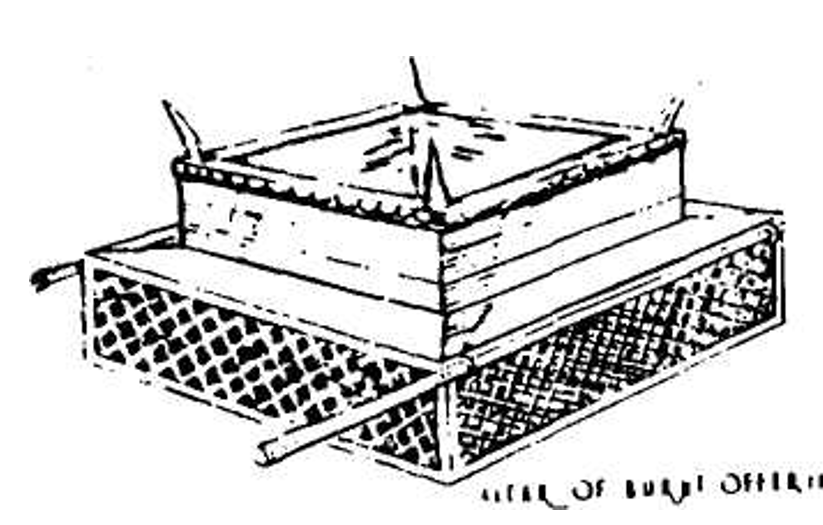
Israel is invited to worship Yahweh, and instructed in the way by which this can be done. It is not enough that a person might want to worship; there are proper procedures to be applied. The most important of these is sacrifice; and the chief of these is the Burnt-offering. So it b considered first. It can take several forms. In presenting it, the offerer identifies himself with it by bringing it to the door of the Tabernacle (Lev. 1:3), pressing his hand upon its head (v.4), and uttering a prayer of confession over it (Lev. 16:21). The animal is slain on the north side of the altar (v.ll); and tradition says that it was bound by a cord to one of the rings fixed at that position. It also claims that at the instance that the confession was completed, the fatal stroke is made. The mode of killing appears to be the same as when animals were slaughtered for food. The throat is cut while a priest, or assistant held a bowl under the neck to receive the blood (Lev. 9:9). The blood is disposed by being applied to the altar. In the Temple, two channels permitted the blood to flow down from the altar to the valley of Kidron. With the blood disposed of, the skin removed, and the animal cut in pieces, the sacrificer, or his assistant washes the entrails and feet. The pieces are then taken to the altar, salted, and placed in order upon it. The hind parts probably were placed at the base; then the entrails with the other viscera including the fat, next the fore limbs, and finally the head on top. They are placed in such a way that the fire could easily move through the pieces, so that the sacrifice gradually smouldered until consumed.
The animal was skinned, and so figuratively, the state of the inner man was openly revealed (John 13:46). The skin was then given to the priests (Lev. 7:8). In all these principles there were powerful exhortations for Israelites to heed and wonder foreshadowing to Christ's offering.
VERSE 1
"And Yahweh called unto Moses"—As noted in our Introduction the first word in the Hebrew is Wayichrah, signifying "and (He) called". This comprises the Hebrew title of the book, which thus commences with the conduction and, linking the book with that which goes before it in Exodus. The events of that book are in preparation for this one. The Tabernacle had to be First built, before the people could be
a. General Principles — vv. 1-2
Yahweh invites Israelites to join Him in fellowship through a voluntary offering. But though the offerings are voluntary, they must conform in every particular to what He requires. As Brother Roberts observes in "The Law of Moses", it is not enough that a man might desire to worship Yahweh; in order to be acceptable, it must also conform exactly to what God requires him to do. invited to worship. The record of that is given in the last chapter of Exodus, which also describes how that the glory of Yahweh, leaving the mountain, made entrance into the Tabernacle. Yahweh "called" the people to worship as an act of mercy, as He, today, calls Gentiles to do likewise (Acts 15:14). It is our wisdom to heed that call, but, as in the case with Israel, Yahweh having made the means the people had to voluntarily respond.
"And spake unto him out of the tabernacle of the congregation, saying"—The word "tabernacle" is ohel, "tent"; the word "congregation" is mow ode from a Hebrew root signifying an appointment to meet at a staled time (see note Exod. -25:22), and denoting a "set time" for worship. The phrase is better rendered: Tent of meeting (see R.V.), and because of the instructions given therefrom it can signify Tent of Revelation. Israelites worshipped at the Tabernacle but not in it. It was not a building designed to accommodate worshippers, but a place that symbolised the worship: the lessons of which were revealed in the symbolism of the whole erection. Israelites were not permitted to enter the Tabernacle, which fact, in itself, emphasised the holiness of Yahweh.
Originally, Yahweh had addressed the people from the mount; but since then. His glory had entered the Tabernacle: "the Sanctuary (or separate place) where He would dwell among them" (Exod. 25:8), so that now He speaks to them from the more intimate and personal site of the Tabernacle in their midst.
VERSE 2
"Speak unto the children of Israel"— Moses was instructed to go to the people with the message of Yahweh, not to the priests. Worship and fellowship were the primary concern of the people, though the priests were the intermediaries by which it would be effected. The people had willingly contributed to the construction of the Tabernacle (Exod. 25:2; 35:21; 36:5,6), and it was designed for their use. They are described as "children", but the word is beni in Hebrew, and signifies "sons". Its use in this context, implies that in a healthy household, the father, as the head of the family, should initiate family acts of worship.
"And say unto them. If any man of you"—Notice this act of worship was voluntary not compulsory. This is emphasised by the use of the preposition. Yahweh having provided the means, the initiative had to come from the man.
"Bring an offering unto Yahweh"— The invitation was directed to Israelites because the nation had been appointed as the channel of approach to Yahweh. Gentiles, likewise, could approach Him, but only in accordance with prescribed rules that enforced their adoption of Israel as a nation. This invitation, therefore, included the "mixed multitude" that had left Egypt with the Israelites, but which by virtue of the covenant made with Yahweh, had been incorporated into the nation. The call, therefore, was not limited to those who were born Israelites but included "real" Israelites, whether born or proselytised into the nation. Thus one "bom a Gentile" who embraced the hope of Israel was included in the invitation. Later, Solomon made provision for such in his dedicatory power: "Moreover concerning the stranger that is not of this people Israel, but cometh out of a far country for Thy name's sake. . . when he shall come and pray towards this house. (1 Kings 8:42-43).
The word "offering" is korban, and is properly translated "offering". It signifies to apportion or give. It occurs throughout this chapter to Lev. 2:2, and then (cp. Lev. 2:3) it is followed by another word minchah. The Lord made reference to the use of this word Korban in Mark 7: 11 when he described how fleshly minded Jews sought to escape their personal obligations to their parents by proclaiming "Corban" over all their possessions. By so doing, they claimed that all that they possessed had been given to God, and therefore could not be used by them to relieve parents in their poverty. They declared this, whilst still retaining the use of their possessions; for though formally given to God, they were not properly delivered up unto Him until after their death. The Lord clearly showed up that hypocrisy for what it was worth.
"Ye shall bring your offering of the cattle"—Though the act of worship was a voluntary one on the part of the man, he had no choice as to what he should offer. To be acceptable, his offering must conform exactly to what Yahwen required. "A person wishing to make a present would desire to offer what would be acceptable. In the case of a human being, it would not matter much, because a gift of any kind would be likely to be in some degree acceptable: but in the case of a human being approaching God, it is different — the relation of the parties being so different. The difference is in some degree illustrated by the difference between a common neighbour and a royal personage. Anything might do to give to the former, but only what court etiquette would allow would be permissible for the latter. If so with a human dignitary, how much more with God, the Creator, the Holy, and the sinned against?" (Bro. R.R. in The Law of Moses).
The word "cattle" is from the Hebrew behemah, and denotes that which is mute. In English, cattle denotes a certain type of animal, but in Hebrew it relates to any dumb beast. Hence it could be taken from the herd or flock: it could be a bullock, a sheep or a goat. The type points to the Lord Jesus, who in giving himself voluntarily to the sacrifice imposed on him, "opened not his mouth" in spite of all that he suffered (Isa. 53:7).
"Even of the herd and of the flock"— Both terms are used of the nation of Israel, or of the Ecclesia of God. The sacri-fica is "of such" i.e. is identified with such. It pointed forward to the Lord Jesus "made like unto his brethren" (Heb. 2:17), "of the seed of David according to the flesh" (Rom. 1:3), and therefore "of the herd and of the flock". The offerer, therefore, seeing that he also is, "of the herd or of the flock" (cp. 1 Cor. 9:9-10), was called upon to identify himself with his offering. He had to try and reveal in life the very principles manifested in the sacrifice he was to offer. Without that identification the offering was of little use to Yahweh, for "the cattle on a thousand" are God's (Psa. 50:10). Hence, if a man "hates instruction, and casts His words behind him" (v. 17), or condones sin or acts with sinners (vv. 18-19), animal sacrifice would avail nought (vv. 8-9).
VERSE 3
"If his offering be a burnt sacrifice of the herd"—The literal Hebrew is: "if burnt his offering is out of the herd" (See Interlinear Hebrew Greek English Bible). The word "Ibumt" is a translation aiolah. "to ascend" as a flame, or as smoke. This teaches that the fire did not "•destroy" the offering thus placed on the altar: rather it changed what was placed there, and caused it to ascend in an acceptable form to Yahweh. That is the idea behind the Bumt-offertng. It witnessed to the offerer that he had need to change the service of flesh from that which satisfied self, to that which fulfilled the will of Yahweh. This b done when the word takes possession of a person. The word is the antitype of the divine fire on the altar changing the offering to ascending smoke. Of the Lord, our representative, is recorded: "The zeal of Thine house hath eaten me up" (Psa. 69:9; John 2:17). Again, Paul, exhorting the Thessalonians to submit to the influence of the spirit-word, wrote: "Quench not the spirit" (1 Thess. 5:19). On the other hand, the Psalmist prays Yahweh to "accept" the Burnt-offering (Psa. 20:3). The Hebrew word, used literally, denotes to "treat as fat" the Bumt-offering. The fat, the choicest part of the sacrifice, representing stored energy, belonged to Yahweh, and was vicariously "consumed" by Him through the fire on the altar. The Buml-offering, therefore, demonstrated that a true worshipper can >ive himself acceptably unto God, if the .ire of the Word motivates his actions. His very body, which in normal circumstances, is given to gratifying the lust of the flesh, of the eyes, and the pride of life, can become the channel of acceptable service to Yahweh, and in so doing can be "caused to ascend" acceptably unto God.
"Let him offer a male"—Sex discrimination was prominent in the appointments of the Law. The numbering of Israel (Num. 1:2); the law of the firstborn (Exod. 13: 12); attendance at the feasts (Exod. 23:17; Deut. 16:16); the seal of the covenant (Gen. 17:10), all applied to males only. A female offering was only permissible in peace-offerings (Lev. 3:1-6^; and was commanded in relation to the sin-offering of the common people (Lev 4:28.32; 5:6). What is the allegorical significance behind all this? In The Law of Moses brother Roberts comments:
"We are probably not far away from it when we read, "Let the woman learn in silence with all subjection ... for Adam was first formed, then Eve. And Adam was not deceived, but the woman being deceived was in the transgression' (I Tim. 2:11-14) "The man is the image and the glory of God. but the woman is the glory of the man. For the man is not of the woman, but the woman (taken out )of the man. Neither was the man created for the woman but the woman for the man' (1 Cor. 11:7-9). Here are historical facts and moral responsibilities at the beginning of human history that inter-weave themselves with the whole work of God with the race. Of course, the modern school, with their 'new woman' racing hither and (hither and posing in attitudes and relations for which she is unfilled by nature, will rebel against these divine appointments, Mosaically recorded. They might as well fight against gravitation. Woman was secondary in the purpose for which she was formed, and she was influential in deflecting man from the path of obedience which he probably would have observed if left to himself. If God has chosen to preserve the memorial of these facts in the constitution of things He has established among men, who can make demur?"
"Without blemish"—Where can we find a male without blemish? There is only one: the Lord Jesus Christ. Ther:-•fore, whereas the instruction of the Law may have elevated the male above the female, this further provision, emphasises that there has been only one male who has successtullv complied with the requirements of Yahweh. Does not this fact illustrate the argument of (he Apostle: "But I would have you know, that the head of every man is Christ; and ihe head of the woman is the man; and the head of Christ is God" (1 Cor. 11:3). Therefore, all should be in subjection to God. The man should be an example to his Wife, as he imitates Christ (Eph. 5:24, 25), and Christ provides the example for all.
Brother Roberts continues on this theme {Law of Moses p. 220):
"Man has the first place all the way through,especially in one great institution that brings man back to God in reconciliation. It was to be in a man and not in a woman that the righteousness of God was to be declared for the putting away of sin by forgiveness. It was lo be by the obedience of one man that justification was to be provided for believing and obedient sinners, and not by the obedience of one woman, although it was by the disobedience of one man and woman that death entered the world — not (hat the law was laid down to Eve: — it was to Adam the command was addressed: 'Thou shall not eat'; but Eve considered herself included (Gen. 3:2), and was. in fact, included as one flesh with Adam (2:23). So in the case of the last Adam — the remover of sin: his bride, the Lamb's wife, shares the victory achieved by him when it has been decided at the judgment-seat who constitute such.
"In both cases, it is the male that is the subject of direct operation. Though there is neither male nor female in Christ Jesus, it is by a man and not by a woman that life has come, though she is instrumentally contributory ..."
The Bullock — vv. 3-9
The Bumt-offering, without doubt, is the most important of the offerings. The basic idea of sacrifice is to be found in it, rather than in the Peace-offering, or in the Sin-offering. Indeed, without the principle expressed by the Bumt-offering, the other two were ineffectual. Thus the most ancient of sacrifices were the Burnt-offerings, and they proclaimed the complete dedication of self on the part of the offerer to performing the will of God. In fact, there is no Scriptural reference to Sin-offerings as such before the Mosaic covenant: the principle of expiation apparently being limited to ihe Bumt-offering. The Sin-offering as such, makes its appearance for the first time in the Mosaic Law. This is appropriate, for the very purpose of the Law was to emphasise the reality of sin (Rom. 7:13): to show that sin (a synonym for human nature) is "exceeding sinful" (Rom. 7:13).
The Bumt-offering found its complete antitype in the Lord Jesus Christ. He is prophetically represented as saying: "Sacrifice and offering Thou didst not desire (i.e. as a substitute for personal dedication); mine ears hast Thou opened; burnt offering and sin offering hast Thou not required (i. e. in the absence of that which they represented). Then said I, Lo, I come; in the volume of the book it is written of me, I delight to do Thv will, O my God, yea Thy law is within my heart" (Psa. 40:6-8). These words epitomise the principles of the Burnt-offering and were perfectly manifested by the Lord Jesus. We therefore: can apply the principles of the Burnt-offering to the service we render Yahweh.
"Of the herd and of the flock"—Certain wild beasts, if clean, were used as food for man. bu; they were not suitable as such for Yahweh (cp. Mal. 1:7). Only those animals that could be domesticated, and so become co-labourers with their owners, were suitable for Him.
"He shall offer it of his own voluntary will"—There was no compulsion exerted on Israelites to make this offering, so the Bumt-offering became the symbol of the voluntary surrender of the offerer's will in an act of personal love unto the Father. However, in the absence of such a worship, salvation was not possible. Christ's offering was voluntary in that he was not compelled by God against his will to make it (John 10:17-18; Mark 14:36). Nevertheless, it was essential to his own salvation (Phil. 2:5-11; Heb. 13:20), as well as that of those whom he came to save. The Burnt-offering was a voluntary act of the worshipper, though without it he could not please God. So with us. Though God "will have all men (o be saved, and to come unto the knowledge of the truth" (1 Tim. 2:4), it is left to the individual to exercise a choice in the matter. God does not compel men to perform His will, but if they fail to do so, there is no future for them.
"At the door of the Tabernacle of the congregation before Yahweh"—The offerer led the animal inside the court towards the door of the Tabernacle. By this action he was brought into close proximity to the principles required to be recognised in order to make his offering effective. He had entered the courts which symbolised the need of separation; approached close to the altar and laver which spake of the cleansing influence of the Spirit word, and the sacrifice of flesh to maintain it; and saw before him the multicoloured door of the Tabernacle suspended on its five pillars (Exod. 26:36-37), which set forth in colour the characteristics to be manifested by (hose in whom Yahweh finds pleasure, as well as the grace (five pillars) by which it is attained. The lessons thus presented to his mind are summarised in the expressions of Psalm 65:4: "Blessed is the man whom Thou chooses!, and causest to approach unto Thee, that he may dwell in Thy courts: we shall be satisfied with the goodness of thy house, even Thy holy Temple".
Finally, the act was done "before Yahweh". He became conscious of the divine Presence; and recognised that Yahweh could see his every action, and discern the motives of his heart. A person whose life is dedicated to doing God's will must daily recognise that principle. Like Abraham he must "walk before God" (Gen.17:1), recognising His presence in his daily walk.
VERSE 4
"And he shall put his hand upon the head of the burnt offering"—This action was both symbolic and important. The hand is the human instrument of action; the head speaks of thought and intellect. Both are brought into conjunction in the Bumi-offering. According to the Jews, the worshipper pressed his hand heavily upon the head of the animal, thus completely identifying himself with it, so that it became his representative, not his substitute (see Num. 27:16-23). The action symbolised that what was about to happen to the animal, the worshipper was prepared to show forth in his own life. He would put to death sin in the flesh, that he might give himself completely unto Yahweh. The antitype speaks similarly. Paul wrote: "Likewise reckon ye yourselves to be dead indeed to sin (a synonym for inordinate human desire) but alive unto God through Jesus Christ our Lord" (Rom. 6:11). Here is both death and life in the one body. "For ye are dead, and your life is hid with Christ in God . . . Mortify (put to death) therefore your members which are upon the earth: fornication, uncleanness, inordinate affection etc. . ." (Col. 3:3-5). The hand of the worshipper was pressed heavily upon the head of the animal, because true worshippers must become sealed in the forehead, in action that takes some effort (Rev. 7:3; 14:1). The mind is to be given to God. Paul spake of the "law of his mind" as being at variance with "the law of sin" which was in his members. With the mind of the Spirit (a mind influenced by Ihe word) he served God; but, unfortunately, the mind of the flesh sometimes got the better of him (Rom. 7:18-25: 8:6-7). That was not the case with the Lord Jesus Christ: the perfect Bumt-offering. His mind was perfectly attuned to that of his Father, so that he could say. "I and the Father are one"; and Paul could write: "Let this mind be in you, which was also in Christ Jesus" (Phil. 2:5). The carnal mind never took possession of the Lord, or otherwise he would have been at enmity with God (Rom. 8:7), and therefore a sinner. As the worshipper rested his hand heavily upon the head of the animal, so figuratively, those in Christ do in relation to their Bumt-offering, and in identifying themselves with him. follow him in a measure of successful living "before Yahweh".
"And it snail be accepted for him to make an atonement for him"—From this we learn that the Burnt-offering was also expiatory in its effect; and that demands of flesh must be put aside if we would worship Yahweh to the fullest extent, such as the Burnt-offering required. When the offerer placed his hand on the head of the animal, he uttered a prayer, including a confession of sin: and atonement, or covering, was effected thereby (Lev. 16:21). The word "atonement" is from kaphar, "to cover". Sins of omission or of commission were "covered", "hidden away", or forgiven thereby. The same principle is illustrated in the atonement effected through Christ. As a Burnt-offering was made every morning and evening for the nation, so there was a constant remembrance made of sin. forgiveness, and dedication to worship. The expiatory efficacy of the Burnt-offering taught that only by denying the flesh is it possible to render whole-hearted service to God such us the Burnt offering implied.
VERSE 5
"And he shall kill the bullock before Yahweh"—The victim was taken to the north of the altar, and there slain (v.11) Christ also was put to death north of the city of Jerusalem, in fulfilment of the type. The word for "kill" is shakat. and it signifies to slaughter quickly. The throat of the animal was cut in such a way lhat death instantly followed, and with the greatest effusion of blood. The Jews call the action shechiiah. The lesson taught was that set forth by Paul: "If ye live after the flesh ye shall die (i.e. eternally), hut if ye through the spirit (word! do mortify (put to death I the deeds of the body, ye shall live (eternally) — Rom. X.I3. The Burnt-offering, as representative ol the offerer, taught that the latter must "put to death (mortify) the deeds of the flesh" (Col. 3:5), and so become "crucified with Christ" (Gal. 2:20), before he can render full dedication to Yahweh. Consider, also the description of the animal selected. The English word "bullock" in this text is a compound of two Hebrew words ben hahu$ar, and denotes "a son of the herd" from a root signifying "to plough" The slaving of such an animal taught that the offerer, who was "a son of the herd" was not to live to himself, but was to die to self, in order that he might live unto God. The bullock is a laborer in the Held (Prov. 14:4; Isa. 7:25; 32:20); an animal amenable to discipline and domestication (Isa. 1:3). and representative of one who uses his labour for God (1 Cor. 9:9): "with good will doing service, as unto the Lord, and not to men" (Eph. 6:~>).
The bullock types Christ. He was "a son of the herd' , "made like unto his brethren" (Heb. 2:17), "in all points tempted like they are, yet without sin" (Heb. 4:15), and therefore their representative. What he did, they are called upon to emulate.
The bullock was put to death before Yahweh. All that Christ did was "before Yahweh", for he was ever conscious of the presence of his heavenly Father. The apostles, under stress, fled from his presence, but, declared the Lord: "I am not alone, because the Father is with me" (John 16:32). Abraham, that man of faith, was told to "walk before God" and be perfect (mature — Gen. 17:1). and this is the ideal set everyone who takes hold of Christ as his offering. They. too. must "walk before God": they. too. must put to death the flesh, whilst dedicating themselves as a Burnt-offering unto God.
"And the priests, Aaron's sons, shall bring the blood and sprinkle the blood round about upon the altar"—The treatment given the blood of the Burnt-offering differed from lhat given to the blood ofthe Sin-offering. In the latter case, it was smeared upon the horns of the altar, and poured out at its base. Here the blood was splashed upon all parts of the altar. Why ' Blood is the seat of life (Lev. 17:11), and when taken from flesh that is slain in sacrifice to Yahweh. and given back to him upon the altar, it represented a life devoted unto God. and therefore the token of "a living sacrifice" (Rom. 12:1). Hence Paul was able to write that though he was "crucified with Christ" he nevertheless "lived", and "the life that I now live in the flesh I live by the faith of the son of God" (Gal. 2:20)'.
The word "sprinkle" is literally dash. The blood was prominently splashed on the altar so that the terms of an acceptable sacrifice might be instantly and prominently represented. It became the symbol of life given entirely unto God.
In the tokens of Christ's offering, the bread, represents the flesh crucified, the denial of its unlawful wants, the negative aspect of his offering: whilst the wine, as representing his blood, speaks of a life of dedication given without reserve unto Yahweh: the positive aspect of his sacrifice. Paul declared: "without the shedding of blood (a dedicated life, the positive aspect of sacrifice) there is no remission" (Heb. 9:22). It is not enough that we deny the flesh; we must also live unto God, seeing in Christ a representation of what is due to God from us.
Finally, it is important to note, that whilst the offerer slew the sacrifice, it was the priest who offered the blood. We can put to death the flesh, but we are in need of a mediator to live righteously before God.
VERSE 6
"And he shall flay the buml offering" — The Hebrew word signifies "to unclothe". The offerer was called upon to unclothe, or skin, the victim, and so reveal its innermost condition. In a figure, he put off, or denied, the flesh (See Eph. 4:22), dramatising the exhortation of Paul relating to the "inner man" (cp. Eph. 3:16). He was caused to remember that "all things are naked and opened unto the eyes of Him with whom we have to do" (Heb. 4:12-13).
To give added emphasis to this, one was appointed to bear away the ashes that remained after the burning. Before doing so, however, it was required of him that tie put off {pashm) his clothes, and put on other clothes. The same word is rendered "strip" (Isa. 32:11), and "put off' (Ezek. 44:19). This demonstrated what is required of those who would come nigh unto Yahweh. There has to be a change of clothing: the putting off of the "old Adam" and the putting on ofthe "new man". The skin of the animal was given unto the priest (Lev. 7:8), because in the parable thus enacted, he represented the worshipper to Yahweh. as he represented Yahweh to the worshipper.
"And cut II into his pieces"—The animal 'vas dismembered so that every part came under close inspection: head for thought), body (or strength), legs (or walk). All these members should be given unto Yahweh in dedication, (see Rom. 6:13). By such dismemberment, and the placing of the pieces on the altar, the flame was enabled to more easily pass between the pieces, and so play on every part (cp. Gen. 15:10). The signification of this is that we should allow the spirit-word to zealously affect our members so that they are freely given up in dedication unto God's will.
VERSE 7
"And the sons of Aaron the priest" — As priests in Israel, they represented Yahweh to the nation (Deut. 19:17).
"Shall put fire upon the altar" — As they placed the fire on the altar, it is the responsibility of saints, who minister as priests (I Pet. 2:9), to cause the spirit-word of Truth to burn brightly by its proclamation. The divine fire when once kindled upon the altar was never to be allowed to go out (Lev. 6:13). Evidently, when the altar was moved from place to place, the fire was carried from point to point in a censer (cp. Gen. 22:7), and then had to be rekindled upon the altar. Once that was done, however, there was no need to again "put fire upon the altar." What, then, are we to make of the statement before us? The word naihan. rendered "put" is a word of great elasticity in meaning, and can signify to cause the fire to burn brightly from the smouldering flame. This, evidently, is the way in which this word is here used. Ceremoniously, and effectively, the presiding priest would stir up the fire, causing it to burn more brightly so as to consume the offering more easily and completely (cp. 2 Tim. 1:6; 2 Thess. 5:19). There is constant need to do this as far as the spirit-word is concerned.
"And lay the wood in order upon the fire"—The whole purpose of this action of the priests was to cause the flame to -" bum brightly. How necessary for us to apply ourselves to the Word, that its influence might motivate us. and those who hear us (cp. 1 Tim. 4:16). Without that necessary adjunct, we cannot become a Burnt-offering effective in the service of God. The fire was divinely given (Lev. G 9:24), and represented the spirit- word. See Jeremiah's comment as to how that word, as a Tire, burned within him (Jer. 20:9).
VERSE 8
"And the priests, Aaron's sons, shall lay the parts, the head and the fat, in order upon the wood that is on the (Ire which is upon the altar"—The very wording of this verse suggests the careful attention that should be given to every aspect of the sacrifice. The parts of the victim, having first been salted in conformity with the instructions (Lev. 2:13; Ezek. 43:24; Mark 9:49), were placed upon the altar so as to set forth the relation of the offering to Yahweh: head, fat and parts represented mind, strength and being. Thus the sacrifice answered to the basic requirements of the Law: "Thou shall love Yahweh thy God with all thine heart (the seat of intellect to an Israelite, hence the head), and with all thy soul (body1 or being), and with all thy might (fat (Deut. 6:5).
VERSE 9
"But his inwards and his legs shall he wash in water"—The parts washed were the stomach, the intestines and the feet divided from the carcase at the knee-joint. This represented an inward washing as expressed in a practical walk (Deut. 6:6). David declared: (Psa. 51:6-7): "Behold, Thou desirest truth in the inward parts; And in the hidden part Thou shall make me to know wisdom. Purge me with hyssop, and I shall be clean; Wash me, and I shall be whiter than snow"
Note that the Lord washed the feet of the Apostles, indicating thereby, the need of a clean walk on their part (John 13:10).
"And the priest shall bum all on the altar, to be a burnt sacrifice" — The verb here translated burn is qatar, and is applied to the burning of incense. The word signifies to mm into fragrance, to bum as incense, thus to exhale odour. Indeed, it is frequently rendered as "incense" (1 Kings 3:3; 12:33; 13:1). The Burnt-offering, therefore, figuratively shows how the flesh can be made acceptable to Yahweh. It was through death, the denial of its lusts, and the consuming of it by the fire of the Word, indicative of the doing of His will. By such means, the actions of the worshipper ascended as incense into His presence. It is to be noted that the word here used to describe the burning is different to that which is normally rendered "consume". That word is saraph, and denotes to consume by fire. It is used of the burning of those parts of the sacrifices which were burned without the camp (Lev. 4:12,21; Num. 19:5 etc). The importance of the distinction is great .in regard to the Burnt-offering. It taught that we can convert that which normally is used to gratify self, into something that is of value to Yahweh, and pleasant in His sight. The flesh of the sacrifice was regarded not as something to be destroyed, but changed into a sweet-smelling savour ascending unto Yahweh. This was caused by the influence of the divine fire upon it. The worshipper thus was taught that through the power of the spirit word, flesh can become the medium of an acceptable life unto Yahweh. He thereby was encouraged to yield himself up "a living sacrifice, holy, acceptable unto God (Rom. 12:1).
Though the word "sacrifice" occurs in the A.V. it is not found in the Hebrew, either here or anywhere else in this chapter. The word is olah, and signifies "to cause to ascend". The bumt-offering illustrated how that a worshipper can rise above the flesh in his service to Yahweh. By dismembering the parts of the sacrifice, he was taught that he can yield his members "as instruments of righteousness unto God" (Rom. 6:13). By the washing of those parts necessary, he learned that he can be made "clean through the word" (John 15:3). By placing the parts on the altar to be slowly consumed by the spirit fire, he learned to permit the zeal of the spirit-word to so take possession of his pans, as to lift his life above the considerations of mere flesh, to one of acceptable service to Yahweh.
"An offering made by lire" — "Offering" is olah. "to ascend". As all sacrifice was representative, and not substitutionary, it represented what the offerer would attempt to do: change his life by the influence of the spirit word so that it should ascend to Yahweh in an acceptable manner. As the divine fire was a symbol of the spirit word, he was taught by this offering that the only way thai a person could please Yahweh was through its influence, for "without faith it is impossible to please God" (Heb. 11:6), and faith cometh by hearing the word of God" (Rom. !0:17). A man or woman of faith is on fire with God's word, and therefore is a living Buml-offering. Normally, human nature is earth directed (Ecc. 3:21); but when the spirit word takes possession of it, it can be made to ascend in a spiritual service acceptable to God.
"Of a sweet savour unto Yahweh"— The voluntary and complete dedication of the whole being to Yahweh as dramatised in the dismembered carcase of the offering being slowly consumed by the ai:ar fire, becomes as it were, a sweet savour, pleasing unto Him. Christ was such (see Eph. 5:2); the apostles became such (2 Cor. 2:14-15); ordinary believers following their example of voluntary, self-sacnficing service became such (Phil. 4:18); teaching that all worshippers can offer themselves as Burnt-offerings unto Yahweh.
The Ram Or Goat — vv. 10-13
A ram or a goat could be offered instead of a bullock. Similar directions apply, and, therefore, supplementary instructions are brief.
VERSE 10
"And if this offering be of the nock, namely, of the sheep or or the goals"— Both sheep and goats are representative of believers, but in different relationships. The sheep emphasises their need of guidance and protection; the goal speaks of the waywardness of human nature. The word for "sheep" is kesebim, from a root signifying to dominate. As it is given in the masculine gender, it denotes a young ram just old enough to butt.
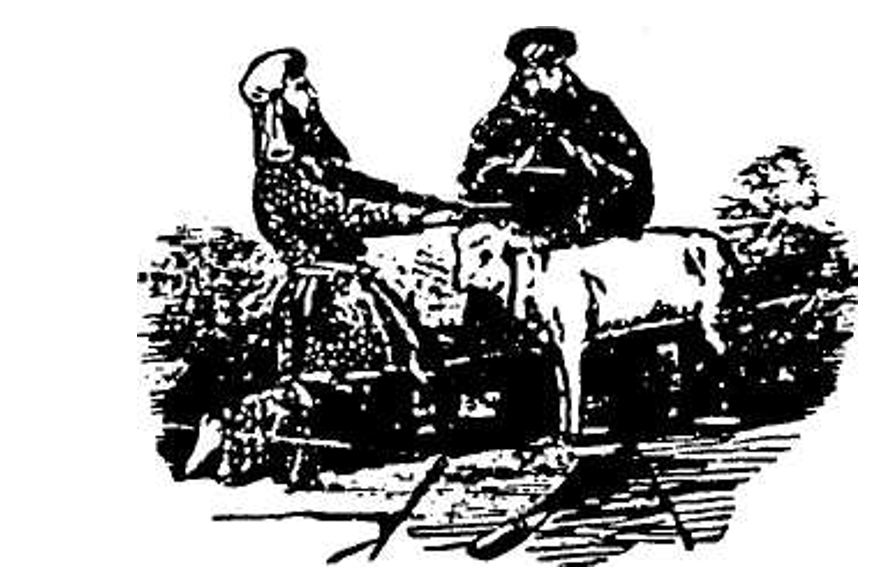
"Goats" is azim from a root signifying to harden, be stout etc., and thus speaks of the stubborn waywardness of flesh. The words used to define both animals indicate that victims selected were to be at that state of growth when the animal nature was beginning to assert itself.
"For a burnt sacrifice"—See note above. The word is olah, "to ascend". The selection of animals taught that God is best pleased when a person decides to give himself as a burnt offering unto Yahweh at the time of life when his manhood is beginning to assert itself. At such a time, a person should decide to ascend above the purely natural way of life.
"He shall bring it a male without blemish"—See note on v.3, and consider its antitypical application to the Lord Jesus. As he developed in understanding and manhood, he consciously gave himself to his Father's business.
VERSE 11
"And he shall kill it on the side of the altar northward before Yahweh"—Why to the north of the altar? Why not to the south, west, or east. It is true that the Lord was put to death at Calvary which is north of Jerusalem, but that only reveals that the type was faithfully fulfilled by the anti-type, and does not answer our question why it should be so.
To the north was stationed Dan the Judge as head of the three tribes there encamped, and so the principle of judgment would be brought to mind. To the Hebrew, the north had significant connotations. The word itself, tsawphon signifies that which is "hidden, dark, unknown". It is derived from a root signifying to hide, and therefore, by implication. to hoard or reserve. Figuratively it denotes to denv, protect, lurk, esteem, hide, lay up, keep secret (see Dr. Strong). Not only was Dan (Judge) stationed to the north of the assembled tribes (Num. 2: 25); the north is said to be the place of fair weather as issociated with God's majesty (Job 37.22; Prov. 23:23) the place empty of man's. presence (Job 26:7), the symbol of God's throne (Isa. 14:13-14). The Cherubim, sent of Yahweh. came by way of the north (Ezek. 1:4). and it is shown as the direction from whence will come the divine judgment of the earth (Isa. 14:31:41:25). Israel, driven into obscurity and suffering divine judgment, were sent into the north, from whence the remnant is to be gathered again (Jer. 3:12.18).
So, we learn, that the north is used as the symbol of that place hidden from man where dwells Yahweh; the place from whence comes judgment of weal or wot. Hence the Psalmist says: "Promotion cometh neither from the east, nor from the west, nor from the south. But God is the judge; He putteth down one, and setteth up another" (Psa. 75:6-7). If judgment came from neither of these directions only north remains. Therefore the fact that Dan, the Judge, was stationed to the north was a constant reminder of God the Judge. In recognition of that, the sacrificial animal was put to death north of the altar, in the presence of Yahweh.
"And the priests, Aaron's sons, shall sprinkle his blood round about upon the altar"—See note v. 5.
VERSE 12
"And he shall cut it into his pieces, with his head and his fat; and the priest shall lay them in order on the wood that is on the Tire which is upon the altar"—The same procedure as that of offering the bullock was followed.
VERSE 13
"But he shall wash the inwards and the legs with water; and the priest shall bring II all, and burn it upon the altar; it is a burnt sacrifice, an offering made by fire, of a sweet savour unto Yahweh"—See notes v. 9.
d. The Turtledove — vv. 14-17
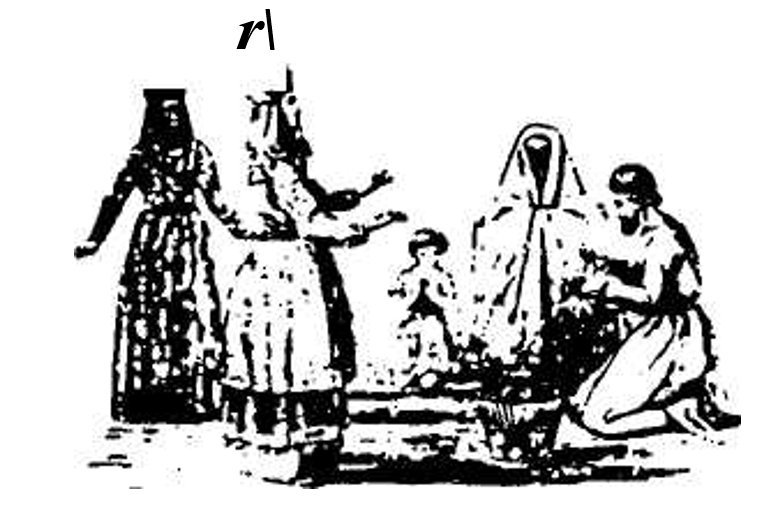
Though no mention is made of it at this place, me statement of Lev. 12:8 would suggest that the permission to offer a bird as a Burnt-offering was a concession to poverty. The birds mentioned were the most e'asv to obtain. It was the intent of the offerer, not the value of his offering, that counted with Yahweh.
VERSE 14
"And if the burnt sacrifice for his offering to Yahweh be of fowls" — The word for "fowl" is 'owph. It denotes a bird, without specifying what kind. It therefore was not used as we use the term today to denote a hen. The Hebrew is derived from a root signifying "to cover" i.e. with feathers.
"Then he shall bring his offering of turtledoves, or of young pigeons"—This was the offering of poverty, permitted as a variant and not as the ideal (see Lev. 5:7; 12:8). The fact that such an offering was permitted and accepted taught that it was the spirit of the law and not its letter that should be sought: the offerer was expected to try and see beyond the actual offering to the spiritual lessons to be applied personally. Consider first the names of the two varieties of birds permitted. "Turtledoves" is a translation of torim. and signifies "to meander or wander". The turtledove is a migratory bird that "knows the time of its coming", a factor that Israel itself failed to observe (see Jer. 8:7). It flies into the Holy Land at the time of Passover, the very time that Israel entered the land under Joshua, but as the season advances, it wholly disappears. The turtledove, therefore, is an excellent symbol of the people of Israel. They entered the land at the right time, were driven from it, but will return in fulness of deliverance at the coming of the Lord. The Hebrew word for "pigeon" is yonah (jonah), a word, that in its Hebrew significance, denotes warmth of affection, (See Strong), but according to others, derived from a root describing a moaning sound (cf. Isa. 38:14). The word, therefore, denotes a moaner. Unlike the turtledove, the dove, or pigeon, the Hebrew vonah breeds in the land. Both tor and yonah were vegetarians, and therefore "clean" birds to the Hebrews. But, in addition, the vonah, or pigeon, was apparently native to Israel so as to be always on hand for the purpose defined (see G. S. Cansdale in Animals of Bible Lands). Both birds are inoffensive and even when attacked will retreat and not retalliate. Among bird-life they represent Israel as the sheep did in animal-life. The dove-pigeon (yonah) is a most appropriate symbol for Israel the persecuted, or for Christ. At his baptism, the "sign of the dove, yonuh was seen to rest upon him (Matt. 3:17; 12:30; 16:4; Luke 11:2S>-32). The Lord, as the antitypical yonah submitted to all opposition without retaliating in kind (1 Pet. 2:23); he was submissive to his Father's will (Phil. 2:15); he knew "his time" (cp. Jer. 8:7; John 7:6). See notes on this theme in our exposition of Jonah: The Goodness And Severity of God.
Followers of the Lord are expected to emulate the same attitude of inoffensive-ness as did he, manifesting the harmless-ness of the dove (Matt. 10:6). For these reasons, the birds selected were ideal for the purpose of acceptable offerings.
It is significant that the offering of poverty was made at the birth of the Lord (Luke 2:24), indicating the poverty of the family at the time (see Phil. 2:7).
VERSE 15
"And the priest shall bring it unto the altar" — As though as to enhance the poor man's offering, priestly ministration was increased (note how the Lord emphasised the value of the poor widow's offering of two mites — Luke 21:2-4). The priest took charge and killed the offering. The offerer merely handed the bird to the priest and did not press his hand down upon it, because there was not the complete identification between him and the bird, as there would have been between him and the self-assertive ram, goat or bullock.
"And wring off his head, and burn it on the altar"—The Hebrew word malaq, does not of itself signify to wring the neck, and the margin has the comment: pinch off the head with the nail. Most likely, however, the verb means to sever the head from the body (cp. Lev. 5:8). This was done by the priest, who then placed the carcase of the bird on the altar as a Burnt-offering.
"And the blood thereof shall be wrung out at the side of the altar"—Such an offering would have very little blood in comparison with that of the animals already listed. The priest had to carefully remove and dispose at the side of the altar the small amount of blood which would be wrung out from the bird.
VERSE 16
"And he shall pluck away his crop with his feathers" — The Hebrew word not-sah, when applied to feathers relates to the pinions or wing feathers of a bird. It comes from a root, nalsah, "to go forth; to be expelled", and therefore can denote either the spreading forth of the wing feathers, or to the expelling of waste matter. The margin renders it as the filth thereof, and this is supported by the R.V. So there was a cleansing of all undigested food in the crop of the bird, answering to the washing of the intestals of the animals mentioned above.
"And cast it beside the altar on the east part" — On the east side of the altar it would be hidden from the Tabernacle, and towards the entrance of the court in a place convenient to be taken away. The final disposal of such is outlined in Lev. 6:11.
"By the place of the ashes" — There were special pans made to receive the "ashes (Exod. 27:3). However, the word for "ashes" (dashen) literally signifies fat. There would be very little of ashes (as we understand the word) that would result from the burning of the victims; but there would be a great deal of fat. This was not just thrown away. The "ashes" represented all that remained after the animal, or bird, had been consumed by the fire, and it was first placed at the east of the altar, and later taken "without the camp" and deposited "in a clean place." A special ceremony was devised to convey it to the place appointed (see Lev. 6:10-11), answering to the fulfilment of the type by Christ. After his death, his remains were taken and placed in "a new sepulchre, wherein was never man yet laid (John 19:41). Why is John so specific in stressing that point? Because he wants to emphasise that in Christ, the perfect sacrifice, there was a perfect alignment with the requirements of the Law.
"And be shall cleave it with the wings thereof"—The R.V. renders "cleave" as rend. The wings were stretched out and the bird opened up, this answering to the dismembership of the animals before-mentioned.
"But shall not divide it asunder"—The bird was opened up by the rendering or cleaving, this answering to the bodies of the beasts used for Burnt-offerings.
"And the priest shall burn it upon the altar, upon the wood that is upon the fire: it is a burnt sacrifice, an offering made by fire, of a sweet savour unto Yahweh" — Yahweh has respect unto the offering of poverty as unto the other offerings. This appointment of poverty was very gracious. The birds specified are found in abundance in the Land, so that the provision was an easy one for the poorest to fulfil. But a bird-offering was treated as meticulously as was an animal, a reminder to the offerer that the very best was expected of him, and that he must not hide behind his poverty for the obligations represented by it.
Summary: With the Bumt-offering, there were ancillary offerings, not noted in Leviticus I. Firstly, the offering was salted (Lev. 2:13; cp. Num. 18:19). Salt is both a flavoring and a preservative (Matt. 5:13; Mark 9:4V Col. 4:6). Secondly, a meal offering of finest flour was made (Num. 15:2-4). It suggested an offering of the strength of life (John 6:51). Thirdly, there was required a drink offering (Num. 15:5). wine is the symbol of a new life (John 6:53). So, with the animals representing the total dedication of life, these ancillary offerings, spoke of the vigour of witness (saltiness), the strength of living (meal), and the joy of a new life (wine). All were freely and voluntarily offered unto Yahweh in recognition of His gracious goodness.
Comments