CHAPTER THIRTY-ONE WORKMEN APPOINTED AND A SIGN GIVEN
Claims have been made that the design of the tabernacle and of some of its furniture is such as to be beyond the ability of man to construct. But this is appropriate to the type, for it points forward to the Christ Tabernacle, both personal and multitudinous. It needed the imposition of the Holy Spirit to bring about the begettal of Christ, and it needs the motivation of the Spirit-Word to bring about the necessary change of character in his brethren to qualify them to befitted into the antitypical tabernacle (see Eph. 2:10). So also in the construction of the Mosaic tabernacle umade with hands" (Heb. 9:11). To carry out the many details of construction required to make such a building, as well as all its furniture and furnishings, Moses needs skilled workmen. Their appointment is not left to chance. Yahweh endows certain men for such work, and places them over their fellow-workers. Thus He calls upon His people to help themselves in the tasks appointed them, whilst providing them with means to accomplish what He desires. Though the tabernacle is most difficult to construct, the Israelites are set to the task of building it. Yahweh will never do for His people what they can do for themselves. By the outpouring of the Holy Spirit, the natural ability of certain skilled workmen is increased, and they are appointed as supervisors over other labourers. Yahweh instructs Moses concerning the sign of the sabbath. This is appropriate at such a time, for its observance gives the lessons of the tabernacle service practical application in the lives of all true Israelites. By the sabbath law they are taught the true meaning of acceptable worship.
Workmen Of Wisdom Appointed — vv. 1-11.
Bezaleel and Aholiab are selected to supervise the construction of the tabernacle and its furniture. They are specifically endowed for their work, and given various tasks to perform. When Yahweh desires a work to be done, He will provide the workmen capable of carrying it out.
VERSE 1
"And Yahweh spake unto Moses, saying" — A preface to the instructions that follow.
VERSE 2
"See, I have called by name" — To know by name implies an intimate relationship (See Psa. 147:4).
"Bezaleel the son of Uri, the son of Hur, of the tribe of Judah" — His name is significant. As "son of signifies filled with, it provides this sentence: Under the shadow (protection) of El, filled with light (Uri), and of righteousness (Hur: white) from among those who praise (Judah).
Bezaleel supervised the fashioning of the ark, the building of the tabernacle and so forth (Exo. 37:1). He was the grandson of Hur who had supported Moses' arms when Amalek attacked (Exo. 17:10,12).
VERSE 3
"And I have filled him with the spirit of God" — His construction of the tabernacle "made with hands," prefigured the work of the apostles drawing many into the spiritual tabernacle (John 17:14, 20-21). Likewise the apostles were endowed with the Holy Spirit for that purpose (Acts 2:4; 4:8), and thus were equipped for the work before them (Acts 4:12-13).
"In wisdom, and in understanding, and in knowledge, and in all manner of workmanship" — Bezaleel was endowed in a practical manner. Wisdom gave him the ability to grasp what was required; understanding enabled him to apply his wisdom; his knowledge stemmed from his experience and acquaintance with facts; whilst the quality of his workmanship demonstrated that he could put the theory of construction into practical application. He typed those who "study to shew themselves approved unto God, workmen who have no need of shame, rightly dividing the word of truth" (2Tim. 2:15).
VERSE 4
"To devise cunning works" — The literal Hebrew expresses this as to plan designs. This suggests that Bezaleel could apply himself to the means whereby he accomplished the revealed plans of God.
"To work in gold, and in silver, and in brass" — See Paul's comment on the various types of vessels used in the tabernacle, and their antitypical significance (2Tim. 2:20-21). Gold represents a tried faith; silver is the metal of redemption; brass speaks of the quality of flesh in which the divine principles must be manifested.
VERSE 5
"And in cutting of stones, to set them, and in carving of timber, to work in all manner of workmanship" — Whereas Bezaleel supervised this part of the construction of the tabernacle, Aholiab appears to have had the charge of the textile fabrics. The Hebrew word rendered "carving," is the same as that rendered "cutting." No ornamental carving of the woodwork is anywhere indicated.
VERSE 6
"And I, behold, I have given with him Aholiab, the son of Ahisamach, of the tribe of Dan" — Aholiab signifies The Tent of His Father which is an appropriate name for one who had charge of the textiles (cp. Exo. 38:23). Ahisamach signifies Brother of Support, and again is appropriate, for Aholiab had the support of his brethren in the work set him to do. And the tribe of Dan (Judgment) suggests discrimination, the ability to select the best. Hiram, who was also related to the tribe of Dan, assisted Solomon in a similar capacity in the construction of the temple (2Chr. 2:12-14). Possibly there were some of the tribe of Dan who were particularly skilled in textile work.
"And in the hearts of all that are wise hearted I have put wisdom, that they may make all that I have commanded thee" — Yahweh used the natural abilities of men and women to assist in the development of His plan. So in the construction of the spiritual tabernacle, there have been those who have been "wise hearted" enough to guard the divine charge and spiritual treasure, playing their play their part within the compass of their natural ability, to spread the Truth (see Mat. 25:14-30; John 17:20; 1 Pet. 4:10).
VERSE 7
"The tabernacle of the congregation" — See notes, Exo. 27:21; 36:8-38.
"And the ark of the testimony" — See notes, Exo. 25:10-16; 37:1-5;
"And the mercy seat that is thereupon" — See notes, Exo. 25:17-21; 37:6-9.
"And all the furniture of the tabernacle" — The Hebrew has vessels, as in the margin. See notes, Exo. 30:27-28; 39:33.
VERSE 8
"And the table and his furniture" — See notes, Exo. 25:23-30; 37:10-16.
"And the pure candlestick with all his furniture" — See notes, Exo. 25:31-40; 37:17-24.
"And the altar of incense" — See notes, Exo. 30:1-10; 37:25-28.
VERSE 9
"And the altar of burnt offering with all his furniture" — See notes, ch. 27:1-8; 38:1-7.
"And the laver and his foot" — See notes, Exo. 30:17; 38:8.
VERSE 10
"And the cloths of service" — The Hebrew begediy serad denotes garments of weaving. The garments relate to the distinguishing vestments of office worn by the high priest. These were the blue robe, the ephod, the girdle of the ephod, and the breastplate. See Exo. 28:6-35; 35:19; 39:1,41.
"And the holy garments for Aaron the priest" — "Holy garments" is begediy haqodesh, "garments of holiness." These comprised the rest of the high priest's dress: the linen drawers, tunic, girdle and mitre which constituted his whole apparel on the great day of atonement (Exo. 28:39, 43).
"And the garments of his sons, to minister in the priest's office" — These white garments, which constituted the uniform of the lower priests are described in Exo. 28:40-42.
VERSE 11
"And the anointing oil" — See notes, Exo. 30:23-25; 37:29.
"And the sweet incense for the holy place" — See notes, Exo. 30:34-38; 37:29.
"According to all that I have commanded thee shall they do" — Bezaleel and Aholiab must conform strictly to the letter of the law in all that is commanded: there must be no deviation, in the construction of the tabernacle.
The Sabbath Sign - vv. 12-17.
The sign of the sabbath is exclusive to Israel. It is introduced at this place to remind Israelites that there must be on their part a practical illustration of all represented in the tabernacle. Worship was not to be confined to the sacrificing of animals, but should include the sacrifice of Self, represented by the animal. Hence the prohibitions and commandments of Sabbath observance brought the tabernacle service into the life of the individual as a practical observance.
VERSE 12
"And Yahweh spake unto Moses, saying" — Again this familiar formula introduces a new subject.
VERSE 13
"Speak thou also unto the children of Israel, saying, Verily My sabbaths ye shall keep" — See notes, Exo. 20:8; 23:12; 35:2. The constant reiteration of the Sabbath law emphasised its importance.
"For it is a sign between Me and you throughout your generations" — The sign of the Sabbath sets the Jews apart from any other nation; for no other nation observes it. Previously, circumcision had was the only "sign" that the Israelites were under a special covenant with Yahweh; that they were constituted His people, bound to Him by special ties (Gen. 17:9-14; Acts 7:8). It still remained as such, constituting the sign of the Abrahamic Covenant in comparison with the Sabbath which now became the sign of the Mosaic covenant.
However, the adoption of circumcision by the Arabs and by other nations such as the Egyptians (Herodotus 2:104) made the "sign" no longer exclusive. It was still a "sign of the covenant," but not a distinguishing mark. The command to abstain from work on the Sabbath distinguished Israel as a nation from all other nations; some of whom were found mocking at the people because of the restrictions thus placed upon them (Lam. 1:7). See notes, Exo. 20:8-11, and Ezekiel's comment on the Sabbath (Eze. 20:12,20).
"That ye may know that I am Yahweh that doth sanctify you" — The Hebrew is: "I am Yahweh Meqad-dishkim." This is revealed as a further title of the Deity, and here is first introduced in Scripture. See its use in Lev. 20:7-8; 21:8, 15, 23; 22:9, 16, 32, and, frequently throughout Isaiah. It is significant that it is proclaimed in conjunction with instructions for the building of the tabernacle, and with the proclamation of the law of the Sabbath. This indicated that Yahweh would be sanctified in those who come nigh unto Him (Lev. 10:3), whilst the Sabbath law exhibited what was required of those who aim at sanctification. The Sabbath law established Yahweh's claim upon the lives of His people. It demanded that the seventh day be entirely set apart for worship and spiritual meditation. This, rightly observed, would inevitably lead to a true knowledge of God, greater obedience to divine law throughout the week, and full fellowship with Him (Isa. 58:13-14).
Concerning the name and this title of the Deity, H.F. Stevenson writes: "To keep one day in seven really holy, however, is a standard few can attain. Men are lovers of self rather than of God; and even the zealously religious would rather be busy in what they consider to be God's service, than quietly waiting upon Him, in worship and devotion. To meet this deficiency, this consequence of the Fall in human nature, God gave the promise contained within this name: Ί am Yahweh that doth sanctify you.' What He demands He will provide. He will give them the desire and enablement to obey, if only there is a true responsiveness to His will on their part. That is one of the most glorious truths of divine revelation, repeated in many different ways and contexts, in both the Old Testament and the New. It is the thought underlying the use of this name of God, in its every appearance in the Bible."
The word sanctify signifies to pronounce clean so as to set apart for special use. It is applied to persons and things set apart for holy service, as the priests were, and also the contents of the tabernacle and temple (Exo. 28:41; 29:36-37, 44; 40:Ι0-Ι1). Its basic meaning, therefore, is a state of separateness for a purpose: in this case, for divine use. Thus Yahweh, the God of covenant grace, separated His people from Egypt that He might dwell among them. He commenced to "work in them both to will and to do of His good pleasure" (Phil. 2:13). He does not do this as an irresistible force, carrying them along in the channel of sanctification whether they will or not. His sanctifying power, like all His enabling grace, operates in and through those who respond to His truth (see John 17:17). However, Israelites are commanded to "sanctify yourselves" (Lev. 11:44), i.e., to play their part to that end. Paul taught: "This is the will of God, even your sanctification" (1 Thes. 4:3). So the challenge is issued repetitively: "Be ye holy [sanctify yourselves] in all manner of living" (1 Pet. 1:15); "Present your bodies a living sacrifice, holy, acceptable unto God" (Rom. 12:1); "lifting up holy hands" (1Tim. 2:8). But in recognition that flesh needs help to that end, Yahweh superimposed this name upon Himself: Yahweh Meqaddishkim, "I am Yahweh that doth sanctify you."
However, to sanctify is not merely to set an object apart for a special use, but to see that it is worthy of such use. So Yahweh commands: "Ye shall be holy; for I Yahweh your God am holy" (Lev. 19:2). It is impossible for flesh unaided to reach the status of holiness thus suggested, hence the promise of God to help, as incorporated in this name. Thus: "we are His workmanship, created in Christ Jesus unto good works, which God hath before ordained that we should walk in them" (Eph. 2:10).
Thus sanctification is effected by God (Judel), in Christ (1Cor. 1:30; Heb. 10:10), through the Spirit-Word (1Pet. 1:2; Eph. 2:18). This is summed up by the Lord's prayer: "Sanctify them through thy Truth; thy Word is Truth" (John 17:17). In the same prayer, Christ declared that he sanctified himself, that "they also might be sanctified through the Truth" (v. 19). The Word cleanses mentally (John 15:3), leading to baptism which commences a moral cleansing, and this will be consummated by a physical cleansing at Christ's return through change of nature. The object of sanctification will then be complete.
The same word rendered sanctify is given as hallow in Lev. 22:32. Yahweh requires that true Israelites should "hallow His name," hence the prayer presented by the Master to his disciples: "Hallowed be Thy name" (Mat. 6:9-10).
VERSE 14
"Ye shall keep the sabbath therefore; for it is holy unto you" — The word "holy" is qodesh, and therefore has the same significance as "sanctify." The sabbath was to be kept apart, as a special day unto true Israelites. Sabbath keeping required Israelites to rest from the works of sin, giving the day over entirely to doing the will of Yahweh (Isa. 58:13-14; Heb. 4:10). It was a token of the frame of mind required for every day of the week.
"Every one that defileth it shall surely be put to death" — To "defile" the sabbath was to please oneself in its observance, and therefore to engage in the works of the flesh. Those found flagrantly breaking the sabbath were to be put to death (Num. 15:32-36). The penalty for a believer today pleasing himself, and refusing to do the will of Yahweh, is to be given over to the second death at the Judgment Seat of Christ.
"For whosoever doeth any work therein, that soul shall be cut off from among his people" — See Exo. 35:2. The prohibition is to performing unnecessary servile work. To work for God at His direction was permitted; necessary activity for the purpose of eating, etc., was also permitted (cp Mat. 12:1-7, 10-12). The penalty "to be cut off from the people" does not necessarily signify to be put to death; rather excommunication. One guilty of infraction of the law of the sabbath, was first separated from the congregation whilst the seriousness of his action was examined, and if it were found to be a flagrant breaking, he would be put to death. Hence a man found breaking the sabbath was first "put in ward," and afterwards executed (Num. 15:32-36).
VERSE 15
"Six days may work be done; but in the seventh is the sabbath of rest, holy to Yahweh" — The "sabbath of rest" is shabbath shabbathown in Hebrew, "a sabbath, a special festival, a festival of rest." It was "holiness to Yahweh" (see mg.) in that it demonstrated what was necessary in order to be sanctified unto Him. The expression, "a sabbath of rest" is literally a rest of resting, giving thus the idea of completeness. It therefore could be rendered "a complete rest."
"Whosoever doeth any work in the sabbath day, he shall surely be put to death" — See notes above.
VERSE 16
"Wherefore the children of Israel shall keep the sabbath, to observe the sabbath throughout their generations, for a perpetual covenant" — A "perpetual covenant" is a "covenant of olam," one designed for continuity. Sabbath-keeping, a resting from the works of the flesh, was fundamental to the covenant established between Yahweh and Israel. If Israel had kept the covenant based upon the law, Yahweh would have kept His part. But Israel having "broken the everlasting covenant" (Isa. 24:5), there was of necessity "a change of the law" (Heb. 7:12). This was accomplished in Christ. Whilst its principles remain, they are now interpreted spiritually. Therefore, there is a sense in which the sabbath law is still binding on believers, in that they are expected to "rest" from the works of the flesh, and give themselves unto God, every day of the week, and therefore are equivalent to the priests under the law (see 1 Pet. 2:9) who were exempt from the sabbath law (Mat. 12:5). Their lives were entirely given to Yahweh, not one day in seven, but in every way. So it is in Christ: every day becomes a pilgrimage to the kingdom, a resting from the works of sin to serve Yahweh.
"It is a sign between Me and the children of Israel for ever" — The keeping of the sabbath represented a threefold sign to Israel, separating that nation from all others.
As a "sign" it witnessed first to the basis of salvation (a resting from the works of the flesh), for defilers of it were put to death. Second, it was linked with the creation week, testifying to the unfolding purpose of Yahweh foreshadowed therein, pointing forward to the seventh millennium of rest. Finally, it commemorated the separation of Israel from Egypt through the national baptism, and the rest from the land of sin and death experienced in consequence (Deu. 5:15). Followers of the Lord, as the true Israel of God (Gal. 6:16), keep the sabbath in a spiritual sense, endeavouring to rest daily from the works of the flesh (Heb. 4:9-10), as did the priests under the law (Mat. 12:5). Their hope is typically set forth in the events of the creation week, anticipating the seventh millennial rest (cp. 2Pet. 3:8). In that way the sabbath law has an application today; and will be reinsti-tuted in the age to come (Eze. 44:24).
"For in six days Yahweh made heaven and earth" — God created the heavens and earth, or actually brought into existence, "in the beginning" — long before the six days' work referred to in the verse before us. That fact is not contradicted by this verse. The verb asah ("made") can signify "to appoint" (see note, Gen. 1:16).
God made or restored, the heavens and earth again to a habitable state. This was done in six literal twenty-four hour days as required by the statement before us (see also Gen. 1:3-2:25).
"And on the seventh day He rested, and was refreshed" — This is the language of anthropomorphism in which God uses human expressions as applying to Himself. Nevertheless, the Elohim found joy in the majesty of creation, when they looked upon it, and "behold, it was very good" (Gen. 1:31). They sang for joy in that which had been accomplished (Job 38:7).
The Tables of Stone - v. 18.
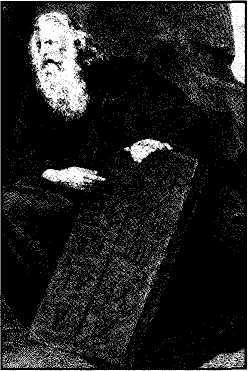
As a fitting conclusion to this experience on the mount during forty days, Moses is given two tables of testimony, providing the basis of the covenant Yahweh entered into with Israel.
VERSE 18
"And He gave unto Moses, when He had made an end of communing with him upon mount Sinai, two tables of testimony" — The "testimony," or witness, were the ten commandments which had been proclaimed verbally to Israel and accepted by them as the basis of the covenant with Yahweh (Deu. 5:22). The stone tablets were those referred to when Yahweh instructed Moses to ascend the mount (Exo. 24:12).
They were designed to be placed in the ark (Exo. 25:16), but they were broken by Moses in anger when he witnessed the extent of the national sin (Exo. 32:19). However, Yahweh later commanded Moses to replace them (Exo. 34:1-4), and Moses placed them in the ark (Exo. 40:20).
"Tables of stone" — However, though many Israelites obeyed Yahweh, in a national sense, the law remained largely
written on "tables of stone" and not upon the heart. It must be "written on the heart" of believers to be really effective (see 2Cor. 3:3), as with "true worshippers" in Christ (John 4:23-24). The time is coming when the nation of Israel will so respond to the Lord Jesus that the "writing" will be inscribed upon the hearts of its people (Jer. 31:31-34).
"Written with the finger of God" — The expression signifies a divine writing as in Luke 11:20. However, there is no reason to believe that the stones were not literally inscribed by the angel of God, and, indeed, the expression of this verse rather requires it.
Moses received the law "by the disposition of angels" (i.e., the Elohim, described here as "God"), so that evidently the angel who bore the name of Yahweh (Exo. 23:20-21), personally inscribed the two tablets of stone with the words of the Law, thus giving them greater authority in the sisht of faithful Israelites.
Comments