TRESPASS-OFFERING LAWS
Three specific sins requiring atonement are listed (vv. 1-13), and then details are supplied of the trespass offering required. The three sins are: (1) Failing to speak and reveal the truth when under oath (v. I); (2) Failing to purify self when one is unclean (vv. 2-3); (3) Speaking and swearing rashly and quickly, then forgetting what was said, or shirking responsibility for it (v. 4). This enumeration is then followed by a compassionate concession (vv. 7-13), and finally by instruction in the Trespass-offering to be made (vv. 14-19).
VERSE 1
"And if a soul sin, and hear the voice of swearing, and is a witness, whether he hath seen or known of it" — This cites the case of a man who had seen or known of something that has a bearing upon a particular case, but who has refused to disclose what he knows when called upon by the judge to do so. In such a case, an oath of abjuration is laid upon him (Cp. 1 Kings 8:31. 2Chron. 18:15; Matt. 26:63). Irritated by Christ's silence. Caiaphas invoked this" law. saying to the Lord: "I adjure thee by the living God, that thou tell us whether thou be the Christ, the Son of God". In respect to the Law. the Lord complied. See also Num. 5:21: Prov. 29:24. When such an oath was laid upon a witness, the Law demanded that he frankly reveal all that he had seen, heard, or known, so that proper adjudication might be made.
"If he do not utter it, then he shall bear his iniquity" — He was treated as an offender, and required to make atonement for his sin.
VERSE 2
"Or if a soul touch any unclean thing, whether it be a carcase of an unclean beast, or a carcase of unclean cattle, or the carcase of unclean creeping things, and if it be hidden from him; he also shall be unclean, and guilty" — A person might touch a dead body unwillingly, and not be conscious of what he has done; or he might be indifferent to the requirements of the Law. or forgetful of his obligations. In such cases there has been a guilt of negligence, and a Sin-offering was required. Why should death be treated with such abhorrence? Brother Roberts answers:
"This touches a subject high, deep and wide. It calls attention to the origin of death in relation to man. and to the nature of life in relation to God. Both these subjects are liable to be skimmed over in this merely naturalistic age. Men find death a universal law of the animal world, so far as they have experience of that world upon earth: and they are apt to regard it as the inseparable corollary of life — (he necessary and other half of the phenomenon of vitality. They see animals, great and small, born, grow, decay, and die: and they see man do the same. Therefore they write it down as a "law of nature', for which they do not require to seek a special origin, and to which, therefore, it is impossible they can attach the odious character suggested by these provisions of the Mosaic law regarding it. But it is evident there is a fallacy in this way of looking at the subject ... So far as man is concerned, death is the result of sin. and not the necessary quality of the nature with which he was endowed in the first instance. This truth enables us to understand the peculiar detestation of death expressed by the ordinances we are considering. The presence of death — the touch of death — means presence of sin, and sin is the awful thing that fools make a mock at. the crime of insubordination against the wish. will, or law of the Eternal Author and Proprietor of Creation." {The Law of Moses pp. 263-264).
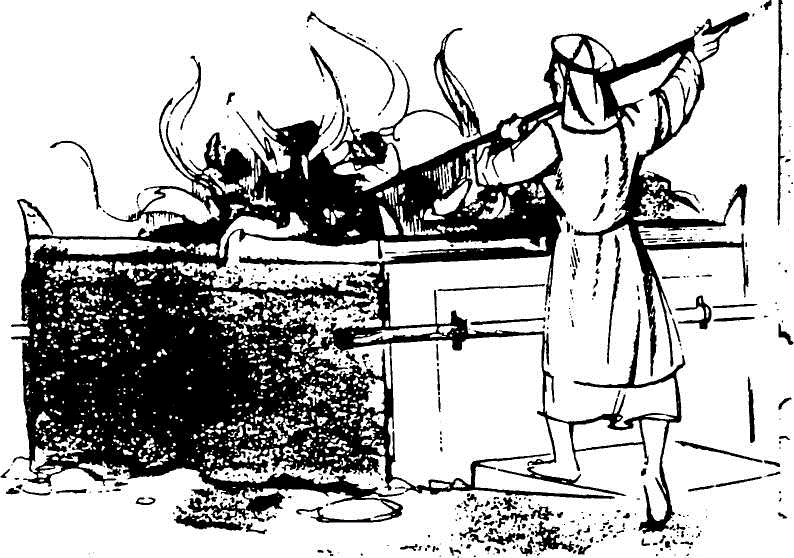
Trespass. Each offering has its peculiar features and applications, pointing forward to the complete and perfect offering seen in Christ. That there are five divisions of offerings is significant. Five is the Scriptural number for Grace — and in this, the Israelite was taught that within the process of the Law could be observed the element of Grace: that wonderful characteristic of Yahweh that allows the covering of sin and the restoration to unity with Him.
It is this Grace that we need to obtain in our own lives today!
Therefore it is with a degree of pleasure that we place this issue into the hands of our readers. We have personally found much spiritual satisfaction and enjoyment preparing the matter for publication. It is and our exposition of the Book of Leviticus. This readers will share this pleasure with us.
We look forward to comments and questions upon the matters outlined, so that we may benefit from mutal consideration of these sections.
Our next issue (God Willing) will complete the first section of Leviticus, dealing with the Offerings, and proceed to the exposition of the Priesthood and the appointments of the priests in Israel. In it will be seen Jesus Christ, not only as the offering itself, but also as the priests performing the offering. Thus, as Zechariah mentions, he would come "having salvation" (or "saving himself mg). He was both the means and the method of salvation.
Certainly, this wonderful Book of Leviticus should teach us much about ourselves, our need of Christ, and the way we can obtain salvation he offers us. May the Expositor assist us in this direction.
We continue our treatment of Leviticus, and offer to the reader notes on a further five chapters of that remarkable book.
As we have slowly and with prayerful thought perused these verses, we have been further impressed with the wisdom of Yahweh in setting down His purpose in such a wonderful way. The Law not only taught Israelites what they should do to make their worship acceptable unto Yahweh, but also foreshadowed the divine purpose to be revealed in Christ. A man like Moses, studying the principles of the Law delivered unto him, must have turned back in thought to the redeemer promised (Gen. 3:15), and considered how its requirements would be fulfilled in the one yet to be manifested in Israel.
The Law humbled and exalted Israelites at the same time; it revealed the true nature of flesh, and showed the great privileges of association with the things of God.
The Law thus taught that a true worshipper should ever keep in mind the cause of death, and recognise that he is a sin-proned mortal (Rom. 5:17-19).
VERSE 3
"Or if he touch the uncleanness of man, whatsoever uncleanness it be that a man shall be defiled withal" — Reference is to both normal and abnormal issues of mankind, such as are listed in Leviticus 12.13. 15. W. F. Barling comments in Law And Grace: "Apart from leprosy, all the diseases of which they (the uncleanness laws) took account were diseases of the reproductive organs Even the normal menstrual flow in healthy women bore close enough an affinity to the idea of the defilement caused by ancestral sin to be classed as a cause of seven days' uncleanness. This in itself was pointed enough an indication of the hereditary effects of Eve's and Adam's sin (Lev 15:19-24; cf. Gen. 3:16). Hidden away out of sight though the source of the defilement might have been, yet its existence could not be denied. In man and in woman alike the same fatal symptom bore witness to it. . . In each case the operative factor was the same: it was an issue that was the cause of defilement — an issue, moreover, out of the flesh — flesh tainted by sin."
This law of defilement, of uncleanness, was illustrative of the Lord's comment: "That which cometh out of the man. that defileth the man" (Mark 7:20) He explained that "out of the heart of man" proceeded every evil, and AS figurative of that, the issues of men and women were classified by the Law as unclean. The Law also decreed that ceremonial defilement be treated as transmissable from person to person, in conirast to holiness which was not MI transmiv-uhle (see Hug. 2:12-13). This taught that moral defilement such as wrong ideas, actions or habits are polluting to others in their influence. To !each that spiritual lesson, the Law decreed that any body touching anything that it classified as "defiled" would be considered "defiled" in turn. In so doing, it legislated to emphasise the importance of keeping well away from sin or from company that might incite to sin.
"And it shall be hid from him; when he kno we lh of it. then he shall be guilty" — A person might unwittingly come in contact with that which is defiling, but when this is revealed to him. he must acknowledge his guiltiness in that regard. In such legislation the Law taught the need of separateness from anything that might defile (see 2 Cor. 6:14-18; Jude 23; 1 Cor. 15:33).
VERSE 4
"Or if a soul swear, pronouncing with his lips to do evil, or to do good" — This law warned against indulging in a thoughtless oath, and therefore taught the need of care in pronouncing what one intended do or would not do. The verb "pronouncing" is bam in Hebrew, and signifies to babble without thought, to vociferate angrily, or to speak idly. In Psa. 106:33, the same word is rendered speak unadvisedly. In this place, therefore, the Law taught the importance of Christ's indictment of "idle words" (Cp. Matt. 18:36). It taught that before a man speak he should think; for whatever he vowed to perform, whether it be evil or good, whether small or large, he would have to account for. As examples of evil things vowed see 1 Sam. 25:22; Mark 6:23; Acts 23:12; and note the wisdom of Balaam Num. 24:13.
"Whatsoever it be that a man shaU pronounce with an oath, and it be hid from him" — How could it be "hid" from the one who pronounced it? He might have uttered a matter in the heat of a moment, not intending his words to be taken seriously; or he may have forgotten what he had u tte red.
"When he kno wet h of it, then he shall be guilty in one of these" — When it is brought home to him, he must recognise his guilt in failing to perform his vow (see Ecc 5:4).
A Female Lainb or Goat Offered — vv. 5-6
Signtfican'ly the guilt offering for the sins previously defined is a female from the flock. This draws uttention to the first sin which was introduced by Eve and not bv Adam; and thus emphasises the lesson impressed by Paul in I Timothy 2:13-15.
VERSE 5
"And it shall be, when he shall be guilty in one of these things" — This is an important statement. It teaches that the first essential to proper atonement is a consciousness of guilt: a recognition of sin. The Law accomplished (his important result for, as Paul taught: "By the law is the knowledge of sin" (Rom. 3:20). When that is brought home to one, there is a greater realisation of one's need of Christ. Hence the law "was a schoolmaster leading to Christ" (Gal. 3:24). The woman, "who was a sinner", was overcome by emotion at the proximity of Christ, because she recognised her true state (Luke 7:37-38); whereas the Pharisee was blind to his need. Paul taught that a first essential to salvation was to realise that "Christ came into the world to save sinners" (I Tim. 1: 15). However, the context shows that a person must acknowledge his state as such before Christ's atoning work can be efficacious. Sin is not always recognised as such today, because the Law is no longer in vogue to guide the minds of men to that end. But in the days of Moses, guilt was made evident by the clear instruction of the Law. and so the mind of the worshipper made ready for the atonement that could be effected.
"That he shall confess that he hath sinned in that thing" — The second requirement for atonement was an acknowledgement of sin (see James 5:16; 1 John ).
VERSE 6
"And he shall bring his trespass offering for his sin which he hath sinned unto Yahweh" — This was the third essential to atonement: sacrifice. The term trespass offering is out of place in this context, since it has become the accepted designation for a distinct kind of Sin-offering mentioned in the next section (sec v. 14). The Hebrew word is ashum. the same word as is rendered "guilty" in the previous verso. (There is no word for "otfering" in the Hebrew in this statement). Hence Rotherhatn renders it as his guilt-bearer, and the RV mg has for his guilt i.e. for his offence.
"A female from the flock, a lamb or a kid of the goats, for a sin offering; and the priest shall make an atonement for him concerning his sin" — See previous Notes. Particularly those relating to Lev. 4:28.
Two Turtledoves or Pigeons — vv. 7-10
In the case of extreme poverty, the mercy of Yahweh was still available, and a less valuable offering could be made.
VERSE 7
"And if he be not able to bring a lamb then he shall bring for his trespass, which he hath committed, two turtledoves, or two young pigeons, unto Yahweh" — See Notes Lev. 1:14.
"One for a sin offering, and the other for a burnt offering" —The Burnt-offering is essentially the offering of dedication; but this must be preceded by the Sin-offering in which atonement or covering is made for sins committed. Therefore, the sacrifice dramatised the need of forgiveness of sins, the covering away of such, and then the dedication on the part of the worshipper to give his life as a Burnt-offering unto Yahweh.
VERSE 8
See Notes Lev. 1:14.
VERSE 9
"And he shall sprinkle of the blood of the sin offering upon the side of the altar; and the rest of the blood shall be wrung out at the bottom of the altar: it is a sin offering" — On this occasion, the blood was placed on the sides of the altar instead of on the horns of the altar: the more prominent and significant spot. Why? No doubt to emphasise the concession of mercy granted to the worshipper who could not afford the normal sacrifice.
VERSE 10
"And he shall offer the second for a burnt offering, according to the manner; and the priest shall make an atonement for him for his sin which he hath sinned, and it shall be forgiven him" — In comment. VV. F. Barling in Law and Grace states: "In the case of poverty two fowl were permitted as a variant offering (Lev. 5:7). One only of these served strictly as a Sin Offering. Some of its blood was sprinkled on the sides of the Altar, the remainder being drained out at its base (Lev. 5:9). A complication arose in a case of this sort since the turtle-dove or pigeon was too small a creature to have adequate abdominal fat to allow of its being separated and burnt upon the Altar. This deficiency was made good by the use of the second bird as a Burnt Offering. By this device the notion of burning a portion of the Sin Offering on the Altar was preserved (Lev. 5:10).
The significance therefore, of slaying and burning was preserved in this offering as well.
Tenth Part Of An Ephah Of Fine Flour — vv. 11-13
In the case of extreme poverty, of destitution, a blood-offering was dispensed with altogether, and a meal offering took its place. This concession illustrates typically how that atonement is offered to all bv Yahweh without respect of persons. The fact that an offering is permitted without the shedding of blood illustrates that God will find a way for the forgiveness of sins for all who approach Him in truth. However, it should be clearly recognised that this is a concession granted as an exception for the benefit of the destitute, and does not invalidate the general rule that without shedding of blood there is no remission of sin (Heb. 9:22).
VERSE 11
"But if he be not able to bring two turtledoves, or two young pigeons, then he that sinned shall bring for his offering the tenth part of an ephah of fine flour for a sin offering" — The word "offering" is korban (see Note Lev. 1.2). The j.ejjth part of an ephah constituted "a homer" (Exod. 16:3) measure it was a little over five pints, and comprised the portion of manna assigned to each individual for his daily food (Exod. 16:lfV2«>). This specific measure was surely a reminder to those who offered it of the manna, and of its figurative meaning (see Deut. 8:3). Thus, in a figure, the destitute worshipper offered up what constituted his life.
"He shall put no oil upon it, neither shall he put any frankincense thereon; for it is a sin offering" — Under the circumstances in which this concession was permitted, it must not imitate the meal offering as donated as a Bumt-offering. Contrast the prohibition of this verse, with the opposite instructions for the meal offering (Lev. 2:1). There was an absence of joy in the Sin-offering, for the requirements of the Word had been overlooked in the committing of sin, a neglect of the things of Yahweh, hence the instructions given, particularly the absence of oil and Frankincense.
VERSE 12
"Then shall he bring it to the priest, and the priest shall take his handful of it, even a memorial thereof, and burn it on the altar" — See Note Lev. 2:2.
"According to the offerings made by fire unto Yahweh; it is a sin offering" — By this action, the meal offering was united with the burnt offering. Hence, though in the case of extreme poverty, no specific blood was shed, in effect, the action of the priest linked it with the national Burnt offering, and so connected it with blood-shedding. This typified that what man in his poverty could not provide. Yahweh in His magnanimity would do. The Law underlined the truth expressed in Psalm 49:6-8:
They that boast in their wealth. And boast themselves in the multitude of their riches; None of them can by any means redeem his brother. Nor give to God a ransom for him; For the redemption of their soul is costly. And it ceaseth forever.
VERSE 13
For explanation of this verse see previous notes, and compare with Lev. 2:3 in regard to the "priest's portion of the meal offering".
The Trespass Offering (Ch. 5:14-6:7)
There is little difference between sin and trespass, and therefore the offering of one was closely associated with the other (see Lev. 7:7). Like the Sin offering, it was the consciousness of a specifically guilty act (Lev. 5:5,17; 6:1-5). However, it differed in that it was a trespass: the invasion of the rights of another, whether Yahweh or man, and as such, it necessitated reparations. Therefore, the offerer not only sought forgiveness, but had to make restitution to the one he had wronged (Lev. 5:14-16; 6:1-5) in circumstances where that could be done (ct. Lev. 5:17-19). Therefore, not every sin fell into the category of "trespass" but every trespass was a sin, for which one animal only was permitted for sacrifice: a ram. However, the value of the ram differed according to the gravity of the offence (Lev. 5:15,18; 6:6).
CHAPTER SIX
THE OFFERINGS IN RELATION TO THE PRIESTHOOD
In the Hebrew Bible vv. 1-7 of this chapter form part of Chapter 5. It is evident that they should do so, for they continue the instruction regarding the Trespass offerings. The chapter then commences the section dealing with the Priesthood which continues on to the end of Chapter 10.
a. The Ram And Restitution Required For Trespass — vv. 14-16
A sacrifice had to be offered and compensation made when a trespass was committed.
VERSE 14
"And Yahweh spake unto Moses saying. . ." — This statement prefaces new instructions, separating those regarding the Sin-offering from those concerning the Trespass-offering.
VERSE 15
"If the soul commit a trespass" — The word "trespass" is mahal and denotes wrong. It is derived from a root signifying to act unfaithfully or covertly. The word "trespass" occurs again in Lev. 6:2. but it is a different word for that rendered "trespass" elsewhere in these chapters.
"And sin through ignorance" — See note Lev. 4:2. Sins of omission are first treated with.
"In the holy things of Yahweh" — These "holy things" relate to the tithes, offerings, firstfmits etc.. that the Law required to be offered unto Yahweh. A person might inadvertently omit to bring these, and in so doing would be treated as having robbed Yahweh (see Mal. 3:8; Num. 5:6-7).
"He shall bring for his trespass" — Here the word "trespass" is asham. "guilt"; and it is rendered Guilt-offering in the R.V. However, before presenting the sacrifice defined, two prior conditions were required: 1. He had to make compensation for any harm or injury done; 2. He must pay a fine to the injured puny equal to two tenths of the value of that of which he has deprived him.
"A ram without blemish out of the flocks" — The word for "ram" is uvil. and is derived from a root signifying strength. It implies a leader, a protector, with the basic idea of strength. In the ram. this strength is sacrificed unto Yahweh. indicating that the offerer will give his strength unto Him
"Wild thy estimation by shekels of silver"— The priest was to assess the loss and add a tilth thereto. This was to be paid in silver, because silver was treated as the metal of redemption. See note Exod. 30:11-15.
"After the shekel of Ihe sanctuary" — The "shekel of the sanctuary" specified a certain weight (Exod. 30:13); other shekels could be lighter. There must be just compensation.
VERSE 16
"And he shall make amends for the harm that he hath done in the holy thing, and shall add the fifth part thereto, and give it unto the priest" — The word "harm" is sin in Hebrew; and the word "amends" is shalam, the root from whence shulom, "peace" is derived. The latter word signifies to unite together as one. to perfect. The R.V. renders make restitution so as to join together the breach caused by sin. A fine of a fifth part was required for that purpose. Five is the number of grace in Scripture: and a fine of that amount brought home to the sinner his need of grace. The payment of restitution is not only just, but teaches an important principle. The penitent is not merely to say. "I am sorry." but is to add. "What can I do about it in order to make good the harm?"
"And the priest shall make an atonement for him with the ram of the trespass offering, and it shall be forgiven him" — The word is asham, guilt. See note v.6. Notice that in the case of a trespass offering, there are no gradations of kinds, or variations of offerings to suit the rank, position, or circumstances of the offerer, as in the previous sacrifices. This emphasises the need of every Israelite to carefully avoid committing a trespass, as the full penalty must be paid. Note. also, from this verse that restitution is first made before the ram is offered. The guilty party must first show his recognition of his fault by the means specified, before his sacrifice will be accepted. This reminds us of Christ's instructions: "If thou bring thy gift to the altar, and there rememberest that thy brother hath ought against thee: leave there thy gift before the altar, and go thy way; first be reconciled to thy brother, and then come and oiler thy gift" (Matt. 5:23). Action on our part is necessary before sacrifice: "To obey is better than sacrifice; and to hearken than Ihe fat of rams . . ."
Ignorance Not Accepted As An Excuse — vv. 17-19
The second case of a Guilt-offering related to acts which are forbidden, but which have not caused material loss to the injured party. In such cases, material restitution was waived. The offence may have been committed without the knowledge of the guilty party, but the Law was careful to specify that ignorance does not exonerate from blame.
VERSE 17
"And if a soul sin, and commit any of these things which are forbidden to be done by the commandments of Yahweh" — This defines sins of commission, in contrast to those of omission considered in vv. 15-16.
"Though he wist it not, yet he is guilty, and shall bear his iniquity" — Ignorance of the offense does not exonerate, for in fact, his very ignorance is itself a trespass (v. IK). He should know what the Law requires, and exercise the greatest care that he fulfils its requirements.
VERSE 18
"And he shall bring a ram without blemish out of Ihe flock, with thy estimation, for a trespass offering unto the priest" — W. H. Barling notes: "While no variation was permissible in the choice of animal, so that it was always a ram, yet variation was permissible in respect of the value of the ram. (This would probably be calculated in terms of age, weight, value of fleece, etc.). But inasmuch as the trespass was a sin. the sinner was denied all right of deciding for himself what should be the value of the ram appropriate for him. The priest alone could assess that, and the standard of judgment therefore had to be not human but divine (since here again the priest typified God)." — Law And Grace.
"And the priest shall make an atonement for him concerning his ignorance wherein he erred and wist it not, and it shall be forgiven him" — Hence, ignorance itself was accounted as a sin. An Israelite should know the law, and be conscious of when he broke it.
VERSE 19
"It is a trespass offering" — See note v. 16.
"He hath certainly trespassed against Yahweh" — Here the verb is asham. signifying that he is guilty of offences Reparation and the payment of a fine are demanded before the offering is made.
Comments