___________________
EXODUS CHAPTER FOUR
MOSES' OBJECTIONS AND YAHWEH'S ASSURANCES
Expressing doubts as to his ability to lead the people out of Egypt, Moses is provided with signs to endorse the assurance that Yahweh will be with him in all that he attempts. Unbelief or doubt are often manifested against God because of failure to accept within oneself the reason for believing. The secret of success, as now revealed to Moses, is for him to firmly "take this rod in thine hand" (v. 17). This is "the rod of God" and symbolises full surrender to Yahweh (vv. 2-4), the means whereby the people will come to recognise His presence among them (v. 5), and the avenue through which His power will be made manifest (v. 17). So long as Moses kept hold of the rod, it remained a support for him; but when he relaxed his hand it became a serpent ready to bite.
Similarly, Christ becomes for believers either a "savour of life unto life, or death unto death" (2Cor. 2:16), depending upon whether they holdfast to the rod, or let it fall to the ground.
This chapter continues the theme of "Visitation — Proposed"
The Sign Of The Serpent Rod — vv. 1-5. — Having been rebuffed on his previous attempt to deliver the people forty years earlier, Moses shows some reluctance to return to Egypt. He complains that the people will not believe him, and is provided with miraculous signs to witness that the authority of Yahweh has been conferred upon him, thus authenticating all that he is called upon to proclaim unto the people.
VERSE 1
"And Moses answered and said, But, behold" — He draws attention to a difficulty he foresees in approaching the people.
"They will not believe me, nor hearken unto my voice: for they will say, Yahweh hath not appeared unto thee" — Moses was human, and his faith had yet to be strengthened. He recalled the previous unbelief of the people (Acts 7:25), and presented it now as a reason against the task that Yahweh imposed upon him.
During the course of his labours, Moses uttered ten complaints before Yahweh. On each occasion, Yahweh dealt with him in such a way as to strengthen his faith.
VERSE 2
"And Yahweh said unto him, What is that in thine hand?" — God directed him to the evidence of His power near at hand.
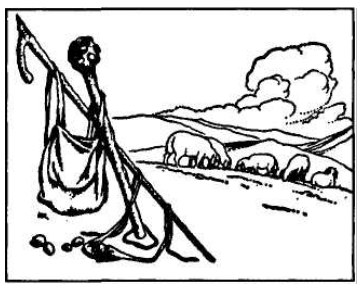
"And he said, A rod" — As a shepherd, Moses had his familiar shepherd's rod in his hand. But what power was transmitted to that rod! With it, Moses plagued Egypt (Ex. 8:5), divided the sea for Israel to pass through (ch. 14:16); and smote the rock to produce water (ch. 17:5). It was called "the rod of God" (ch. 4:20) because of what Yahweh accomplished through the rod by Moses.
VERSE 3
"And He said, Cast it on the ground" — It was to be identified with that which is "earthy," and its associated problems, in order to provide a means of redemption.
"And he cast it on the ground, and it became a serpent" — The Hebrew is nachash as in Gen. 3:1. The pharaohs wore a basilisk in the form of a serpent on their crowns as the symbol of royal and divine power. In classical legends the basilisk was said to have the power to kill by its breath or look. It, therefore, was the symbol of Egypt, and consequently to be feared.
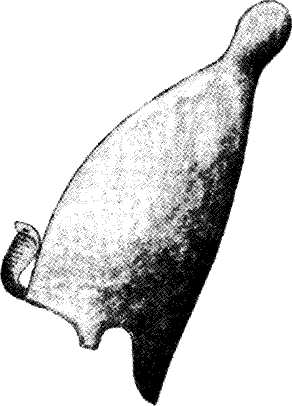
By the miraculous sign of the shepherd's rod turned into a serpent, Moses was taught that, as shepherd, he would oppose the serpent forces of Egypt through the power that Yahweh would grant him. As a type of Jesus Christ, Moses prefigured the good shepherd provided by Yahweh (Jn. 10:14), who would gain the victory over the serpent in human nature (sin and death) or nationally (see Isa. 27:1). This is the first miracle performed by man recorded in the Bible.
"And Moses fled from before it" — The serpent was to be feared, whether it represented Egypt as a nation, or sin bringing forth death, as in Num. 21:6.
VERSE 4
"And Yahweh said unto Moses, Put forth thine hand, and take it by the tail" — This was a call to faith and courage. Moses had to advance upon the serpent,
and take it by the tail. Normally a snake is grasped at the back of the head, where it can be best controlled. When taken by the tail, there is danger that it will twist back and bite. Moses had to be aware of the dangerous character of the power he was handling.
"And he put forth his hand, and caught it" — In obedience to the instruction, Moses acted immediately.
"And it became a rod in his hand" — The living serpent became a staff in the
hand of Moses, symbolising that he would ultimately have complete control over the flesh. It was only through the power of Yahweh that the serpent became a rod in the hand of Moses; and it was only because God was "in Christ reconciling the world unto Himself (2Cor. 5:19) that the Good Shepherd gained mastery over sin and death (Rom. 8:3). As the sign of the serpent rod revealed to the people that Yahweh was with Moses, so the resurrection of the Lord Jesus to eternal life demonstrated his conquest of sin and death, confirming that God was with him for the salvation of his people (Acts 17:31).
VERSE 5
"That they may believe that Yahweh God of their fathers, the God of Abraham, the God of Isaac, and the God of Jacob" — The divine Name and titles constituted the guarantee that, as God had responded to the faith of the fathers, so He would to their seed. "Abraham" signifies Father of a Multitude, and reflects the divine purpose to develop a family of faith (Rev 7:9). "Isaac" signifies Rejoicing, and speaks of the joy that comes to those who manifest the faith of his father (Rev. 7:12). "Jacob" signifies Supplanter, for the Spirit will ultimately supplant the flesh (Rev. 7:14).
"Hath appeared unto thee" — Accordingly, the sign was first displayed to Israel (vv. 30-31), and afterwards to Pharaoh (v. 21; 5:1). In similar order, Christ's power over the serpent in the flesh was first displayed to Israel and afterwards to the Gentiles (Rom. 1:16).
The Sign Of The Leprous Hand - vv. 6-8.
A second sign is now given to Moses: that of the leprous hand. Moses is told to put his hand into his bosom. He does so, and when he draws it out, it is covered with leprosy. He is told to return it to his bosom. He does so, and when he draws it out again, it is clean.
VERSE 6
"And Yahweh said furthermore unto him, Put now thine hand into thy bosom, And he put his hand into his bosom" — A hand resting upon the bosom is a sign of inactivity (see Psa. 74:11; Pro. 19:24; 26:15). If Moses refused to do the will of God, or the people delayed to respond, or Pharaoh defied the divine decree, the condition of the hand would symbolise their state before Yahweh.
"And when he took it out, behold, his hand was leprous as snow" — The word "behold" draws attention to the remarkable result.
Leprosy denotes uncleanness (Lev. 13:3). In its worst form, the whole skin becomes glossy white, dry and ulcerous. There is no hope when the leprosy appears "as snow." Thus the first part of the sign revealed the hopelessness of man caught in the grip of sin, and helpless to effect a cure; or of a nation, like Israel, enslaved to the sin power, and unable to effect deliverance.
But why place the hand in the bosom? Because the leprous hand in the bosom implies the deceitfulness of man's heart (Jer. 17:9).
VERSE 7
"And he said, Put thine hand into thy bosom again. And he put his hand into his bosom again; and plucked it out of his bosom, and, behold, it was turned again as his other flesh" — At the direction of Yahweh, the hand was healed of its leprosy. What man cannot do, Yahweh can accomplish (Rom. 8:3). He would deliver the nation from the captivity of Egypt, and heal the people from "all their diseases" (Psa. 103:3; Exo. 15:26).
The first sign revealed Yahweh's ability to save; this second sign demonstrates His ability to heal (see 2Kgs. 5:7).
VERSE 8
"And it shall come to pass, if they will not believe thee, neither hearken to the voice of the first sign, that they will believe the voice of the latter sign" — Even inanimate objects are said to have a voice. They can mutely testify to the glory of Yahweh (Psa. 19:1-3; Hab. 2:11).
The Sign Of Water Turned Into Blood - v.9.
A third sign is now given in order that "in the mouth of two or three witnesses every word shall be established." The water of the Nile is poured out upon the ground, and becomes as blood.
VERSE 9
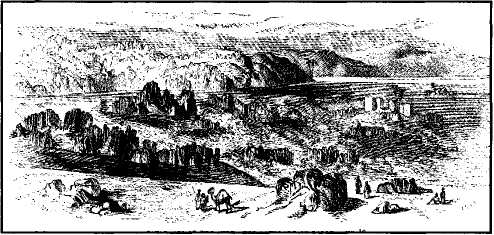
"And it shall come to pass, if they will not believe also these two signs, neither hearken unto thy voice, that thou shalt take of the water of the river" — The Hebrew ye'or is a word of Egyptian origin, and signifies a channel or canal. It is used of the Nile which was worshipped as a god, and was also a symbol of national greatness.
"And pour it upon the dry land; and the water which thou takest out of the river shall become blood upon the dry land" — The life of Egypt depended upon the water of the Nile, and therefore the latter is appropriately represented as turning into blood, for "the life is in the blood" (Lev. 17:11). When life was shed in order that people might eat or live, the blood was poured out upon the ground to indicate from whence came the life, and the Israelites dependence upon Yahweh for all things (Lev. 17:13). Moses was called upon to act similarly.
This third sign, therefore, taught that if Pharaoh failed to heed the appeal of Moses (v. 21), or if the people rejected the message of redemption that he would proclaim, their blood would be shed.
(2) VISITATION RESISTED Chapters 4:10 to 5:23
Though Moses is given a divine commission fortified with outstanding signs as a seal of its authenticity, he is still reluctant to visit the people. Their previous resistance to his attempt to help them, plus forty years of isolation from the land have left their mark, so that he now feels completely inadequate to the task.
He pleads inability to speak fluently. When that is set aside, he prays that Yahweh sends instead the One whom He has promised to send, even the Messiah.
Moses' resistance arouses the anger of Yahweh. He appoints Aaron as spokesman for Moses, and then orders him to return to Egypt and visit the people. But even now, Moses is not yet ready for the part assigned him. He has neglected to circumcise his youngest son, and this must be rectified before he attempts to ucircumcise" the nation. His return to Egypt is therefore delayed, and his wife and family are placed in the care of Jethro. The two brothers confer together regarding the divine commission, and returning to Egypt, call the elders of Israel together to hear the proposition of Yahweh. The people accept it and worship. The two brothers then request an interview with Pharaoh. This is granted, but their reasonable request on behalf of the people for leave of absence to withdraw into the wilderness to worship Yahweh, is contemptuously refused.
Pharaoh harshly and unreasonably orders that the peoples' burdens be increased. Finding that the intercession of Moses has only added to their workload and sorrow, the children of Israel turn upon him in anger. Frustrated by the seeming hopelessness of the situation, Moses turns to Yahweh with a word of complaint, seeking to know the reason for the resistance to a visitation that is divinely designed.
Moses' Reluctance To Return — vv.10-13.
Ordered by the angel of Yahweh to return and visit the children of Israel, Moses resists the command on the grounds that he is not eloquent of speech, and therefore Yahweh should send the promised Messiah, to redeem the people.
VERSE 10
"And Moses said unto Yahweh, Ο my Lord" — According to CD. Ginsburg's comments on The Massorah (Jewish exposition on the ancient Hebrew text), this is one of the 134 passages where the Sopherim (an organisation of Jews after the return from Babylon whose work was to carefully revise the text of Scripture and set it in order) altered Yahweh to Adonai. It is suggested, therefore, that Moses' address should read, "O Yahweh," and not "O Adonai" (see The Companion Bible).
"I am not eloquent, neither heretofore, nor since thou hast spoken unto thy servant" — Literally, as in the margin, "I am not a man of words." Thus, 'Words do not come readily to my tongue; I have never been a fluent speaker, neither yesterday (of recent times) nor since the third day (i.e. previously — see mg). Nor do I find myself suddenly speaking freely, by divine inspiration, since Thou spake with me.'
Moses' lack of ability to speak eloquently, or freely, was a constant, though unnecessary, source of embarrassment to him (see Ex. 6:12). His objection to perform the duty given him by Yahweh on that account, was effectively set aside by Yahweh's rebuke of v. 11. It could have been that Moses suffered from an impediment of speech, even though Stephen claimed that he was "mighty in words" (Acts 7:22). A man can be "mighty in words" though hesitant in speech. Paul's critics said of him that "his speech is contemptible" (2Cor. 10:10), but God said to him: "My grace is sufficient for thee; for strength is made perfect in weakness" (2Cor. 12:9). When a man of faith attempts to accomplish something for God beyond his normal ability, it is evident that he is motivated by something greater than flesh, and Yahweh can be glorified in his work.
"I am slow of speech, and of a slow tongue" — The Hebrew indicates "heavy" of speech and of tongue. Moses may have had an actual impediment in his speech, but if so, it did not necessarily have to impair the effectiveness of the labor set him. The very silence of a man of God can be eloquent (see Eze. 3:26-27; Jn. 19:9-10).
VERSE 11
"And Yahweh said unto him, Who hath made man's mouth?" — Moses was reminded that he is not expected to visit the people in his own strength, wisdom, or ability, but in complete reliance upon Yahweh. The apostles, being granted the Holy Spirit, were given the same instructions (Luke 21:15). Even the Lord was not to rely upon worldly wisdom, but was given a commandment, "what he should say, and what he should speak" (John 12:49; 7:16). In Christ, a person is commended if he is "swift to hear, slow to speak" (James 1:19).
"Or who maketh the dumb, or deaf, or the seeing, or the blind? have not I Yahweh? — The verb "maketh" is siym in Hebrew, and signifies "to put, to appoint" as well as "to make." The greatest lesson for all to learn is that even extremely difficult things are not impossible with God. He made the faculties, and can also use them. If a man has a natural gift, let him use it to the glory of the Giver that "God in all things may be glorified" (1 Pet. 4:10-11).
VERSE 12
"Now therefore go, and I will be with thy mouth, and teach thee what thou shalt say" — Moses was thus taught a lesson that other men of God had to learn, namely that the words they use in His service and the effectiveness of what they proclaim and do is dependent upon His blessing. See Isa. 50:5; Jer. 1:9; Mark 13:11. The verb "I will be" is ehyeh, the root verb of the divine Name. Yahweh thus promised Moses that He would manifest Himself in the effectiveness of what he would proclaim, as well as in the message itself — both in his mouth and his teaching.
VERSE 13
"And he said, Ο my Lord" — As in v. 10, the Sopherim have changed the Name from Yahweh to Adonai. Why should they have done so? Perhaps to express the fact that Moses was actually speaking to an angel, Yahweh's representative or similitude (Num. 12:8), and not to the Father personally. However, the angel acts with the authority of the Deity, and in His Name (Exo. 23:21).
"Send, I pray thee, by the hand of him whom Thou wilt send" — The number of words in this statement that are expressed in italics in the AV indicates some uncertainty as to the meaning of the original text. The margin adds to this uncertainty by providing a further suggestion, "Send by the hand of him whom Thou shouldest send." The Hebrew shelach na beyad tishlach signifies "send now by the hand Thou wilt send." The statement is an appeal to Yahweh to send immediately the promised Seed of the woman.
The name of Yahweh, He Who Will Be, is prophetic of the divine intention to send a saviour to redeem His people. Having heard that Name pronounced, and being reluctant himself to return to Egypt, Moses prays that Yahweh will send the One whom He promised He "will send." He therefore attempted to avoid his own responsibility by requesting an alteration of the divine purpose in the immediate appearance of the one promised. However, Yahweh had provided a set time for the first advent of the Lord (Gal. 4:4), as there is for his second coming, and would not change that determination.
Aaron Appointed As Spokesman - vv.14-17.
Moses' reluctance arouses Yahweh's anger. He appoints Aaron to share the leadership with his brother, though Moses is still to retain the pre-eminence. These arrangements are apparently accepted by Moses as being adequate, for he makes no further objection to the mission set before him.
VERSE 14
"And the anger of Yahweh was kindled against Moses" — The words anger and angry are found 258 times in the O.T. and 16 in the N.T. Over 200 of these passages refer to God being angry at men. It is not God's nature to be angry without just cause. He is by nature 'slow to anger' (Neh. 9:17; Psa. 103:9; 145:8), and His anger lasts but for a moment (Psa. 30:5; 103:9). Under certain circumstances, therefore, anger is a divine characteristic. The Lord Jesus manifested it when conditions warranted (Mark 3:5).
However, the anger of the Father and that of the Son was controlled; that of the mortals is not always so, and therefore can lead to sin. Paul exhorted: "Be ye angry and sin not, let not the sun go down upon your wrath" (Eph. 4:26).
In regard to Moses, the context of the verse before us suggests that Yahweh's anger was kindled against him because of the excuse advanced in v. 10, and not because of any lack of ability on Moses' part, nor because of his appeal for the coming of the One promised (v. 13), for in providing Aaron, the angel declared: "I know that he can speak well." Meanwhile, Moses' petition for the coming of the Promised One still stands, and with the coming of the Lord Jesus will be completely answered.
"And He said, Is not Aaron the Levite thy brother?" — This is the first mention of Aaron in the Bible. The The English and Hebrew Bible Students' Concordance gives the meaning of his name as A Shining Light, or Enlightened, though this is uncertain.
Both Moses and Aaron typed the Lord Jesus Christ: the former as shepherd-leader, the latter as high priest. There is obvious reference to his future priestly office (even though he was not appointed to this position) in the title given him: Aaron the Levite. It also suggests a contrast to the Melchizedek order of priesthood to be set up by Messiah at his coming. Thus, instead of the coming of the antitypical Melchizedek Priest for whom Moses had prayed, Israel would be given the Aaronic priesthood. In regard to the general organisation of the nation, it has been well said that among the mature males of Israel there were three classes presented before God: from the tribes of Israel came the warriors; from the tribe of Levi came the workers; and from the family of Aaron there came the worshippers.
"I know that he can speak well" — The literal Hebrew is emphatic: "speaking he can speak," that is, he is remarkably fluent in speech.
"And, also, behold, he cometh forth to meet thee" — Aaron had been instructed to meet Moses (v. 27). Many years later, in the days of Samuel, the message of God came to Eli: "Thus Yahweh has said, I revealed Myself to the house of your father when they were in Egypt subject to the house of Pharaoh. And I chose him out of all the tribes to be My priest..." (ISam. 2:27-28, RSV). Evidently, about this time, in some way, Yahweh revealed Himself to Aaron, and sent him on a mission out of Egypt to seek his brother.
"And when he seeth thee, he will be glad in his heart" — After an absence of forty years, the knowledge that his illustrious brother was alive would rejoice the heart of Aaron.
But what message did he convey to Moses? Perhaps advice that the Pharaoh who had sought his life was dead. If so, there was a foreshadowing of Christ's experience as a babe; for when he was in Egypt the message came to Joseph that the one who sought the life of the child in his care was dead (Mat. 2:20).
Meanwhile, Israel, in dire extremity in Egypt, needed the presence of the one whom the people had despised forty years earlier, so an urgent appeal went forth for him to return.
VERSE 15
"And thou shalt speak unto him, and put words in his mouth" — Moses was to instruct Aaron in what he should say, and Aaron was to express it in appropriate speech.
"And I will be with thy mouth, and with his mouth" — As in v. 12, the verb "I will be," is ehyeh, the root of the divine name of Yahweh. In promising to be with Moses in the manner described in this verse, Yahweh defined the work of inspiration. He put words in the mouths of the prophets, endorsing their utterances, though leaving it to them to express them according to their own manner. The prophets were spokesmen for Yahweh, guided by His spirit to utter words to instruct the people (Neh. 9:20).
In the case of Moses and Aaron, the more powerful and direct form of inspiration was to the former, whilst lesser measure was given to the latter. In this there seems a foreshadowing of the work of the Spirit with the Lord Jesus and his apostles. The Lord had the Spirit without measure (John 3:34), whereas it was given unto them in measure. Nevertheless, Yahweh was with the mouths of both. Christ declared: "The Father gave me a commandment, what I should say, and what I should speak" (John 12:49; Deu. 18:18); and the apostles were taught, "I [Christ] will give you a mouth and wisdom, which all your adversaries shall not be able to gainsay nor resist" (Luke 21:15).
"And will teach you what ye shall do" — Thus foreshadowing the work of Christ in instructing the apostles.
"And he shall be thy spokesman unto the people: and he shall be, even he shall be to thee instead of a mouth" — See Ex. 7:1-2.
"And thou shalt be to him instead of God" — Moses was to retain his position as mediator and prophet. As such, he stood in the place of the Elohim to Aaron. His words would be words of God (see Ex. 7:1). Divine inspiration conferred an authority upon those who so spoke, so that they were to be accepted as God's representatives to the nation. See Psa. 82:6; John 10:34-35.
VERSE 17
"And thou shalt take thine hand this rod in, wherewith thou shalt do signs" — The shepherd rod was to become the insignia of his office. He was to return as shepherd to lead the people out of Egypt, guiding them to the land of promise. This types the work of the Lord Jesus at both advents (Deu. 18:18; Jn. 10:11; Eze. 34:23-24). For the power manifested through the rod, see notes on v. 2.
This rod is also called "the rod of God" (v. 20), for Yahweh also is a Shepherd to Israel (Psa. 80:1). To take that rod in hand was to fully surrender unto Yahweh as to a Chief Shepherd (Psa. 23:4). At the same time it also would make evident His presence among them (v. 5) and the avenue through which His divine power would be demonstrated (v. 17).
Moses Commences His Return - vv. 18-23.
Obtaining the approval of Jethro, Moses commences his return to Egypt. He receives further instructions and assurances from Yahweh as he sets forth upon his mission.
VERSE 18
"And Moses went and returned to Jethro his father in law" — See note Ex. 3:1.
"And said unto him, Let me go, I pray thee, and return unto my brethren which are in Egypt, and see whether they be yet alive. And Jethro said to Moses, Go in peace" — Prudently, Moses refrained from disclosing his true mission. If it became known, Pharaoh would have been put on his guard, and might have moved to destroy Moses before his work commenced. Silence is sometimes a valuable aid to a successful mission (cp. Neh. 2:16).
VERSE 19
"And Yahweh said unto Moses in Midian, Go, return into Egypt" —
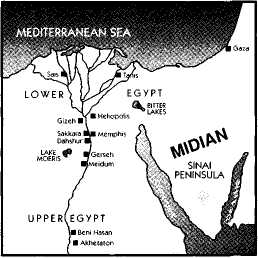
Midian was north of Sinai. Evidently Moses had returned to that area, to await a further call of Yahweh. He then proceeded to the mount to meet Aaron; thus this second commission revealed that the time was ripe for him to leave: information which had not previously been given him.
"For all the men are dead which sought thy life" — This statement indicates that the Pharaoh of the oppression must have reigned for over forty years, the period of Moses' absence in Midian. It confirms the identity of Rameses π as the Pharaoh, for, of the rulers of the period, only he continued for that long. See similar comments in Mat. 2:20 in regard to the family of Jesus, who waited in a foreign land until advised of the death of Herod.
VERSE 20
"And Moses took his wife and his sons, and set them upon an ass" — The
Hebrew is ha-chamor, "the ass." The ass was the only unclean animal whose firstborn was redeemed. It was redeemed through the death of a lamb (Ex. 13:13) — a remarkable symbol of the redemption of Israel. Moses rode upon an ass: the Lord rode upon a colt and led the ass into the city of Jerusalem. In the type, the ass represents the Israel of old; the colt, the new Israel of God brought into being through the preaching of the gospel to Jew and Gentile. Moses rode upon the first into Egypt; Christ rode upon the colt and led the ass into Jerusalem — a remarkable type of the work of both of these great men of God. As to Moses' sons at the time, Gershom has already been mentioned in Ex. 2:22, and Eliezer (ch. 18:4) was probably but an infant.
"And he returned to the land of Egypt" — The Hebrew shuwb, here rendered "returned," signifies merely to "turn back," and not necessarily to complete the journey. It could be rendered "set out to return." His journey back was delayed by the intervention of the angel referred to later in this chapter.
"And Moses took the rod of God in his hand" — His normal shepherd's rod is now referred to as the "rod of God" because it was a medium of outstanding miracles (vv. 2-4, 17, 20; 7:9, 20; 8:5, 16-17; 9:23; 10:13; 14:16; 17:5-9; Num. 20:11).
VERSE 21
"And Yahweh said unto Moses, When thou goest to return into Egypt, see that thou do all these wonders before Pharaoh, which I have put in thine hand" — The miracles wrought in Egypt, are called mophethim: "portents" (here rendered "wonders"), othoth: "signs" (cp. Ex. 4:9,17 etc.), and niphe-loth: "marvels" (rendered "wonders" in Ex. 3:20; 15:11). Mophethim signifies something out of the ordinary course of nature, and corresponds in the NT to the Greek teras, "wonders," such as in Acts 2:22,43, etc.
It is a different word from that used in Ex. 3:20 where "All those wonders" include, not only the three signs of Ex. 4:3-9, but the whole series of miracles afterwards wrought in Egypt, referred to in ch. 3:20. Outstanding wonders, outside the ordinary course of nature were performed subsequently by Moses, indicating that he was the medium of a power greater than man's.
"But I will harden his heart, that he shall not let the people go" — This is the first reference to the hardness of Pharaoh's heart, a theme upon which Paul discourses in Romans 9.
Some foolishly claim that Yahweh deliberately and unreasonably hardened Pharaoh's heart in such a way as to be Himself responsible for the king's actions, unrighteously condemning the monarch for that which He made him do.
That was not the case. Yahweh hardened Pharaoh's heart by manifesting clemency toward him, in the circumstances which were brought about. As the sun melts the wax but hardens the clay, so Pharaoh revealed that he had a heart of clay that became hardened by the heat of the Sun of Righteousness (Mai. 4:2). Thus, Pharaoh, being a very stubborn man, hardened his heart when Yahweh, in clemency, withdrew the plagues inflicted on the land. The plagues softened the heart of the king through fear, but it became hardened when they were withdrawn. Thus the Scriptures declare that Pharaoh hardened his own heart by being unreceptive to the divine mercy.
The word "hardened" in this place is the Hebrew chazaq, which means "to strengthen, prevail, become strong; thus harden, and is found in Ex. 4:21; 7:13, 22; 8:19; 9:12, 35; 10:20,27; 11:10; 14:4,8, 17. Two other words translated "hardened" are qashah, (meaning "to be dense, i.e., tough, severe, hard, cruel," found in Ex. 7:3; 13:15), and kabed ("to be heavy, i.e., difficult, burdensome, severe, stupid," found in Ex. 7:14; 8:15, 32; 9:7,34; 10:1; 1Sam. 6:6).
The first word suggests that Pharaoh was encouraged to resist once the immediate danger had passed; the second word shows that he was by character stubborn, dense, hard and cruel; the third word reveals that his very stupidity caused him so to act. Yahweh "hardened his heart" only by manipulating circumstances that caused Pharaoh to react as he did because of his natural characteristics. In the verse before us, Yahweh declares that He would "harden" Pharaoh's heart, and the word chazad is used to signify that Pharaoh would be emboldened to resist by the danger being withdrawn.
Upon this important point, Brother Thomas comments in Elpis Israel (p. 267):
"Pharaoh of Egypt is another illustration of this principle [i.e. that nothing is left to the will of man]. God purposed to show forth His power that His name might be declared throughout all the earth. This manifestation was not left to the wisdom or pleasure of Moses. The display was to be according to the divine will. The world was overspread with ignorance and superstition; and Pharaoh was the autocrat of the age. He was totally ignorant of who the Lord was, and therefore refused to obey Him. He was 'a vessel unto dishonour:' an idolater under the dominion of the propensities. Had he been left to himself, he would have continued like all other chiefs of the sin-power, 'a vessel of wrath fitted for destruction.' His tyranny had come to this crisis, namely, either the Israelites must be exterminated, or the oppressor and his power must be destroyed. The judgment in the case belonged to the God of Abraham, of Isaac, and of Jacob; the result could not, therefore, be for a moment doubtful. He that has power over the clay, had appointed Israel to be 'a vessel unto honour,' upon whom it was His sovereign pleasure to have mercy. They were, therefore, 'vessels fitted for mercy,' whom He had before prepared, that on them He might make known the riches of His glory, both then and in a time to come. To effect their deliverance then; to punish Pharaoh and his abettors for their tyranny; and to make Himself known to the surrounding nations, He stirred up the Egyptian king to show all that was in his obdurate and relentless nature. Upon this view of the case, He elected Pharaoh and his host to a terrible overthrow; while He elected Israel to become His people in the land of Canaan. Thus 'He had mercy on whom He would have mercy, and whom He would He hardened' (Rom. 9:14-33)."
However, it should be recognised, that in acting upon this principle, Yahweh did not do so arbitrarily, but on the basis of His foreknowledge. He knew that, in spite of all their faults, Israel would constitute the best medium of the manifestation of His mercy to the world, and acted upon the basis of that knowledge. Pharaoh's obstinate refusal to act according to the request of Yahweh, brought prominently before mankind the demonstration of God's purpose with Israel, and resulted in others beside Israelites being saved. It attracted a "mixed multitude" who left Egypt when Israel departed (the faithful Caleb possibly being among this "mixed multitude"). These circumstances were an essential part in the conversion of Rahab and her family (Josh. 2:9-14), through whom came David and the Lord Jesus Christ (Mat. 1:5).
Thus Pharaoh's obduracy performed a useful part in the plan of salvation, that reaches down to our own times.
VERSE 22
"And thou shalt say unto Pharaoh, Thus saith Yahweh, Israel is My son, even My firstborn" — Israel enjoyed a special relationship to Yahweh, being not merely His national son, but His firstborn.
Thus when God told Abraham that He had constituted him a father of many nations, He spoke of many national sons; for a father implies sons. But who of this family of national sons is the firstborn son? Scripture declares that it is Israel (see Elpis Israel, p. 291).
Other national "sons" will be incorporated into the family of God at the return of Christ (see comments on Gen. 17:5).
Meanwhile, as Israel is constituted firstborn, which position included priestly responsibilities for the family, the channel of approach to Yahweh is through the hope of Israel (Acts 28:20; Eph. 2:11-12). In his preaching of the gospel, Paul taught that the "adoption" (or sonship as the word really signifies, indicating authority and maturity) still "pertains to Israel" (Rom. 9:4; Hos. 11:1; Jer. 31:9). Because of that fact, the Lord declared "salvation is of the Jews" (John 4:22).
VERSE 23
"And I say unto thee, Let My son go, that he may serve Me" — There would be nothing unreasonable, nor confusing by Pharaoh on making this demand in the name of Yahweh, the God of Israel. The king would be familiar with the claim that a God can have a son, for the Pharaoh was considered as a son of the gods, and therefore, divine. However, the question remained as to who is more powerful: Yahweh, or the gods of Egypt?
"And if thou refuse to let him go, behold, I will slay thy son, even thy firstborn" — For the fulfilment of the threat, see Exodus 12:29. Moses did not utter it until all other arguments were exhausted, and he knew that he was having his last interview with the king (Ex. 10:29; 11:4-5).
In delaying his threat, and in all his dealings with Pharaoh, Moses carried out the special directions that he received from Yahweh after his return to Egypt. He was in constant communion with God (see Ex. 6:10; 7:8, 14, 19; 8:1, 5, 16, 20 etc.). Only the carrying out of the threat that alone caused Pharaoh to finally renege, and permit Israel to leave.
The Rite Of Circumcision Reconfirmed — vv. 24-26.
In preparation for the mission before him, Moses is disciplined and taught that Yahweh requires obedience of all that He requests. Though he obeys God, returning to Egypt, there is one serious matter of failure: he has omitted to circumcise his younger son. This dereliction of duty threatens the success of his mission. Moses is forcibly shown that whatever Yahweh commands must be properly carried out.
VERSE 24
"And it came to pass by the way in the inn" — This has been rendered: "On the way he tarried in a lodging place." Though we are not told why Moses tarried, it does suggest that he was still unsure of himself in regard to his mission. Perhaps the realisation of his neglect to circumcise his son contributed to this.
"That Yahweh met him, and sought to kill him" — To kill whom? The son of Moses who had not been circumcised, and who was therefore under the sentence of death. Yahweh had warned Abraham of the consequences of such neglect: "The uncircumcised man child whose flesh of his foreskin is not circumcised, that soul shall be cut off from his people; he hath broken My covenant" (Gen. 17:14). Moses was engaged in a mission that would result in the national circumcision of Egypt; how incongruous to do so when he had neglected to carry out the requirement of Yahweh in regard to his own family! The threat to his son revealed that he must scrupulously carry out every requirement of Yahweh if his mission is to succeed.
VERSE 25
"Then Zipporah took a sharp stone, and cut off the foreskin" — For earlier reference to Zipporah, the wife of Moses, see note on Ex. 2:21. The fact that she took the lead in circumcising her son, suggests that she considered herself partly responsible for the neglect.
But why should such a man as Moses permit her action? Possibly there was no real attempt to avoid the rite, for it may have been that Jethro and Zipporah had prevailed upon Moses to delay performing it until the son was thirteen years old in accordance with the Arab custom (Gen. 17:25). Be that as it may, Moses now had a graphic demonstration that if Yahweh's national firstborn was not freed, he would carry out His Word to slay the firstborn of Egypt.
For the important significance of the rite of circumcision, see comments on Gen. 17. In neglecting to circumcise his son, Moses exposed him to the risk of being cut off in death. Yahweh's insistence upon the rite also taught that His son, then in Egypt, must be nationally "circumcised" by entering into covenant with Him at Sinai: a covenant that demanded the denial, or cutting off, of flesh.
The Messianic Psalm 118:10 shows that there will ultimately be a national circumcision: "All nations compassed me about; but in the name of Yahweh surely I will make them be circumcised" (see Rotherham).
The "sharp stone" was evidently a stone knife such as was commonly used in Egypt for making the incisions necessary when bodies were embalmed. Joshua ordered the preparation of stone knives for the circumcision of those born in the wilderness (Josh. 5:2). Stone was considered less defiling than iron or steel (Ex. 20:25).
"Of her son" — Evidently the younger son of Moses (cp. v. 20 with v. 25) whose name was Eliezer, God is My Help.
"And cast it at his feet" — This should be rendered: "made it to touch his feet" (see Hebrew as in the margin). In so doing, Zipporah linked Moses with her action: she performed the rite because of him.
"And said, Surely a bloody husband art thou to me" — The RV renders this: "a bridegroom of blood." Having become aware of the danger to her son through her own neglect, Zipporah performed the rite herself. She now believed herself allied to Yahweh through the covenant of circumcision (Gen. 17:11). To her, Moses now took on a new relationship. He became a bridegroom of blood, through the blood of the covenant. She now considered herself united to him in the bonds of the covenant as well as those of matrimony.
By circumcision of this son, Zipporah was brought into covenant-relationship with her husband and with Yahweh: a foreshadowing of the effect of the "cutting off of the Lord Jesus by which a believer is brought into association with the Lord and Yahweh.
In Arabic, the word for circumcision is a synonym for that of marriage.
VERSE 26
"So he let him go" — This is a reference to the "angel of Yahweh" who had belligerently opposed the progress of Moses and Zipporah. The Septuagint renders v. 24 as "The angel of the Lord met him."
"Then she said, A bloody husband thou art, because of the circumcision" — The RV renders: "a bridegroom of blood art thou." Zipporah recognised that she was more closely united to her husband through the bonds of the covenant she now fully endorsed, than formerly when only through marriage.
Moses And Aaron Meet — vv. 27-28.
Moses returns his family to the care of Jethro until he will send for them (Ex. 18:2). Meanwhile Aaron makes his way into the wilderness and meets Moses. The two brothers confer in regard to the mission before them, thus establishing complete mutual confidence for the work appointed for each of them to do.
VERSE 27
"And Yahweh said to Aaron, Go into the wilderness to meet Moses"— Aaron would have been told more than this, but Yahweh's instruction is here merely summarised.
"And he went, and met him in the mount of God" — "The mount of God" is a title given to Horeb, as distinct from that given to Sinai. The two mountains are separated by a distance of about five kilometres (3 mis) on a plateau. Scripture is careful to specify the particular use that Yahweh made of each site.
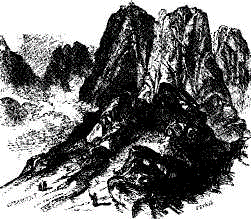
"And kissed him" — An act of affection indicating the great pleasure experienced at the meeting. Eastern men are more demonstrative than those in Western communities. The kiss is the common form of greeting among Arabs to this day.
VERSE 28
"And Moses told Aaron all the words of Yahweh who had sent him" — Aaron was carefully instructed in all that Yahweh intended to do, and thus was better equipped to assist his brother, whom he recognised as one appointed and sent of God, as was the Lord Jesus (see John 3:2; Heb. 3:1).
"And all the signs which He had commanded him" — The signs authenticated the words and gave them added power.
The People Are Convinced — vv. 29-31.
Back in Egypt, the brothers report the intentions of Yahweh to the people. The signs Moses performs convince them that Yahweh had revealed Himself to him. The oppressed Hebrews are filled with joy to learn that their prayers to heaven have been heard, and, in anticipation of their early deliverance, they worship Yahweh in gratitude and thanksgiving.
VERSE 29
"And Moses and Aaron went and gathered together all the elders of the children of Israel" — Though the children of Israel were in bondage to the Egyptians, they had their own internal organisation that maintained their sepa-rateness as a group from the powerful nation in which they dwelt. Now, Moses and Aaron gather the appointed elders of the nation together as instructed by Yahweh (Ex. 3:16).
VERSE 30
"And Aaron spake all the words which Yahweh had spoken unto Moses, and did the signs in the sight of the people" — The power of performing these miraculous signs was thus conferred on Aaron as well, demonstrating that Yahweh approved the delegation of duties to him.
The fact that these "signs" were performed in the "sight of the people," shows that two meetings were called: first, one for the elders to whom the mission of the two brethren was disclosed; second, a meeting for the people generally, to show them the signs authenticating the position of Aaron and Moses as men "sent of God."
VERSE 31
"And the people believed" — Humbled by reverses, and humiliated by slavery, the people were more ready to accept the teaching of Yahweh.
"And when they heard that Yahweh had visited the children of Israel" — This is a key verse in this section of Exodus (see the introductory Analysis, p. 23). It links with the statement of ch. 3:16 ("I have surely visited you") and that of Acts 15:14 ("God did visit the Gentiles to take out of them a people for His name").
According to Gesenius the Hebrew term paqad, implies more than merely to visit, and includes the idea of visiting in order to enquire into the state of a person, with the idea of punishing or helping. A cognate word is translated: The Day of Visitation, and is related to those times when Yahweh gave close inspection to His people to ascertain what should be done in regard to them (see Isa. 10:3; Jer. 8:12; 10:15; 11:23; Luke 19:44, etc.).
"And that He had looked upon their affliction" — This additional clause gives added point and emphasis to the significance of the word paqad.
"Then they bowed their heads and worshipped" — In their joy that Yahweh had heeded their prayer for help, they humbled themselves before Him.
The word "bowed" is qadad and signifies "to shrivel up." The Jewish custom was to bend the body so that every joint of the backbone became incurvated, and the head was bent towards the knees in such a way that the body resembled a bow.
By so doing, the people felt in every part of the body the feelings they tried to express in prayer. They did not try to "stand comfortably" whilst engaged in such worship.
A similar expression is used in Gen. 24:26 which records the gratitude of Eliezer toward God for the success of his mission in obtaining a bride for Isaac.
Comments