CHAPTER FOURTEEN CROSSING THE RED SEA
The exact spot where the crossing of the Israelites took place cannot be established with certainty. What is sure, however, is that the sea in that place constituted a sufficient barrier to prevent them crossing, being deep enough to destroy the Egyptians who attempted to do so. When the Israelites had left, Pharaoh began to regret releasing his slaves. Once again his innate stubbornness gains the ascendancy, and he despatches a chosen chariot guard as well as all the chariots of Egypt, to attack the Israelites and to bring them again into captivity. With their escape cut off, the people are in mortal fear and turn on Moses with bitter criticism. Appealing to Yahweh, Moses is instructed to "stand still" and await the salvation that would come. The rod is outstretched, the sea opens, Israel is saved, whilst the pillar of fire guards their rear and forms a barrier between them and the Egyptians. When the barrier is lifted, and the Egyptians attempt to follow, they are destroyed. Tremendous lessons were learned by the Israelites that day. The believer can learn also, that he cannot go ahead in the strength of God until he has learned to stand still in his own helplessness. Then, when God moves, that which becomes the means of salvation to those who believe, often turns out to be the means of destruction to those who resist His will.
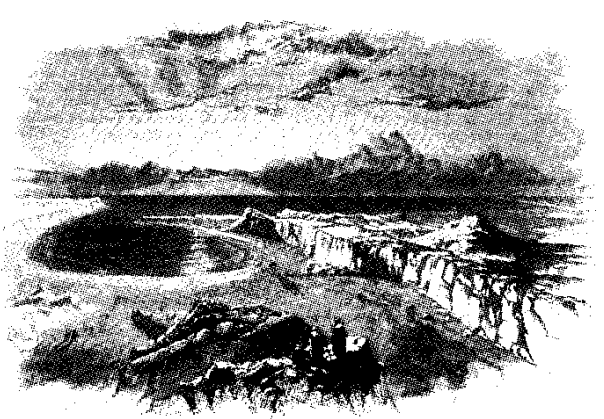
The Journey To Pi-hahiroth — vv. 1-4. ' .
The Israelites are led to the place of crossing, and Moses is warned that Pharaoh, regretting his release of the slaves, will attempt to again bring them into bondage.
VERSE 1
"And Yahweh spake unto Moses, saying" — An authoritative statement, often repeated. Cp. Num. 33:2.
VERSE 2
"Speak unto the children of Israel, that they turn" — In attempting to establish the locality of the crossing, attention has been drawn to the word "turn," and it is claimed that this denotes that the Israelites were commanded to turn back. The RSV supports this by rendering the word as "turn back," and from this, some assume that the Hebrews turned back towards the Mediterranean, and they locate the site of the crossing in that direction. But the Hebrew word merely means to turn, and not necessarily back. Indeed, the Septuagint has the Greek apostrepho in this place, which signifies "turn away," and not anastrepho which it would require to indicate "turn back." It would be rather useless, and indicative of lack of wisdom, to cause the nation to retrace its steps, as though Yahweh could not anticipate the moves of Pharaoh, and was governed by his whims.
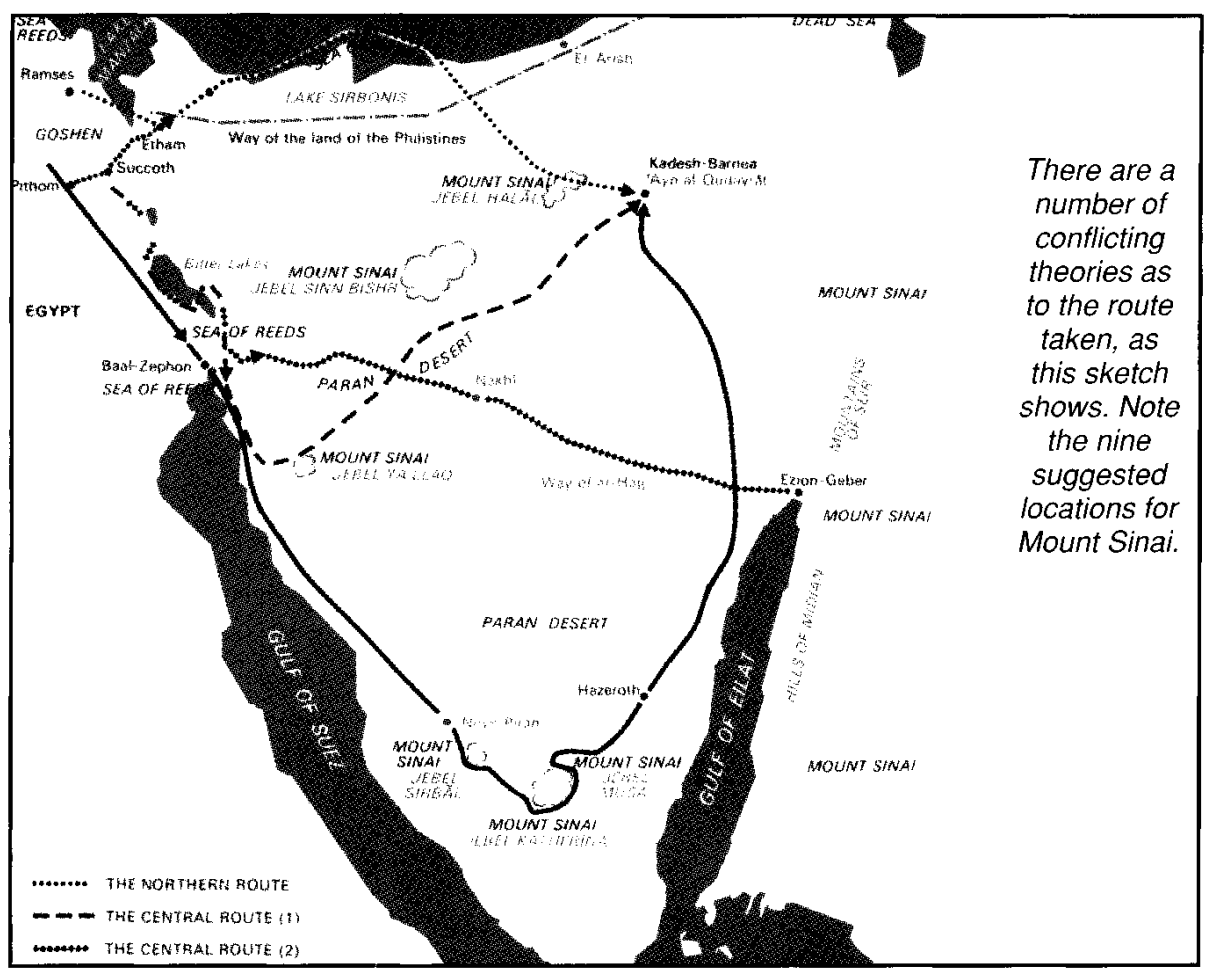
Others locate the site of the crossing near Suez, where, prior to the construction of the Canal, the water was so shallow at ebb-tide that Arabs on camels could wade across it without difficulty. By selecting such a site for the crossing, these commentators attempt to remove the fact of the miracle that occurred. However, the very terms of the narrative demand a miracle of stupendous and supernatural proportions.
"And encamp before Pi-hahiroth" — The site of this place cannot be established with certainty. According to A. Pick, the name signifies: The passage through the mountains, and according to J. Strong, The mouth of the gorges. This would suggest a mountainous area with a pass leading to the sea. It is important to remember this whilst trying to identify the route of the children of Israel.
In Archaeology of the New Testament, M.F. Unger writes: "In tracing this itinerary on the map it is important first to observe that the translation of the Hebrew name Yam Suph by 'Red Sea' is plainly incorrect, for the word obviously means 'Reed' or 'Marsh Sea.' That this can scarcely denote the Red Sea or even its northwestern arm (the Gulf of Suez) is indicated by the fact that there are no reeds in the Red Sea and that the body of water they actually crossed formed a natural barrier between Egypt and the Sinai Wilderness, whereas the Israelites would have had to traverse a long expanse of desert to get to the Red Sea or its arm, the Gulf of Suez. On the contrary, however, the account unquestionably implies the proximity of the Reed Sea to Succoth, modern Tell el-Mashkutah some thirty-two miles south-eastward of their starting point from Rameses (Exo. 12:37)."
However, see our comments upon the Red Sea at Ex. 10:19. We point out also, that the Greek New Testament has "Red Sea" and not "Reed Sea." Moreover, when Israel was turned back from Kadesh Barnea, and was condemned to wander for thirty-eight years in the wilderness, they were told to return into the wilderness, "by way of the Red Sea (Yam Suph)." These wanderings brought them to Eziongeber at the top of the Gulf of Eilat (Num. 33:36). Obviously this arm of the Red Sea was given the title of Yam Suph, showing that it cannot be limited to the reedy lakes north of Suez as stated by Unger above. Certainly the very terms in which the miracle of the Crossing is described in Scripture suggest something more dramatic than the fording of comparatively shallow waters caused by driving wind or ebbing tide, as suggested by some.
The Crossing demands an area of water sufficiently deep enough to "baptise" the Israelites (ICor. 10:1), whilst drowning the Egyptians and their horses. This means that at some stage, and for considerable distance, the wall of water on either side must have been higher than the tallest person: for otherwise the term baptism would not apply, and it would be difficult for a person to drown with his head above water!
Moreover, the stretch of water must be wide enough to baptise all the Israelites at once, and then, to destroy the Egyptians as a group. There were six hundred chariots at least, and all were overwhelmed together. A stretch of deep water extending for some kilometres is required for both the national baptism of the Israelites, and the wholesale destruction of the Egyptians.
The Crossing was a miracle that cannot be explained in the terms of natural phenomena. As one writer has remarked: "It is evident that if the grand results were caused by the fortunate and conjunct action of wind and tide, then, as such a combination may have happened often both before and since, the alleged miracle turns out rather a poor and commonplace affair. The glorious Song of Moses, too, 'with its waters standing upright as an heap,' its depths congealed in the 'heart of the sea,' is, in the light of this theory (to say it mildly), an exaggeration, which no plea of poetic licence can excuse or explain. And when we remember the language of the Psalms, that the Red Sea was rebuked, 'dried up,' 'that He turned the sea into dry land,' that they went through the flood on foot,' are we to put down all this as little more than a grand flight of poetry?"
The same writer, G. Sandie in Horeb And Jerusalem (published 1866) describes how he visited Egypt to ascertain among other things, the site of the crossing. He wrote: "We have the four boundaries of the encampment on the plain marked for us, and the minuteness of the description should help us to decide where it really was. The names of ancient Scripture localities are often found to linger with little change to the present day. And such seems to be the case with Pi-hahiroth and Migdol. Hahiroth corresponds to the modern Ajroud, and Migdol to Muktala; and since the names have thus continued, we may believe that in ancient times they are large and well-known districts: Migdol was the west, and the sea the east boundary; Pi-hahiroth the north, and Baal-Zephon the south. The question now is, Can we determine this last or southern boundary? It has been sought for in the plain near Suez, but it has not been found. No trace of the name has been hitherto discovered..."
The writer shows that the title Baal implies a high place or a mountain, as in the case of Baal-peor, and therefore we should look for a mountainous region, and not fix upon a plain adjacent to Suez or the reed lakes north thereof. Josephus also describes the area as mountainous. He writes: "They were shut up between the mountains and the sea — mountains that terminated at the sea, which were impassable by reason of their roughness, and obstructed their flight."
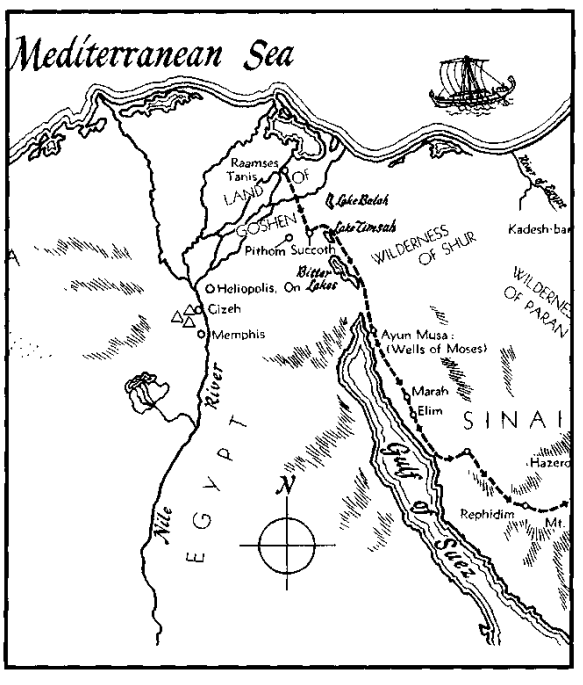
All the requirements of the narrative are supplied some 25kms (15mls) southwards of Suez, at a place called Ras Attakah. G. Sandie wrote: "Words will not easily convey to those familiar only with pastoral hilly country, an idea of its grim and terrible aspect. It arises not so much from its sudden elevation, as from the precipitous chaos and endless confusion of the sand heaps that lie along its slopes... You cannot but think that the Israelites, looking to these hills, would feel that escape was as hopeless as resistance was vain. The ridge circles round to the north, and as the enemy came down upon them from that direction, they were fairly imprisoned — the Egyptian army on the north, the hills on the west and to the south, and the sea on the east. It was as though they were pent up for the slaughter; and at the only opening, the enemy was coming in to work his cruel will."
He points out that Ras Attakah signifies The Mountain of Deliverance, and on the opposite side of a 12km (7ml) stretch of water are the Ayoun Mousa, the wells of Moses. This point, mountainous on one side and with the water of wells to refresh on the other, seems the most appropriate site of the Crossing, when all the facts are called to mind.
"Between Migdol and the sea" — Migdol means Watchtower. According to the above writer, it was west of the sea. Perhaps from this point the Israelites saw the Egyptians approaching, and so gave it this name.
"Over against Baal-Zephon" — Baal-Zephon signifies Lord of that which is dark or hidden. It was evidently a height used for pagan worship, and was suggestive of that which is gloomy, dark and obscure. This is the suggested southern border of the pass.
"Before it shall ye encamp by the sea" — They were brought to a point where they faced the water which was to save them at the same time as it destroyed their enemies. Hemmed in by precipitous mountains, and with the ocean in the front of them, the Israelites could not extricate themselves from any attack launched against them by a determined and skilful foe.
VERSE 3
"For Pharaoh will say of the children of Israel, They are entangled in the land" — Instead of "for" read "and" as in the Interlinear Bible. The Israelites were not taken to this point "because" of Pharaoh's words; he spake and acted as he did because of reports he received of the route taken by the Israelites.
Having "turned back" from the obvious escape route, and drawn west of the Red Sea, Pharaoh imagined that they had lost their way and had become confused and perplexed. The word "entangled" signifies "perplexed." Pharaoh, evidently, kept track of the Israelites through his scouts.
"The wilderness hath shut them in" — Moving down the western side of the Gulf of Suez, the Israelites would be hemmed in by the wilderness and the sea, and if Pharaoh sent an army to cut off their retreat, they would be completely without hope.
VERSE 4
"And I will harden Pharaoh's heart, that he shall follow after them" — See
note ch. 4:21. Rotherham renders the phrase in this place as "I will let the heart of Pharaoh wax bold."
"And I will be honoured upon Pharaoh, and upon all his host" — This came to pass, for Yahweh "made Himself an everlasting name" through the deliverance of His people (Isa. 63:12). By protecting the righteous and overthrowing the wicked, Yahweh was manifested as a God of justice and power.
"That the Egyptians may know that I am Yahweh" — By these experiences, the Egyptians, too, came to learn the principles of the Name, and the goodness and severity it revealed (Exo. 34:6-7; Rom. 11:22). As a result, the nation was saved from the annihilation that otherwise would have taken place. See note, Exo. 12:36.
"And they did so" — The Israelites turned around from Etham to make their way south along the western side of the Red Sea.
(2) - SEPARATION RESISTED Exodus 14:5-18
After an interval of some days, the king recovered from his panic, and his innate obstinacy once again asserting itself, violent anger takes the place of fear. He learns of the stupid mistake (as he views it) of the Israelites in turning south to the wilderness, and he views this as a propitious omen. His stubbornness again asserting itself, he determines to avenge the tragedy of Egypt. His blindness to the right of Israelites to their freedom becomes an obsession with him, driving him to destruction. He decides to resist it, and orders that a chosen contingent of charioteers overtake the Israelites, in order to carry them again into captivity. The appearance of the Egyptian army constitutes a challenge to Moses. Already dispirited by the journey, the people turn with anger on him. But he is encouraged by Yahweh who urges him to not to fear, and promises to complete the separation of the people from the land of Egypt.
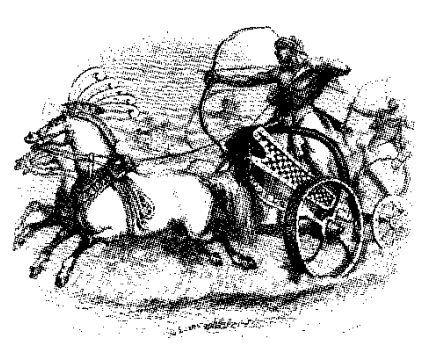
Pharaoh Pursues The Israelites — vv. 5-9.
Pharaoh's obstinacy again asserting itself, he orders his charioteers to pursue the Israelites.
VERSE 5
"And it was told the king of Egypt that the people fled" — He could argue that he had only granted permission for the Israelites to go on a three days' journey into the wilderness, for this was all that Moses previously had requested (cp. Exo. 5:3). Now, however, it was obvious from reports received that they had no intentions of returning.
"And the heart of Pharaoh and of his servants was turned against the people" — As Pharaoh and his courtiers recovered from the shock of the death of the firstborn, they were filled with hatred against Israel. Instead of "turned against" the Hebrew has "turned towards" (see Interlinear Bible). Their attention was focused on the Israelites, and they began to fabricate thoughts of vengeance.
"And they said, why have we done this, that we have let Israel go from serving us?" — They saw the district of Goshen empty, the brickfields deserted, great works halted for want of labourers, and they regretted that they had allowed the Israelites to leave. Actually, there was reason enough for letting God's people go, if they had allowed their gaze to take in the cemeteries of Egypt, but now Pharaoh was overcome with a blind, unreasonable hatred.
VERSE 6
"And he made ready his chariot, and took his people with him" — The verb "made ready" is 'acar in Hebrew, and literally means to hitch or to yoke, and in this context, to yoke the chariots to the horses. The chariot was a light, speedy vehicle, open behind, with a semicircular standing board of wood from which rose in a graceful curve the front protection to the height of about 76 cms (27: ft). The chariot had two wheels, and a pole in front to separate two horses which drew the vehicle. It contained two men only: the charioteer and the warrior. Pharaoh's chariot was splendidly decorated with gold. The "people" he took with him comprised the Egyptian army. See similar expressions in Num. 21:23.
VERSE 7
"And he took six hundred chosen chariots" — This was probably the royal guard. The number 6 is significant in such a context, for it represents the number of flesh (Rev. 13:18); thus the company epitomised the pride and glory of the flesh which is opposed to the ways of God (1 Jn. 2:16).
"And all the chariots of Egypt" — A considerable force was gathered together, suggesting that this was necessary because of the numerical size of the escaping Israelites.
"And captains over every one of them" — Rotherham, in agreement with Gesenius, renders: "with warriors in every one."
VERSE 8
"And Yahweh hardened the heart of Pharaoh king of Egypt, and he pursued after the children of Israel" —
Pharaoh's heart was hardened because of the circumstances which Yahweh controlled, and hotly pursued the people to avert the removal of his influence over Israel and the destruction of his power. See note ch. 4:21.
"And the children of Israel went out with an high hand" — They left confidently and boldly — not as fugitives, but as men in the exercise of their just rights. They left, perhaps, with a measure of ostentatious assurance which needed to be humbled — as is evident also today in the pride of their national achievement (see Eze. 38:8; 39:26).
VERSE 9
"But the Egyptians pursued after them, all the horses and chariots of Pharaoh, and his horsemen, and his army, and overtook them encamping by the sea, beside Pi-hahiroth, before Baal-zephon" — The terms "horsemen" and "army" denote the charioteers and the infantry of Egypt.
The People Panic - vv. 10-12.
The attention of the fleeing people is attracted to the approaching Egyptians. Lacking faith, they complain to Yahweh and to Moses, accusing the latter of bringing them into the wilderness to perish.
VERSE 10
"And when Pharaoh drew nigh, the children of Israel lifted up their eyes, and, behold, the Egyptians marched after them; and they were sore afraid" — They became obsessed with the sight of their eyes, so that their spiritual vision was blurred. They forgot that Yahweh had manifested already such power as to cope with the full strength of the Egyptian army.
It was when Eve saw the tree, that she was drawn to partake of its fruit (Gen. 3:6); it was when Achan saw the goodly Babylonish garment that he was led to steal it (Josh. 7:21); it was when Peter took his eyes off the Lord, and saw the boisterous waves and stormy sea, that he began to sink (Mat. 14:30). The "sight of the eyes" can induce desire for evil things, or fear of man. The sight of Pharaoh's chariots and infantry steadily marching towards them in efficient order induced the greatest fear in the Israelites. Note the contempt with which Yahweh viewed the object of their sight (v. 13).
"And the children of Israel cried out unto Yahweh" — They cried out in fear but not in faith, seeking to avoid the challenge of sin, not relying on Yahweh for direction and protection. They were "of little faith" (Mat. 8:26).
VERSE 11
"And they said unto Moses" — Panic gripped them when they saw the Egyptians moving steadily nearer, their fear gave way to exasperation and they turned in unreasonable anger against Moses.
"Because there were no graves in Egypt, hast thou taken us away to die in the wilderness?" — After all that had been done for the people, this was a faithless and cowardly accusation. They conveniently forgot that Egypt had been one vast grave for male Israelitish children. What of the decree of Pharaoh, that every Hebrew son born should be cast into the Nile? (ch. 1:22). Human memory is very short, and human nature very ungrateful. The attitude of the people at this time contrasted sharply with that of Joseph who declared that there was no grave for him in Egypt, and arranged for his remains to be taken out of the land when the Hebrews should leave (Gen. 50:24-26). His coffin was a mute reminder to the people who carried it, that Joseph's faith was in Yahweh's deliverance of His people from Egypt; thus, "though dead he yet speaketh"!
"Wherefore hast thou dealt thus with us, to carry us forth out of Egypt" — In this moment of crisis and fear, the people forgot their previous sorrow and sighing, their pleas for relief from a life of bitter bondage (ch. 2:23-24), and in a most unwarranted and cowardly accusation charged Moses with forcing them to leave Egypt against their will.
VERSE 12
"Is not this the word that we did tell thee in Egypt, saying, Let us alone, that we may serve the Egyptians" — The reference was probably to that time of frustration and depression which followed the decree of Pharaoh that their labours were to be increased. They reproached Moses and Aaron (ch. 5:21), and refused their words of encouragement (ch. 6:9).
"For it had been better for us to serve the Egyptians, than that we should die in the wilderness" — In speaking in this fashion, the Hebrews conveniently forgot the rigours of their labours, the pain of their persecution, and the sentence of death that had been decreed by Pharaoh against their male offspring. God had no intention of permitting them to die in the wilderness, but with their eyes fixed upon the advancing Egyptians, and lacking a vision of faith, death in the wilderness seemed the only destiny.
Moses' Faith — vv. 13-14.
Once again, at a time of crisis, Moses proves himself equal to the task, and matches his faith and courage against the faithlessness and cowardice of the people.
VERSE 13
"And Moses said unto the people"
— The quiet voice of faith and courage was a great contrast to the panic-stricken outbursts of the people.
"Fear ye not" — The reference is to "the fear of man that bringeth a snare" (Pro. 29:25). On the other hand, the "fear of Yahweh is the beginning of knowledge" (Pro. 1:7). Between the two fears there is a great gulf. "Fear not" is the keynote of Deuteronomy, the last message of Moses (ch. 1:17,21,29; 31:6,7,8, 12, 13). This exhortation is repeated throughout the Word: Num. 14:9; Deu. 20:3; 2Kings 6:16; 2Chr. 20:15-17; Psa. 27:1, 2; 46:1, 3; Isa. 26:3; 30:15; 35:4; 41:10-14; Mat. 28:5. It is a good spiritual exercise to follow the use of such an exhortation throughout the Word by the aid of a Concordance.
"Stand still, and see the salvation of Yahweh, which He will shew to you to day" — In times of crisis it is very difficult to do this. Human nature feels safer when it is doing something to alleviate its fear. But sometimes it is important to realise that human endeavour and skill cannot effect a deliverance, and one must rest upon God. This is the manifestation of patience and trust. But when a person is governed by the fear of man, he lacks the faith to quietly wait for Yahweh to move on his behalf. The Scriptures record at least five times (the number of grace) where the command to stand still is given:
- "Stand still and see the salvation of Yahweh" (Exo. 14:13).
- "Stand still and hear what Yahweh will command concerning you" (Num. 9:8).
- "Stand still a while that I may show you the salvation of Yahweh with you" (2Chr. 20:17).
- . "Stand still and consider the wondrous works of God" (Job 37:14).
However it is not the attitude of merely "standing still" that Yahweh requires, but the concentration of the mind upon Him to the development of faith.
"For the Egyptians whom ye have seen today, ye shall see them again no more for ever" — At that moment, when the people saw the marching Egyptians converging upon them, the threat to their existence seemed very real: but that which they saw did not represent the reality, only the transient scene. Faith was needed to perceive the reality, but this they lacked. Yahweh had promised to deliver the nation, and the present threat was but a test of their belief in Him. The sight of the eyes is often deceptive. Note the contrast presented in v. 10. Compare their lack of faith with Paul's attitude as described in 2Cor. 4:15-18.
VERSE 14
"Yahweh shall fight for you, and ye shall hold your peace" — At that moment, when the people were faced with a crisis beyond their ability to handle, they were exhorted to rely completely upon Yahweh in faith, and to wait for Him to move. The man of faith does not fight in his own strength. Cp. Deu. 1:20; 20:1-4; Josh. 5:14-15; 10:42; 1Sam. 17:45-46; 2Chr. 14:11-12; 32:8; Neh. 4:20; Rom. 9:29; ITim. 2:3-4.
Yahweh Answers Moses' Prayer - vv. 15-18.
Somewhat discouraged by the unreasonable and faithless attitude of the people under stress, Moses beseeches the urgent help of Yahweh, and is instructed to commence the march towards the sea. He is also commanded to stretch forth his rod, and the waters will divide, revealing a passage of safety. The Egyptians, attempting to follow the Israelites, will be destroyed.
VERSE 15
"And Yahweh said unto Moses, Wherefore criest thou unto Me?" —
This answers an unrecorded prayer that Moses directed to Yahweh in view of the national crisis. The word "criest" is tsa'aq, "to shriek." Faced with the spirit of revolt sweeping the people, Moses turned with earnest and urgent entreaty to Yahweh for help and encouragement.
"Speak unto the children of Israel, that they go forward" — This was Yah-weh's challenge of faith to the people: Go forward! But where to? In front of them was the ocean!
It is one of the important lessons of life that when engaged upon the work of God, the urgent need is to go forward in spite of apparent obstacles. Faith will find a way. It opened the waters of the Red Sea (Heb. 1 1:29), and, later, destroyed the walls of Jericho (Heb. 11:30). It will help us in times of difficulty.
VERSE 16
"But lift thou up thy rod, and stretch out thine hand over the sea, and divide it" — Moses' rod that turned into a serpent is now to be used to divide the ocean, so that Israel would be baptised (ICor. 10:1-2). Observe, that it was the rod extended in obedience to Yahweh, that divided the sea, and not merely the wind aided by the tide, as is sometimes alleged. Isaiah states that Moses with his rod extended in his right hand, led the people to where the waters divided before him (Isa. 63:11-12).
"And the children of Israel shall go on dry ground through the midst of the sea" — This completely refutes the suggestion, frequently made, that they waded through the shallow waters adjacent to the Bitter Lakes during the period of the ebbing tide. The statement that the Hebrews passed through the sea on dry ground is made several times. See Exo. 15:19; Neh. 9:11; Psa. 66:6; Heb. 11:29.
VERSE 17
"And, I, behold, I will harden the hearts of the Egyptians, and they shall follow them" — The Egyptians would be emboldened to attempt the passage. This occurred when the fiery cloud was removed; and therefore it is said that Yahweh did it. See note Exo. 4:21.
"And I will get Me honour upon Pharaoh, and upon all his host, upon his chariots, and upon his horsemen" — See note, v.4.
VERSE 18
"And the Egyptians shall know that I am Yahweh, when I have gotten Me honour upon Pharaoh, upon his chariots, and upon his horsemen" — See note, v. 4.
(3) - SEPARATION ACCOMPLISHED Chapter 14:19 to 15:21.
The angel of Yahweh first severs the Israelites from the Egyptians by placing the fiery cloud between the two companies of people. With this effective barrier against attack, Moses' rod is extended and a path is driven through the midst of the sea. A strong east wind assists in doing this, and in drying the large passage that has appeared, permitting the Israelites to go across on dry land. When the fiery cloud is removed before the Egyptians, they discover that their quarry has escaped them. Undaunted by the miracle, the Egyptians pursue the Israelites along the path formed through the sea, but disaster overtakes them. A storm of rain causes the chariot wheels to bog. Then, as premonitions of tragedy sweep through the host, and soldiers endeavour to flee on foot, Moses' rod is again extended, and the waters roll back upon the Egyptians, to destroy them. Once again Israel has evidence of the mighty power of Yahweh to save. On the other side of the Red Sea they rejoice before Yahweh, as they sing the Song of Moses. The nation has reached a climax in spiritual experience.
Israel Go Through The Red Sea - vv. 19-22.
First the cloud protects the Israelites from the Egyptians: then the rod is extended to form a path wide enough for the people to move through the Red Sea. This is helped by a strong east wind which assists to dry and harden the ground sufficiently to hold. Along the way of salvation thus revealed, overshadowed by the waters of the ocean, that now "stand up as an heap," the people move through to the safety of the other side. In doing so, they are "baptised into Moses" (ICor. 10:2).
VERSE 19
"And the angel of God which went before the camp of Israel" — This angel is described by Isaiah as the "angel of His presence" (Isa. 63:9). The angel is identified with Yahweh (Exo. 13:21) because "His name was in him" (Exo. 23:20-21). See also Exo. 32:34; Num. 20:16; Psa. 77:20. The angels are still active on the behalf of Yahweh's "little ones" (Mat. 18:10), so that they are represented as "encamping around about them that fear Yahweh" (Psa. 34:7).
We need to remember that God's power to help and to save is just as great today as it was in the days of Moses. Nevertheless, faith teaches us to recognise that He alone has the wisdom to determine when it should be manifested.
Let us also remember, that few, if any, would have seen the angel move to the rear of Israel on that evening of fear and tempest, with the people crouching before the roar of the hurricane, in the night of darkness lit up by the mysterious light of the fiery cloud that formed a barrier behind them. But the angel was actively engaged in working on behalf of the people, and out of those terrifying circumstances they were delivered to discover a new relationship with their God.
"Removed and went behind them" — The angel acted as a rearguard to Israel. This experience will be repeated during the course of the second exodus in the age to come (Isa.52:12; 58:8), the only difference being, that the Elohim of the future, will comprise Christ and the saints, then made "equal unto the angels" (Luke 20:36).
"And the pillar of the cloud went from before their face, and stood behind them" — The pillar of cloud was the visible presence of Yahweh among them. Normally this preceded the camp (Exo. 13:21; Psa. 78:14), but now, in order to provide for the defence of Israel, it formed a barrier between the Hebrews and the Egyptians. The Word of God today has the same purpose as the cloud, and can both lead and defend, dividing between that which is soulish (fleshly) and that which is spiritual (Heb.4:12).
VERSE 20
"And it came between the camp of the Egyptians and the camp of Israel" — It completely divided the two camps, as the Truth divides the "Israel of God" (Gal.
6:16) from spiritual Egypt (Rev. 11:8) today. The Truth requires complete
separation for the purpose of God manifestation, for we simply cannot be in
Christ and of the world at the same time (John 17:6, 16). Indeed, true sonship with
God is predicated upon separation unto Him from the world: "Wherefore come
out from among them, and be ye separate, saith the Lord, and touch not the unclean
thing; and I will receive you, and will be a Father unto you, and ye shall be My sons
and daughters, saith the Lord Almighty" (2Cor. 6:17-18). Separation from the world is the condition of sonship in Christ.
"And it was a cloud and darkness to them, but it gave light by night to these" — This is the effect of God's presence in His Word, to this day. The Egyptians
could not see the path of salvation that stretched out before the Israelites, but the
light of the cloud permitted the latter to discern it clearly. So with the understanding of the Truth. To the world it is evidence of superstitious ignorance and darkness; to the initiated it shines as light.
The wise man declared: "The path of the just is as the shining light, that shineth more and more unto the perfect day. The way of the wicked is as darkness; they know not at what they stumble" (Pro. 4:18-19).
The army of Egypt and the escaping refugees of Israel, divided by a barrier that enshrouded the former in darkness, but gave light to the latter, is illustrative of the proverb. The Truth effectively divides the world into two categories: to one Christ is "the savour of death unto death; and to the other the savour of life unto life" (2Cor. 2:15-16).
"So that the one came not near the other all the night" — The separation was effective, as it should be also in the Truth. Those bound to the latter have no affinity with the forces of darkness, "but rather reprove them" (Eph. 5:11). Christ likened the time of his absence from the earth as the time of Gentile "night" (John 9:4-5), and whilst the light of truth illuminates the darkness, the unfortunate fact is that though "light is come into the world, men love darkness rather than light, because their deeds are evil" (John 3:19). Meanwhile, on the shores of the Red Sea, the separation designed of Yahweh for His children was made effective by the barrier of darkness and light that divided the groups.
VERSE 21
"And Moses stretched out his hand over the sea" — This was to divide the waters (v. 16), a fact commemorated in the annals of Israelitish history and poetry: Neh. 9:11; Psa. 74:13; 78:13; 106:9; 114:3; isa. 63:12.
"And Yahweh caused the sea to go back by a strong east wind all that night" — This statement has led many to conclude that the miracle was but a minor incident, and that the passage of the sea was effected by normal natural forces.
For example, G. Rawlinson writes: "If we suppose the Bitter Lakes to have been joined to the Red Sea by a narrow and shallow channel, the action of a southeast wind, by driving the water of the Lakes northward, may have easily produced the effect described in the text. A simultaneous ebb of the lower gulf would have further facilitated the passage."
Others have pointed out that before the Suez Canal was constructed, it was frequently possible, through the ebbing tide, for Arab-ridden camels to wade across. A Jewish commentator states: "A strong east wind, blowing all night and acting with the ebbing tide, may have laid bare the neck of water joining the Bitter Lakes to the Red Sea, allowing the Israelites to cross in safety."
But such a hypothesis does not accord with the language of Scripture, that speaks of it as a miracle of such an extent, as to be commemorated in the Psalms of Israel centuries afterwards.
As noted above, if the grand results were caused by the fortunate and conjunct action of wind and tide, then, with such a combination happening frequently, the alleged miracle would be a rather poor and commonplace affair.
We have given reasons to conclude that the crossing was at the top of the gulf, and not at the shallow channel of water close to the Bitter Lakes, and we believe that the language of Scripture demands this. But faith is necessary to believe the account, and as a challenge to flesh, there is always provided sufficient of natural phenomena to permit the rationalist to reason himself out of such a conclusion. Indeed Pharaoh did so, as soon as the cloud that obscured his vision was removed. Many commentators view the miracle as did Pharaoh: as something normal and not necessarily requiring the miraculous hand of God!
It was Moses' control of the serpent rod, and the stretching of his hand over the sea, indicative of the power granted him over it, that caused the ocean to part for the Israelites. In consequence, they were baptised into Moses (ICor. 10:2). In the case of believers, it was the Lord's conquest over the serpent power of sin in himself (Heb. 2:14), and the power of his resurrection from the grave, that opened the way to salvation for believers who are "baptised into his death" (Rom. 6:3).
The "strong east wind" was an element in the performance of this miracle. It helped keep the waters apart, and dried up the ground, hardening it sufficiently for the passage of the Israelites. The word for "wind" is ruach, a word frequently used for "spirit." The word for "east" is qadim. It is mentioned also in regard to the eighth plague (Exo. 10:13), as bringing the locusts over the land. The east wind crosses the sandy wastes of Arabia Deserta before reaching the land of Israel. It is the prevailing wind from February to June, and sometimes blows with violence. The Khamsin or "wind of the desert" commonly visits Egypt about the time of the vernal equinox, and is accompanied by an awful and weird darkness. This is caused by the dense clouds of fine sand whipped up by the wind which intercept the sun's rays and produce darkness. It usually blows for the space of about two, or at the most, three days.
"And made the sea dry land" — Cp. Psa. 66:6.
"And the waters were divided" — See supporting references quoted above.
VERSE 22
"And the children of Israel went into the midst of the sea upon the dry ground" — The sea is about eleven kms (7mls) wide at the suggested place of crossing.
"The waters were a wall unto them on their right hand, and on their left" — They stood up as an heap (Psa. 78:13), as being congealed or frozen (Exo. 15:8). These expressions would be incongruous if the "miracle" consisted merely of the effect of the ebbing tide, supported by the strong wind. They imply a miracle of the greatest magnitude.
The waters arose as a wall of defence to the children of Israel. The Hebrew word used signifies a wall of protection. Pharaoh could not attack them on either flank, on account of the two bodies of water between which their path lay. He could only come at them by following after them. The description demands that the waters appear as solidified walls of protection to the escaping Israelites.
The Egyptians Destroyed In The Red Sea — vv. 23-31.
With the Israelites safely across to the other side, the barrier of fiery cloud is removed, and the Egyptians are ordered to the attack. Pharaoh's charioteers make the assault, but are instantly troubled by lightning and storm. The dry seabed becomes clogged with mud, grinding the charge to a halt. Panic sweeps the Egyptian army. The soldiers alight from the bogged vehicles in fear, intent upon escape. But Moses is commanded to again stretch forth his rod, and as he does so, Yahweh reverses His action so that the waters return to their former place. The same waters that were a wall of defence and a means of salvation to Israel become the weapon of destruction for the Egyptians. As the sea calms, the dead bodies of Egyptians clutter the shore of the Red Sea.
VERSE 23
"And the Egyptians pursued, and went in after them to the midst of the sea" — The cloud of darkness that separated the Egyptians from the Israelites had hidden the miracle from them. When it lifted, the amazing passage through the sea was revealed, and being commanded to advance, they did so.
"Even all Pharaoh's horses, his chariots, and his horsemen" — It is significant that Pharaoh himself is not said to taken part in the pursuit. It is claimed that, generally Merneptah avoided placing himself in a position of personal danger. Nor is any of the infantry said to have entered the passage of the sea. Both king and foot soldiers remained as witnesses of the power of Yahweh in miracle. Merneptah returned to Egypt to boast that Israel had been destroyed! He recorded this on an inscription that has been discovered, and is today located in the Cairo Museum. It claims that "Israel is desolated, her seed is not."
VERSE 24
"And it came to pass, that in the morning watch" — Early morning, between 3am and 6am, when the light of the rising sun would appear, suggesting the new day, symbolic of the approach of the Sun of Righteousness (Mai. 4:2).
"Yahweh looked unto the host of the Egyptians through the pillar of fire and of the cloud, and troubled the host of the Egyptians" — The expression is metaphorical for lightning (see Amos 7:4; Psa. 104:32 and cp. Rev. 1:14). Certainly, but one glance of Yahwerfs eye is sufficient to throw the enemies of His redeemed firstborn into hopeless confusion. Israel was safely across, the Egyptians perhaps half way (it would not take the light, speedy chariots long to traverse the eleven kms crossing), when, suddenly, a fierce storm broke. Thunder roared and crashed in the heavens above; lightning streaked down like angry fingers; the earth shook; rain poured down (Psa. 77:12-20).
VERSE 25
"And took off their chariot wheels, that they drave them heavily" — The Septuagint renders this as "clogged the axles of their chariots," which certainly would bring their progress to a halt. The pouring rain, referred to by the Psalmist, would soon turn the seabed into a quagmire, causing the chariots to become hopelessly bogged. However, the Hebrew text (similar to the AV), suggests that the terrified horses, in stampeding, smashed the chariots, forcing the charioteers to attempt to escape on foot.
"So that the Egyptians said, Let us flee from the face of Israel; for Yahweh fighteth for them against the Egyptians" — The words of the Egyptians confirmed the promise of Moses (v. 14). The Egyptians were convinced by the succession of obstacles they encountered that once again the finger of God was in evidence. In this way they showed more wisdom than do modern commentators who claim that the crossing was but the manifestation of the natural phenomena of wind and tide.
VERSE 26
"And Yahweh said unto Moses, Stretch out thine hand over the sea, that the waters may come again upon the Egyptians, upon their chariots, and upon their horsemen" — The Scriptures claim that the "depths were congealed" (Exo. 15:8). The expression suggests that they were frozen like ice! If so, the miracle was all the more amazing. The Psalmist also speaks of earthquake that took place at this time (Psa. 77:18). Perhaps the effect of Moses's rod was to cause earthquake which cracked the ice and permitted the water pour in upon the trapped Egyptians.
VERSE 27
"And Moses stretched forth his hand over the sea, and the sea returned to his strength when the morning appeared; and the Egyptians fled against it" — As the sun was seen rising in the east, the rod was outstretched, there was a great earthquake, and the enemies of Israel were overwhelmed. All this is typical of the future, when the Sun of righteousness will arise (Mai. 4:2), and "a great earthquake" occur (Rev. 16:18).
By describing the sea as "returning to its strength," Moses means that it began to flow as usual, implying that the miracle required the suspension of the normal forces of nature, which now again were seen.
"And Yahweh overthrew the Egyptians in the midst of the sea" — The Hebrew na'ar, rendered "overthrew" signifies to tumble about, but also includes the noise that accompanies such action; in this case, the roar of the ocean as it crashed down upon the Egyptians.
Paul likens the Red Sea crossing to "baptism" in which the sins of the past are blotted out, and a new beginning commences for the believer. In Romans 6, he speaks of the effect of baptism as of being delivered, through water, from the domination of King Sin, and recruited for service under King Jesus (vv. 1 1-12); and of being purchased from the slave owner Sin to become a slave to God (vv. 17-22). This was prefigured in Yahweh's remarkable deliverance of the people from the bondage to which they had previously been subjected. As the Egyptians were violently overthrown in the midst of the sea, so baptism is the token of crucifixion of the lusts of the flesh (Gal. 5:24; Rom. 6:3).
VERSE 28
"And the waters returned, and covered the chariots, and the horsemen, and all the host of Pharaoh that came into the sea after them; there remained not so much as one of them" — This national baptism (ICor. 10:1-2) depicted the destruction of sin's forces, as there is the forgiveness of sins in personal baptism in Christ. In referring to this incident, the Psalmist graphically outlines the effect of the miracle: "He saved them from the hand of him that hated them, and redeemed them from the hand of the enemy. And the waters covered their enemies; there was not one of them left. Then believed they His words; they sang His praise" (Psa. 106:10-12). The baptism of Israel became the basis for their national redemption. In the miracle of the sea, the power of Pharaoh and his host over Israel was destroyed (Psa. 136:15), though Pharaoh himself apparently escaped the destruction; and Egypt remained to tempt the children of Israel. So with personal baptism. Past sins are forgiven, and the believer comes into a new relationship with God. But the very nature that led to sin retains its power to conquer again. The subsequent history of Israel revealed that fact.
VERSE 29
"But the children of Israel walked upon dry land in the midst of the sea; and the waters were a wall unto them on their right hand and on their left" — This repetition of the events emphasises the extent of the miracle performed.
VERSE 30
"Thus Yahweh saved Israel that day out of the hand of the Egyptians" — Notice it was the nation that was saved, but not the individuals who made up the nation, for they later perished in the wilderness.
Christ's sacrifice has placed beyond all doubt that his people will be saved, but individuals must make "their calling and election sure" by their personal application of the principles required. This fact reminds us that Israel was delivered for the purpose of God manifestation, not individual salvation. The latter is conditional upon the former.
The Psalmist observes that God "saved them for His name's sake, that He might make His mighty power to be known." In saving them for "His name's sake," it was for the purpose that they were to become the channel of the manifestation of His name to the world at large. This required that they manifest the qualities of the Name. It is for this same purpose that Gentiles are invited into the scope of divine salvation (Acts 15:14).
"And Israel saw the Egyptians dead upon the sea shore" — Some of the bodies of the Egyptians were flung onto the shore by the violence of the waves, so that it became strewn with the wreckage of Pharaoh's host. Josephus claims that Moses armed the Israelites with weapons found in the flotsam.
The storm of wind subsided with the coming of the morning (v. 21), and a calm ensued. With the Red Sea now "as glass," though strewn with the debris of the destroyed Egyptian forces, Moses led the people in singing the Song recorded in chapter 15. The occasion provides the historical basis for the symbolism of Rev. 15: "I saw as it were a sea of glass mingled with fire, and them that had gotten the victory over the beast... stand on the sea of glass, having the harps of God. And they sing the song of Moses the servant of God, and the song of the Lamb."
The anxiety, trouble, and amazing miracle that resulted in the establishment of Israel as a nation, will be exceeded by the "time of trouble" (Dan. 12:1-2) and miracle that will accompany the re-establishment of the kingdom of God upon the ruins of all other nations, at the coming of the Lord. The events recorded in Exodus foreshadow the thrilling events of the future.
VERSE 31
"And Israel saw that great work which Yahweh did upon the Egyptians" — They had visible evidence of His mighty power, as will also the Redeemed in the future. Meanwhile, they must walk in faith.
"And the people feared Yahweh, and believed Yahweh, and His servant Moses" — The "fear of Yahweh" is the beginning of wisdom (Pro. 1:7). Wisdom is manifested in moral conviction of religious truth, and with such evidence before them, the people could not help but believe.
Note the title given Moses. He is described as a bondservant. This title is contrasted by Paul in Heb. 3:5 with Christ's status as a Son: "Moses was faithful in all His [God's] house, as a servant, for a testimony of those things which were to be spoken after; but Christ as a Son over His [God's] house." The "house" spoken of by Paul refers to God's house in all cases, in which Moses was a servant and Christ was a son. Paul then reasons that if Moses was to be believed and heeded, how much more should men attend the words of Christ.
Comments