CHAPTER TWENTY-NINE
THE SEVENTH MONTH OFFERINGS
This chapter continues instructing Israel regarding Yahweh's will in sacrifice and service. Requirements are laid down for Israel, as the people are about to enter the land, that are not given elsewhere. This chapter outlines what the seventh month Offerings are necessary for. Special services were conducted this month bringing the general worship of Israelites to a climax.
New Year Offerings — vv. 1-6
The seventh month of the Israelite religious year was the first month of the civil year. It therefore commenced a new beginning. The numbers seven and one suggest the covenant and a new beginning; suggesting that the New Year should be lived with the Covenant ever in view.
VERSE 1
"And in the seventh month, on the first day of the month, ye shall have an holy convocation" — At the time of the first Passover, the year was changed so that Abib became "the beginning of months" (Exod. 12:2): that is, the commencement of the religious year in conjunction to the civil year, of which it was the fifth month. Five being the number of grace, and the Passover speaking of a new beginning, the principle of a new beginning through the grace of God is suggested. On the other hand, the first month of the civil year was the seventh month of the religious year, and on this occasion the new beginning was associated with the number of the seven, the number of the covenant. This "seventh" month, called Ethanim was specially set apart above all other months for special sacrifices (Lev. 23:23-44). "Ye shall do no servile work: it is a day of blowing the trumpets unto you" — See comments at Lev. 23:24. On this day, both the shofar trumpet and the silver trumpets were heard. In fact, the silver trumpets were sounded at all such times, and over all the offerings. The purpose of so doing was "that they may be to you for a memorial before your God" (Num. 10:10). The silver trumpets, therefore were as the voice of prayer. In addition, on the first day of the seventh month there was "a memorial of blowing of trumpets", or the sounding of the shofar trumpets. These represented the voice of God calling the people together to the "holy convocation". See Psa. 81:3; 89:15. Prophetically, the sounding of the trumpet heralds the restoration of Israel (Isa. 27:13; Zech. 9:14), the resurrection of dead saints and gathering together of the living (1 Cor. 15:52; 1 Thess. 4:16), and the massing of the nations for the judgment of Armageddon (Rev. 11:15,18). The apocalypse represents the trumpets as already sounding; and the preliminary regathering of Israel, and massing of Gentile powers is already taking place. We await the climax of the Lord's return and the resurrection. Meanwhile the New Year was a very solemn occasion for Israel, quite unlike the Gentile celebration of the New Year. One Jewish writer has commented: "The sounding of the shofar, consisting, as handed down by tradition, of three distinctive shofar-notes (tekiah, shevarim, teruah), has been looked upon from time immemorial as a call to contrition and penitence, as a reminder of the shofar sound of Sinai; and the Day of Memorial, the beginning of the ten days of Repentance, which culminates in the Day of Atonement, as a time of self-examination and humble petition for forgiveness. The Scriptural injunction of the shofar for the New Year's Day has a profound meaning. It says, "Awake, ye sleepers, and ponder over your deeds, remember your Creator and go back to Him in penitence. Be not of those who miss realities in their pursuit of shadows and waste their years in seeking after vain things which cannot profit or deliver. Look well to your souls and consider your acts; forsake each of you his evil ways and thoughts, and return to God so that He may have mercy upon you."
VERSE 2
"And ye shall offer a burnt offering for a sweet savour unto Yahweh; one young bullock, one ram, and seven lambs of the first year without blemish" — See notes on Lev. 23 for the spiritual significance of such offerings. However, the specific offerings for this day had not been set down previously. Leviticus 23 only makes the general statement: "Ye shall offer an offering made by fire unto Yahweh" (Lev. 23:25). Now, for the first time, the offerings are detailed. The bullock was a beast of labour; the ram typified strength as its name indicates; the seven lambs relate to the covenant which one would accept in meekness, that being a characteristic of the Lamb. The blood of these animals being offered unto Yahweh on the altar provided the ideal that the worshippers should aim to emulate.
VERSE 3
"And their meat offering shall be of flour mingled with oil" — Flour or bread is the staff of life; oil represents the gladness of the spirit (Heb. 1:9). To mingle the staff or substance of life with the joy derived from the Truth is pleasing to Yahweh, and in symbol formed part of the sacrifice of the New Year. The "good resolution" of Israelites was to build such principles into their lives.
"Three tenth deals for a bullock and two tenth deals for a ram" — See note Num. 28:20.
"And one tenth deal for one lamb, throughout the seven lambs" — See Ch 28:29.
VERSE 5
"And one kid of the goats for a sin offering, to make an atonement for you" — See on Num. 28:15,22,30.
VERSE 6
"Beside the burnt offering of the month, and his meat offering, and the daily burnt offering, and his meat offering, and their drink offerings according unto their manner, for a sweet savour, a sacrifice made by fire unto Yahweh" — This requires that there be offered in addition to the animals and meal offerings detailed above, the normal daily Lambs, one morning and one evening (Num. 28:3), the two bullocks, one ram, seven lambs with their meal offerings offered at every new moon (Num. 28:11)
"unto their manner", or as already prescribed.
The Atonement Offering — vv. 7-11
The great day of atonement was the most solemn and sacred day in the calendar of Israel. On that day, everyone was required to afflict his soul in humble recognition of his low estate before Yahweh. The days preceding it were treated as days of contrition, culminating in the great Atonement offering.
VERSE 7
"And ye shall have on the tenth day of this seventh month an holy convocation" — Further details are supplied in Lev. 16:29-31; 23:27, and our notes at those places. See below.
"And ye shall afflict your souls" — The word "afflict" is 'anah, from a root signifying to eye, and so to look down in humility. A Hebrew would be afflicted, or humbled by calling into remembrance his past, recognising his shortcomings, and acknowledging his need of forgiveness. This law, therefore, ordered Israelites to make mental preparation before seeking their God on the day of atonement. It was a cause of: "Prepare to meet thy God, O Israel" (Amos 4:12). Unfortunately, the people pretended to afflict their souls whilst remaining stubborn and indifferent to the divine requirements: "Wherefore have we afflicted our soul, and Thou takest no knowledge?" they enquired. The prophet outlined the hypocrisy of their actions (Isa. 58:3-5). There is a Day of Affliction coming for Israel, when they shall "Look upon Me Whom they have pierced, and they shall mourn for him, as one mourneth for his only son" (Zech. 12:10). Thus humbled, Israel will be nationally cleansed (Zech. 13:11), and re-established as the Kingdom of God on earth, on the basis of the new covenant. As Israelites were required to afflict their souls, or make mental preparation to appear before God, so saints should do so in preparation to partake of the Memorials, and in anticipation of the impending Judgment Seat. Those who mourn now, will then be blessed (Matt. 5:4). See also Paul's comments in 2 Cor. 7:9-11. Affliction and mourning are good for the soul that seeks its God.
"Ye shall not do any work therein" — On that day all work must cease. This is in comparison with the other feast days, when only "servile work" ceased. This day was a day of fasting, and therefore no provision is made for preparing food.
VERSE 8
"But ye shall offer a burnt offering unto Yahweh for a sweet savour; one young bullock, one ram, and seven lambs of the first year; they shall be without blemish" — The total dedication of these animals in sacrifice reminded the people of Israel of the ideal set before them, but which they failed to attain unto. This failure then became a means whereby they could "afflict their souls" (v. 7).
In similar manner, Christ's disciples are humbled as they partake of the Memorials, and remind themselves of the ideal set them in the example of the Lord. Such become "chastened of the Lord" (1 Cor. 11:32).
VERSE 9
"And their meat offering shall be of flour mingled with oil, three tenth deals to a bullock, and two tenth deals to one ram" — See notes Num. 15:3-12.
VERSE 10
"A several tenth deal for one lamb, throughout the seven lambs" — See note, Ch. 28:13.
VERSE 11
"One kid of the goats for a sin offering; beside the sin offering of atonement, and the continual burnt offering, and the meat offering of it, and their drink offerings" — The sin offering of atonement relates to the "two kids of the goats for a sin offering" one of which was slain, and the other let go as "the scapegoat" (see Lev. 16:5- 10). The offerings listed here are in addition to those listed in Leviticus 16.
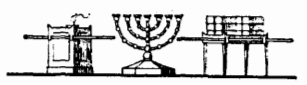
THE DAY OF ATONEMENT: A SUMMARY
• On the first day of the seventh month of the religious year (suggesting the covenant), but the first month of the civil year (suggesting a new political beginning), there was a memorial of the blowing of trumpets, so gathering the people together (Lev. 23:24).
• This was followed by days of contrition, in which true Israelites mentally prepared to meet their God, by meditating on their past conduct.
• On the Tenth Day of the month, the Day of Atonement was commemorated.
• The morning lamb was offered as usual, to smoulder all day (Lev. 8:13).
• There was a special offering (Lev. 23:27; Num. 29:7-11) comprising a bullock (labour), a ram (strength), seven lambs (covenant), and a goat (waywardness) for a sin offering. The bullock, ram and lambs were offered as burnt offerings with their meal offerings (the results of personal labour). The burnt offering represented the offerer's complete dedication of self in relation to those things indicated by the offerings.
• The goat as a sin offering was a recognition of the waywardness of flesh, and the need to deny it in order to render fit worship to Yahweh.
Special Services
(1) Aaron was to completely wash (cp. John 15:3; Eph. 5:26; Psa. 51:7), representing a cleansing, accomplished by the Word (Lev. 16:4).
(2) He was to clothe himself in special linen garments representing righteousness (Rev. 19:8). See Lev. 16:4.
(3) He was to present his bullock and ram (Lev. 16:3).
(4) He was to present the two goats as one sin offering (Lev. 16:7).
(5) Lots were to be taken to determine what goat should be sacrificed, and what goat should be sent into the wilderness (Lev. 16:8-10). Christ's perfect life made him a perfect sacrifice, and assured his resurrection to life eternal.
(6) Aaron was to kill the bullock for himself and his house (Lev. 16:11).
(7) He was to proceed into the Most Holy with the censer of incense (Lev. 16:12).
(8) He was then to take the blood of the bullock and sprinkle the Mercy Seat and the way thereunto, seven times (Lev. 16:14).
(9) He was to kill the goat and do likewise with his blood (Lev. 16:15).
(10) He was to make an atonement for the Most Holy, the Holy and the brazen Altar (Lev. 16:15-19).
(11) He was to confess the sins of the nation over the live goat, and despatch it into the wilderness under the care of a man of opportunity (Lev. 16:20-22)
(12) He was to wash thoroughly, change into his special High Priestly garments for glory and for beauty, and offer the burnt offering for himself and for the people (Lev. 16:23-25).
(13) The attendant of the scapegoat was to cleanse himself (Lev. 16:26).
(14) The remaining portion of the bullock and goat were to be burned without the camp after which the man so doing shall wash his clothes and bathe his flesh (Lev. 16:27-28).
Evening Ceremony
The normal evening ceremony of offering a lamb, replenishing the lamps in the Holy Place, and offering incense therein was to follow. Under the Law, many sacrifices were offered continuously day by day, and year by year, but all found their substance, their antitype, in the one offering of Christ.
The Antitypical Atonement
The Day of Atonement was called Yom Kippurim, or Day of Coverings. It foreshadowed the work of Christ in providing forgiveness of sins. The Epistle to the Hebrews is built around this festival of the Law, and the following are some of the antitypical lessons adduced.
• Christ provides for the covering of his people — Heb. 2:17.
• He passed through the "heavens" to the Most Holy — Heb. 4:14-16.
• He is competent to help the ignorant and the erring — Heb. 5:1-2.
• His appointment is of Yahweh — Heb. 5:5.
• He is High Priest after the order of Melchizedek — Heb. 6:20.
• His "one" offering was complete in itself — Heb. 7:11- 28.
• He entered the Most Holy through his own blood — Heb. 9:1-28.
• His atonement completely removes sin — Heb. 10:1-39.
• His offering accomplished this by going beyond the scope of Law into the realm of grace — Heb. 13:11-15.
• Through his own offering he gained redemption — Heb. 9:12.
• Through him both priest and priesthood were cleansed — Heb. 13:20-21.
The Day of Atonement in the Age to come will be extended to include "the people" — Heb. 9:28; Rev. 15:8; Ezek. 45:20.

The Feast Of Tabernacles — vv. 12-40
In greater detail than ever before, the requirements of the Festival of Tabernacles, denoting the ingathering of the harvest (see Lev. 23:39), are now set down. More offerings are made than on any previous occasion. One writer has dramatically expressed his view in the following terms: "Suddenly, as if after the hush of expectancy on the Day of Atonement the outburst of praise can no longer be restrained, the lambs are doubled, the rams also, and the bullocks mount to thirteen!" It is the exultant outburst of millennial joy typified by the Festival of Tabernacles — but this settles down as daily they are reduced until on the seventh they are back to seven. Then, on the eighth day, they return to the number of the Day of Atonement, foreshadowing the final judgment at the end of the Millennium.
The First Day — vv. 13-16
VERSE 12
"And on the fifteenth day of the seventh month ye shall have an holy convocation; ye shall do no servile work, and ye shall keep a feast unto Yahweh seven days" — See note, Lev. 23:34.
VERSE 13
"And ye shall offer a burnt offering, a sacrifice made by fire, of a sweet savour unto Yahweh" — See these instructions followed (Ezra 3:4). Previously (see Lev. 23:34), the offerings had been referred to only in general terms, and not specifically prescribed as now. That was because the Festival, was associated with the harvest ingathering and foreshadowed the Millennium. The instruction of Lev. 23:39 ordered that the Festival be kept "when ye have gathered in the fruit of the land". This was not possible until the Israelitish wanderings had ceased, and they had inhabited the land.
"Thirteen young bullocks" — The bullock represented strength in labour, as is implied by the Hebrew word for the animal: par. Perhaps it should be noted that whereas the modern use of the term bullock relates to a castrated animal, that was not so in previous times. The animals offered Yahweh in sacrifice were not to be mutilated or deformed in any way (see Mal. 1:8). They had to be complete as foreshadowing the perfection of Christ's offering. Why were thirteen bullocks offered? It is suggested (see Bullinger) that thirteen signifies rebellion (Gen. 14:4). It is relevant, perhaps, that the Hebrew word for "bullock" comes from a root signifying to break out, and so could relate to rebellion. Such an attitude, however, is to be sacrificed to the will of Yahweh. The introduction of the Millennium will see the end of widespread rebellion for a thousand years.
"Two rams" — The ram is considered the protector of the flock. The Hebrew word is from the same root as El, "strength", frequently rendered God. The number two denotes the two great families of mankind out of whom are drawn those who are to be combined as one in the flock of God (John 10:16). All strength needs to be sacrificed to Yahweh.
"And fourteen lambs of the first year" — The lamb is the symbol of meekness and inoffensiveness. Such qualities of character are expected of those whom Yahweh claims as His own. The number fourteen combines two lots of seven, the number of the covenant. The number is doubled because the covenant is extended to include Gentiles as well as Jews.
"They shall be without blemish" — The animals were to be complete in every particular, pointing to the unblemished character of the Lord, and setting the ideal for those who would worship the Father acceptably. Note the comment on "bullocks" above.
VERSE 14
"And their meat offering shall be of flour mingled with oil" — Flour represents human cooperation with Yahweh in that which He provides, for it is the result of selecting, cleaning, preparing and grinding the grain. Oil types the gladness of the spirit word (Heb. 1:9). This part of the sacrifice, therefore, represents the joy of human co-operation with Yahweh as guided by the Word.
"Three tenths deals unto every bullock of the thirteen bullocks" — See note, Num. 28:20.
"Two tenth deals to each ram of the two rams" — See note, Num. 28:20.
VERSE 15
"And a several tenth deal to each lamb of the fourteen lambs" — The term "several" signifies one tenth deal to each lamb. The verse has been rendered: "A tenth for each of the fourteen lambs". A tenth is a tithe, and as such represents Yahweh's portion of food. See note Lev. 23:18.
VERSE 16
"And one kid of the goats for a sin offering" — The goat represents self-assertiveness, all of which is to be sacrificed to Yahweh. Sin is the result of self-assertiveness of the flesh (see Mark 7:20-23), so that a goat forms an appropriate sin offering.
"Beside the continual burnt offering, his meat offering, and his drink offering" — For details and comments see Num. 28:3-8. Reference to the "continual burnt offering" points to the continuity of sacrifice and worship that should be offered by those who desire to please Yahweh. Both continual and consistent obedience is required. See John 8:31; Acts 13:43; Rom. 2:7; Gal. 2:5; 6:9; 2 Thess. 3:13; Heb. 3:14; 10:39; 13:15.
The Second Day — vv. 17-19
VERSE 17
"And on the second day ye shall offer twelve young bullocks, two rams, fourteen lambs of the first year without spot" — One less bullock was offered the second day. The diminution of animals could emphasise that it was not animal sacrifice merely that was required, but the presentation of the worshippers themselves as living sacrifices. In the absence of such personal involvement, animal offerings were of no use to Yahweh. See Psa. 40:6; 50:8-9; 51:16-17; Isa. 1:11; Jer. 7:22-23; Hos.6:6;Rom. 12:1; Heb. 8:13; 9:3-14. In addition to that thought, twelve is the number of government, and human rule should be subject to the will of Yahweh.
VERSE 18
"And their meat offering and their drink offerings for the bullocks, for the rams, and for the lambs, shall be according to their number, after the manner" — This latter clause signifies, as already prescribed.
VERSE 19
For this verse see notes on v. 16.
The Third Day — vv. 20-22
VERSE 20
"And on the third day eleven bullocks, two rams, fourteen lambs of the first year without blemish" — On this day eleven bullocks were offered. According to Bullinger, eleven signifies imperfection. Im- perfections are removed by sacrifice, so that one is presented blameless before the throne of grace (Jude 24).
VERSES 21,22
These verses are a repetition of vv. 18,19.
The Fourth Day—vv. 23-25
VERSE 23
"And on the fourth day ten bullocks, two rams, and fourteen lambs of the first year without blemish" — Ten is the number of completeness which the Millennium shall reveal. Jewish commentators claim that the daily diminution of sacrifices point forward to the gradual lessening of independent nations until all are brought under the government of the Messiah. The ten toes of the image seen by Nebuchadnezzar in his dream (Dan. 2) represent the completeness of the nations in the confederacy pictured by it, and does not necessarily require exactly ten individual powers. For the use of the numeral ten as representative of a large unspecified but complete number, see 1 Sam. 29:5; Song 5:10; Psa. 3:6; 1 Cor. 4:15; 14:19.
VERSES 24,25
For this repetition, see notes above.
The Fifth Day — vv. 26-28
VERSE 26
"And on the fifth day nine bullocks, two rams, and fourteen lambs of the first year without spot" — Bullinger gives nine as marking the end (being the last of the digits), and therefore signifying the conclusion of a matter. One should aim at bringing worship to a satisfactory conclusion.
VERSES 27,28
See notes above.
The Sixth Day — vv. 29-31.
VERSE 29
"And on the sixth day eight bullocks, two rams, and fourteen lambs of the first year without blemish" — Eight is the number of perfection, and speaks of the conquest of flesh. On the eighth day circumcision was performed, and at the eighth millennium, mortality will cease.
VERSE 30,31
See notes above.
The Seventh Day — vv. 32-34
VERSE 32
"And on the seventh day seven bullocks, two rams, and fourteen lambs of the first year without blemish" — Seven is the number of an oath that finalises a promise or a covenant. The Abrahamic or Davidic covenants were confirmed with divine oaths (Gen. 22:16; Psa. 89:2-4; Heb. 6:16- 18). The Hebrew expressions for oath and seven are the same.
VERSES 33-34
See notes above.
The Eighth Day — vv. 35-40
VERSE 35
"On the eighth day" — The eighth day terminated the Festival of Tabernacles. It pointed forward to the epoch beyond the Millennium when all sacrifice will be brought to completion and both sin and death eradicated (Rev. 21:4). A perfected world will be given up to Yahweh, that He might be "all and in all" (1 Cor. 15:23-28). Then all humanity will be united in one (John 17:21), and the covenant of perfection will be completed in Christ. On this great day of the Festival, therefore, the sacrifices are limited to one bullock with seven lambs expressive of the perfect covenant completed in Christ.
"Ye shall have a solemn assembly" — See note, Lev. 23:36. This was called, A Day of Restraint, the closing festival, bringing to conclusion the celebrations of that time, and fittingly pointing to the termination of things at the conclusion of the Millennium.
"Ye shall do no servile work therein" — All normal labour, such as might remind them of servitude to the flesh, was interdicted on that day.
VERSE 36
"But ye shall offer a burnt offering, a sacrifice made by fire, of a sweet savour unto Yahweh: one bullock, one ram, seven lambs of the first year without blemish" — A computation of the previous sacrifices will reveal that during the seven days of the festival seventy bullocks were offered, answering to the seventy Israelitish families that went down into Egypt (Gen. 46:26), and the seventy nations into which mankind was divided as listed in Gen. 10. As those seventy nations included both the two great families of humanity, Jew and Gentile, and they have been related to two covenants — of law and of grace—so fourteen lambs were of- fered typifying the perfect sacrifice doubled. As all this finally ended in a normal offering on the eighth day when at this new beginning sacrifice ceased for a time, so it will be then. The full ingathering of the harvest, symbolised by the Festival of Tabernacles (Lev. 23:39; Deut. 16:13-15) will be complete. In regard to the seventy bullocks offered, it is significant, that when the Lord sent forth his disciples, other than the Apostles, so foreshadowing the work of preaching in all the world, he did so by appointing "other seventy also", and sent them into the cities. In doing so, he tied this action in with the Festival of Tabernacles, for he declared unto them: "The harvest truly is great, but the labourers are few; pray ye therefore the Lord of the harvest, that He would send forth labourers into His harvest" (Luke 10:1-2). If, in addition to the seventy bullocks, the evening and morning sacrifices are added to the other offerings, they total 215. This is an appropriate number, for it totals the years Israel was in Egypt (see Exod. 12:40 which is rendered as 215 by some versions. See our notes).
VERSE 39
"These things ye shall do unto Yahweh in your set feasts" — This statement re-calls the Lord's words in relation to his offering: "This do in remembrance of me" (Luke 22:19). The term "set feasts" denotes appointed times. The expression is derived from a root signifying an appointed time of meeting with Yahweh. See Lev. 23:2.
"Besides your vows and your freewill offerings, for your burnt offerings, and for your meat offerings, and for your drink of- ferings, and for your peace offerings" — See Lev. 22:18-33 etc. According to R. Winterbotham: "All the offerings commanded in these chapters amounted to 1071 lambs, 113 bullocks, 37 rams, 30 goats in the lunar year, together with 112 bushels of flour, more than 370 gallons of oil, and about 340 gallons if wine, supposing that the drink offerings were proportionate throughout." From this it can be seen that the Israelites did not receive their religion cheap. Assess the value of those offerings today, and a tidy sum was expended on sacrifice. Yet all that did not equal the real price paid for redemption (see 1 Pet. 1:18-19)! Nevertheless, it did serve to emphasise the statement of the Psalmist: "The redemption of their soul is precious, and it ceaseth forever" (Psa. 49:8). Through Christ, a person's soul may live throughout eternity by a resurrection from the dead. Do we seek to cheapen our religion today? What price are we prepared to pay for eternal life? The preciousness of redemption was impressed upon Israel by the value of the offerings they were compelled to make. Let us give willingly unto Yahweh of our substance as well as our strength.
VERSE 40
"And Moses told the children of Israel according to all that Yahweh commanded Moses" — In performing this duty, Moses instructed Israel in the principles of personal sacrifice, as the Apostles were deputed to instruct believers in the principles of the Christ-sacrifice (Matt. 28:20; Acts 20:27; 1 Cor. 15:3). Summary of Offerings The complicated offerings listed in this chapter are simplified by the following chart.



Comments