___________________
409. CHAPTER THIRTY-FOUR JACOB AS A PILGRIM IN THE LAND
(Genesis 34:1-36:43)
This painful story begins a series which centres on the qualifications of Jacob's children as worthy bearers of the covenant promises and responsibilities. It commences with the shameful defilement of Dinah, the violent treachery of Simon and Levi, the death of Rachel in childbirth and the wickedness of Reuben. This section of Genesis goes on to record the death of Isaac, and the generations of Esau and the Edomites. Thus it records the experiences of Jacob as a pilgrim in the land, faced with problems, and surrounded by enemies.
Dinah is defiled — Vv. 1-6
Jacob's children were growing up. The problems of childhood increased with the coming of adolescence — as they do in every family. At Shechem the younger sons, excluding Joseph, reach the age of virility; and even Dinah, the youngest of all his children but Joseph (Gen. 30:21-25), arrived at the threshhold of womanhood. Dinah would have been only a young teenager at the time the tragic events of this chapter took place.
VERSE 1
"And Dinah the daughter of Leah, which she bare unto Jacob" — Dinah is the feminine form of Dan and therefore signifies Judgment. She would have been a young teenager, as Jacob had spent some years at Shechem before this incident took place.
"Went out to see the daughters of the land" — The very seclusion adopted by Jacob excited her curiosity. Probably hovering between girlhood and womanhood, and a prey to all the curiosity and vague desires which beset young maidens at such a time, weary perhaps of her solitary life as the only girl in the family, and observing other young girls, probably going or returning from the fountains with pitchers on their shoulders, she desired the company of her own sex. Though it may have been an innocent act, it did constitute a seeking of the friendship of the world (James 4:4), and in doing so, she imitated the action of Lot, rather than that of Abraham or her father. Parents need to guard against this natural action of inexperience, and independence and provide some compensation for the separation the Truth requires. See the exhortation of 1 Tim. 3:12; Titus 2:5.
VERSE 2
"And when Shechem the son of Hamor"— Shechem signifies Between the shoulders, and hence the Burden-bearer. Hamor signifies Ass from chamar to boil, ferment, glow, and thus implies high-spiritedness. Shechem acted in accordance with his name. As son of (Heb. filled with) Hamor, his high-spiritedness got him into trouble. Nevertheless, he was prepared to honourably shoulder the responsibility attached to his irresponsible action.
"The Hivite, prince of the country" — The Hivites constituted a powerful nation in ancient times. The word signifies life-giving, living-place, village (Strong). The Hivites were among the nations that, later, Moses was commanded to destroy because of their ungodly ways (Deut. 7:1). Their main settlement seems to have been in the north under the shadow of Lebanon (Josh. 11:3; Jud. 3:3; 2 Sam. 24:7), but Hamor, apparently, had moved south to Shechem. The story of this chapter shows the Hivites to have been warmhearted, impulsive, over-confident (v.23), over-trustful (v.21), gullible, greedy of gain, given to trade and to the multiplication of flocks and herds rather than to engaging in war. The absence of any attempt of revenge following the treacherous massacre of Simeon and Levi argues for the unwarlike nature of their character; as does also the ease with which Abimelech took the city later (Jud. 9:22-49). The Hivites were diplomats rather than warriors, and gained by strategy and cunning what others sought by warfare. The name of their god: Baal-Berith or Lord of the Covenant, confirms this impression of their unwarlike character. The Hivite form of administration seems to have been highly democratic. From the reference to the elders and the people in Josh. 9:11, it would appear that the latter exercised considerable voice in national affairs. So Hamor and Shechem reasoned and "communed with the men of their city" (Gen. 34:20-24), but did not attempt to dictate or command.
In the days of Joshua, Hivites occupied the four cities of Gibeon, Chephirah, Beeroth, and Kirjath-Jearim which made a league with Joshua (Ch. 9:17). In tricking Israel into entering into covenant with them, the Hivites of Joshua's day unconsciously avenged the treachery of Jacob's sons in tricking the men of Shechem into being circumcised as recorded in this chapter. Thus the cunning by which the sons of Jacob deceived the Shechemites on this occasion, was matched by the cunning of the Hivites keeping Joshua to the terms of the covenant into which he had entered when the Israelites occupied the land.
"Saw her, he took her" — The terms of this statement suggest that he forcibly assaulted her, and afterwards returned her to his house Cp. v. 26.
"And lay with her, and defiled her" — He had intercourse with her, and in so doing he humbled her. The word "defiled"
is anah in Hebrew and signifies to humble. This is the only place where it is rendered defiled. The terms of the narrative suggest
that she was forced against her will to this humiliating experience.
VERSE 3
"And his soul clave unto Dinah the daughter of Jacob, and he loved the damsel" — Shechem discovered a genuine affection for Dinah, so much so, that he "longed" for her to be his wife (v.8). He doubtless now repented of his action in seducing her. The word "damsel" is na'ar and signifies an adolescent, actually of either sex; thus a young person.
"And spake kindly unto the damsel" — Literally, he spake to her heart. She was evidently distraught at what had taken
place, and he tried to comfort her. He began to woo her with words, trying to gain her affection, and reconcile her to her
disgrace; probably by disclosing to her his determination to secure her hand in marriage.
VERSE 4
"And Shechem spake unto his father Hamor, saying, Get me this damsel to wife" — This was the normal custom of the day.
VERSE 5
"And Jacob heard that he had defiled Dinah his daughter" — In this verse, the word "defiled" in Hebrew is different to that in v. 2. It is the Hebrew tame and signifies to render unclean. How Jacob learned of this we are not told. Dinah was still retained in the house of Shechem (v. 26), so it may have been from some of her companions.
"Now his sons were with his cattle in the field" — They had taken the animals to graze some distance from Jacob's encampment, and so were absent when this occurred.
"And Jacob held his peace until they were come"— His timidity again asserted itself, causing him to refrain from any approach until his sons were with him.
VERSE 6
"And Hamor the father of Shechem went out unto Jacob to commune with him" — Jacob remaining silent about the matter, Dinah still absent in the home of Shechem, the initiative was taken by the diplomatic Hamor.
Shechem Is Offered Peace On Conditions — Vv. 7-19
This most unsatisfactory state of affairs, caused through the idle curiosity of Dinah, and lack of supervision on the part of her parents, is further aggravated by the scheming deception of some of Jacob's sons. And so the circumstances become even more tragic.
VERSE 7
"And the sons of Jacob came out of the field when they heard it" — Evidently Jacob sent a message to his sons, calling them home for a family consultation. This caused them to return from out of the field where they were grazing the herds.
"And the men were grieved, and they were very wroth" — They returned furious at the disgrace upon the family name. The word atsab translated "grieved" in the hiphil tense signifies to become pained with anger, to grieve themselves, to toil with pain. They deeply felt the disgrace; and the more they pondered the circumstances, the greater their agony.
"Because he had wrought folly in Israel in lying with Jacob's daughter"— This expression is significant. It aligns folly, or unreason, with sin; and therefore holiness with the highest form of knowledge. Since Yahweh views sin as the height of unreason (Psa. 74:22; Jer. 17:11), and holiness as the sublimest act of reason or wisdom (Psa. 111:10; Prov. 1:4,7), the term folly merges into the idea of wicked-ness of a shameful character (1 Sam. 25:25; 2 Sam. 13:12).
This is the first time that the expression "wrought folly in Israel" is used. However, it afterwards was used as a national expression to describe acts of stupidity which reflected adversely upon the character which Israel should have manifested as a separated and covenanted people. Thus harlotry is folly (Deut. 22:21); Achan's covetousness was folly (Josh. 7:15); the Gibeathites manifested folly (Jud. 19:23; 20:6, 10); Amnon committed folly against Tamar (2 Sam. 13:12). In Hebrew, "folly" is nebalah, signifying wickedness, and is derived from the root nabal, meaning stupid, wicked.
"Which thing ought not to be done" — Folly of all kinds should be avoided, and not merely that which is sexually immoral.
VERSE 8
"And Hamor communed with them, saying, The soul of my son Shechem longeth for your daughter" — It was no passing infatuation with Shechem, but a deep-seated affection for young Dinah. He doubtless regretted his impetuosity, and desired to make reparation. Above all, he could not bear the thought of being parted from her, and desired honourable marriage.
"I pray you give her him to wife" — This appears an honourable suggestion, but in the eyes of Yahweh it added sin to sin. Later, Israel as a nation, was strictly warned against giving its daughters in marriage to the Hivites (Deut. 7:1-4).
VERSE 9
"And make ye marriages with us, and give your daughters unto us, and take our daughters unto you" — Hamor spake with all good intentions, but he spake as a man of the world. It is what the world offers; nor can it understand the scruples of believers in refusing such unions, and remaining separate (Deut. 7:3; 2 Cor. 6:14).
VERSE 10
"And ye shall dwell with us" — The worst possible suggestion to a people separated unto God.
"And the land shall be before you" —You will share it equally with us. Hamor, of course, did not realise that it was at Shechem that the land had been promised to Abraham as a possession (Gen. 12:7).
"Dwell and trade ye therein, and get you possessions therein" — This seductive appeal was in the best traditions of the world. It invited Jacob to leave his God-appointed status as a pilgrim, and become a Hivite. At the same time, Hamor presented to his people the advantages of accepting Jacob into the tribe (v. 23). The world constantly tries to break down the wall of separation between it and the believer, and it offers as inducement for so doing, the material advantages that it imagines it has in its power to give.
Hamor's offer contained three features, which were later answered by three propositions from the sons of Jacob (v. 16).
VERSE 11
"And Shechem said unto her father and unto her brethren, Let me find grace in your eyes, and what ye shall say unto me I will give" — He pleaded for favour, and promised restitution. Probably Hamor's suggestion had been received in silence by Jacob and his sons. Certainly, the Hivites would have been able to sense the disapproval in the attitude of the Hebrews.
VERSE 12
"Ask me never so much dowry and gift, and I will give according as ye shall say unto me: but give me the damsel to wife"—The dowry was the price paid for a bride to her parents; the gift was what was given as a present to the bride. Shechem invites the Hebrews to name their price to both parents and bride, and he would pay it.
VERSE 13
"And the sons of Jacob answered Shechem and Hamor his father deceitfully" — They evidently did this without the knowledge of their father, for Jacob is not mentioned, and, obviously disagreed with the action taken. Perhaps they withdrew from the conference to consider the matter, and then returned to give their verdict. The latter was given in the absence of Jacob.
"And said, (because he had defiled Dinah their sister)" — These words in parenthesis should so appear in the text. The words are supplied to explain why they spake deceitfully.
VERSE 14
"And they said unto them, We cannot do this thing, to give our sister to one that is uncircumcised; for that were a reproach unto us" — There was no doubt in the minds of Jacob's sons, that marriage with the alien was unscriptural. They described it as a reproach, a disgrace or a shame. Thus the ground upon which they declined the marriage was good; the proposal they made subsequently cannot be defended on any claims of humanity or religion. It made politics of the truth; so completely evil was it, that Jacob recalled it with horror on his deathbed (Gen. 49:6-7).
VERSE 15
"But in this will we consent unto you: If ye will be as we be, that every male of you be circumcised" — The proposal was sinful. They had no right to offer God's covenant sign to a heathen people who were in ignorance of the Truth. It was abominable for them to use it as a means of duplicity and violence. It is tantamount to offering baptism to a person not sufficiently educated in the Word, merely because he desires marriage with one in the faith. Unfortunately, in that manner, the sin of Jacob's sons is sometimes repeated today.
VERSE 16
"Then we will give our daughters unto you, and we will take your daughters to us, and we will dwell with you, and we will become one people" — The sons of Jacob made three propositions to match the three offered by Hamor (v. 10). They were (1) intermarriage: "give our daughters"; (2) association: "we will dwell with you;" (3) assimilation: "we will become one people."
VERSE 17
"But if ye will not hearken unto us, to be circumcised; then we will take our daughter, and we will be gone" — They were not prepared to bargain further.
VERSE 18
"And their words pleased Hamor, and Shechem Hamor's son" — They were delighted that some terms were given them; not at the prospect of submitting to circumcision.
VERSE 19
"And the young man deferred not to do the thing" — Shechem brooked no delay in accepting the conditions and inducing the men of the city to do likewise.
"Because he had delight in Jacob's daughter" — He had discovered a genuine affection for her.
"And he was more honourable than all the house of his father" — The R.V. renders: "he was honourable above all the house of his father." He was probably the firstborn of Hamor, and therefore held in higher esteem than his other sons. This statement emphasises the great honour he was prepared to pay Dinah.
Shechem Agrees To The Conditions — Vv. 20-24
Hamor and Shechem accept the innocent-sounding proposition of Jacob's sons, without realising its lethal overtones. They carry it back to the people of the city, with arguments that convinced their fellow-citizens of the advantages of intermarriage and trade that would follow their acceptance of it. The men submitted to circumcision, an operation which incapacitated them for several days.
VERSE 20
"And Hamor and Shechem his son came unto the gate of their city, and communed with the men of their city, saying" — They had to convince them of the advantages of adopting the Hebrew rite of circumcision, with the pain that the operation induces.
VERSE 21
"These men are peaceable with us" — The first inducement was a political one. Perhaps the men of Shechem had viewed with concern the large tribe on the outskirts of their city. Certainly, the unwarlike Hivites would prefer a diplomatic victory, rather than a test of arms. Perhaps they reasoned that one or the other was the alternative, and selected this as the lesser of the two evils.
"Therefore let them dwell in the land, and trade therein; for the land, behold, it is large enough for them" — The second inducement was based on profit through trading: an argument that would appeal to the mercenary-minded Hivites.
"Let us take their daughters to us for wives, and let us give them our daughters" — The third inducement was personal: marriage with the attractive strangers in their midst. How many "daughters" did Jacob have? We only know of one, but there may have been others, or this may have been just a general comment, in anticipation of daughters to come.
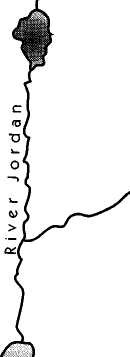
However, there is a site just above the Sea of Galilee, where the upper Jordan moves down to empty its waters into it, that from very ancient times has been called Gesher Benot Ya'acov (The Bridge of the Daughters of Jacob). This is a very ancient crossing-place. Indeed, it is claimed that Jacob's daughters forded the river here, hence the name given to it. However, no guide is able to provide the names of any alleged daughters of Jacob apart from Dinah. This is not unusual as far as Scripture is concerned, because the names of daughters are not generally recorded, unless they played some significant part in the narrative.
VERSE 22
"Only herein will the men consent unto us for to dwell with us, to be one people"—With diplomatic skill, Hamor dwelt on the advantages of association with the children of Israel. They were threefold: politics, profit, and personal considerations. He briefly made mention of the painful condition (submitting to circumcision), and then quickly and smoothly, moved on to reaffirm the advantages.
"If every male among us be circumcised, as they are circumcised" — The significance of the rite was not explained; and in the absence of any such understanding, circumcision became merely concision (Phil. 3:2), a mere mutilation, by which pain and inconvenience are suffered to no purpose.
VERSE 23
"Shall not their cattle and their substance and every beast of their's be our's?" — The painful condition having been briefly stated, Hamor swiftly moved on to describe the material benefits that would accrue therefrom. He appealed to their cupidity, realising that this would constitute for them a telling argument.
"Only let us consent unto them, and they will dwell with us" — Though Hamor was chief, he evidently ruled the city on democratic principles, and thus appealed for the co-operation of each one.
VERSE 24
"And unto Hamor and unto Shechem his son hearkened all" — Evidently Shechem added his words of appeal to those of his father; and the people, motivated by greed, accepted the proposition. The Hebrew word for hearkened, shama signifies to hear intelligently with the object of endorsing and applying what has been said.
"That went out of the gate of his city" — A Hebraism which, in this case implies all the men of war; all who could independently move on their own account.
"And every male was circumcised, all that went out of the gate of his city" — They submitted to the painful operation which incapacitated them for some days.
Simeon and Levi's Treachery — Vv. 25-29
The Shechemites, suspecting nothing, agree to the terms imposed on them, and the rite is performed. On the third day, however, when the pain and fever resulting from the operation is at its height, Simeon and Levi, two of Dinah's own brothers, who had connived to execute a terrible vengeance, proceeded to do so (v. 13, Ch. 49:5-6). With sword in hand, they "slew all the males." Then taking their sister with them, but leaving the spoil of the town untouched, they leave. This terrible deed is committed without the knowledge of Jacob. The other brothers, however, then enter the devastated city, despoil it, and taking captive all who remain alive, return to their own place.
VERSE 25
"And it came to pass on the third day, when they were sore, that two of the sons of Jacob," — It is said that the effect of the operation is particularly felt on the third day.
"Simeon and Levi, Dinah's brethren, took each man his sword" — As Dinah's full brothers, they felt the disgrace more than did the others. Unknown to Jacob (Gen. 49:5-7), but perhaps known to some of the other brethren (cp. v.27), they took counsel together, and determined upon a terrible and treacherous vengeance.
"And came upon the city boldly, and slew all the males" — Seeing that all the men were incapacitated, there was little real courage in these two men coming "boldly" upon the city. Moreover, they probably had other retainers with them to support them in their action. Their act of vengeance, was an act of treachery (cp. Vv. 15-16), and, therefore, is inexcusable. But in extenuation thereof it must be urged that Dinah was retained a prisoner in the house of Shechem, without any hope of release apart from violence; and, further, having incorporated the covenant sign in their flesh, the men of the city had brought themselves under the shadow of judicial condemnation. Nevertheless, Simeon and Levi should have discussed the matter with Jacob their father. Perhaps they feared the natural timidity of Jacob, and were irritated at what they considered his lack of action. But, surely, the one who had wrestled with the angel, and had submitted to the guidance of God in the past, and did not fear to defend his right to the piece of land that he occupied close to Shechem (Gen. 48:22), had sufficient faith and courage to commune with God in regard to the problem now before him. Be that as it may, the two brothers took the law into their own hands (as their descendants did in the days of the Lord: see Notes Gen. 49:5-7) with disastrous effect.
VERSE 26
"And they slew Hamor" — There was judicial justice in what they did, but not in the treacherous way they went about it. Hamor had tried to use the sin of his son to his own advantage hoping to obtain riches by this means.
"And Shechem his son with the edge of the sword" — By forcibly defiling one of the covenant people, he deserved death; in retaining her in his house, he made it obvious that he would only give up Dinah by force.
"And took Dinah out of Shechem's house" — This was the sole objective of their attack, and if it had not been accompanied by the most blatant form of deception, it could be applauded as an act of courage and high principle. But their secret counsel, the lying deception by which they brought the men of the city into their power, their ungodly use of the covenant sign to wreak their vengeance, and deliver their sister, are indefensible. Even the wholesale slaughter in which they engaged could have been avoided.
"And went out" — Their mission accomplished, they left, leaving behind them a mourning city, with its spoil untouched.
VERSE 27
"The sons of Jacob" — These are not enumerated. Leah had six sons in addition to her daughter Dinah, and it may have been other full brothers who now converged on the city. Whoever they were, they evidently knew of the intentions of Simeon and Levi, and whilst not joining in their attack, were prepared to profit by their action.
"Came upon the slain, and spoiled the city, because they had defiled their sister" — As in v.5, the word "defiled" signifies to render unclean.
VERSE 28
"They took their sheep, and their oxen, and their asses, and that which was in the city, and that which was in the field" — They removed all their possessions.
VERSE 29
"And all their wealth, and all their little ones, and their wives took they captive, and spoiled even all that was in the house" — They completely sacked the city, although it must have been an extremely small one in those days.
Jacob's Reproof — Vv. 30-31
Deeply shocked, Jacob rebukes Simeon and Levi for their crime. Furthermore, knowing what reaction his family can expect from the Canaanites in the land, he recognises that the foolish and treacherous action of his two sons has placed the future of himself and his descendants in jeopardy. Simeon and Levi, however, remain unrepentant and seek to justify their action.
VERSE 30
"And Jacob said to Simeon and Levi, Ye have troubled me to make me to stink among the inhabitants of the land, among the Canaanites and the Perizzites" — He did not deny that the action of Shechem merited punishment, but he condemned Simeon and Levi for the brutal and unscrupulous methods they adopted in carrying it out.
"And I being few in number, they shall gather themselves together against me, and slay me; and I shall be destroyed, I and my house" — God had promised to protect Jacob wheresoever he went, but the patriarch realised that he must not tempt God. He recognised that the position of privilege brings added responsibility; and that one cannot presume upon the former whilst ignoring the latter. He evidently made the problem a
matter of prayer, with the result that the arm of God was extended to help (Ch. 35:5).
VERSE 31
"And they said, Should he deal with our sister as with an harlot?" — The word "harlot" is zanah, and signifies one who is well fed and wanton; one who prostitutes herself for hire. Of course, the answer to the question, is No! The folly of young Dinah, had brought disgrace to the family, and the fierce indignation of her two brothers was fully justified. But they should not have allowed this to blind them to other considerations and responsibilities. Her action did not justify the lying, treachery and murder in which they had indulged. They had condemned Shechem for betraying Dinah, but they had betrayed God; they had accused the Hivites of unfaithfulness, but they had been unfaithful to their solemn word; they had condemned the guilt of Dinah and Shechem, but they had been guilty of sin in permitting the covenant-sign to be the means of gratifying their personal anger, and so bringing the Truth itself into contempt. Jacob never forgot their action, and recalled it on his death-bed with horror (Gen. 49:5-7). As we shall see at that place, it was typical of the treachery, sin and violence of which the nation was guilty in crucifying the Lord.
In the sad circumstances recorded in this chapter, which were brought about by the irresponsible folly of young Dinah, there does appear a clearly defined type to which Jacob makes reference in Gen. 49:5-7. The treacherous council of Simeon and Levi brought about the murderous death of Shechem, the Burden-Bearer, and resulted in Jacob being brought into ill favour with the surrounding nations (Gen. 34:30, 35:5). This was exactly the case following the crucifixion of the Lord (our Burden-Bearer), which is described as murder (Acts 7:52). The murder of Shechem, therefore, foreshadowed the crucifixion of flesh. No doubt Jacob had intended to exact retribution and deliver Dinah, but his two sons took the matter into their own hands, and by treachery and violence accomplished that which he would have attempted in another way. Their treachery and murder brought judgment upon themselves and the tribes as a whole (cp. Gen. 49:5-7, and see Acts 2:23), as was also the case in regard to the crucifixion of the Lord.
Comments