444. EXODUS - CHAPTER SEVENTEEN
DIVINE PROTECTION IN SUPPLYING WATER AND IN WAR
The children of Israel make their way slowly up the Valley of Rephidim: a long, stony wadi that leads away from the coastal plain into the labyrinth of high granite mountains that cluster throughout the peninsula. The way is hard, seemingly ever onwards and upwards. It is arid, a sandy waste devoid of oases until well into the valley. Inevitably the Israelites experience an acute lack of water. This leads to further murmuring on their part, prayer on the part of Moses, and a supply of water (this time through a smitten rock) at a place afterwards called Massah and Meribah. At the same time, the Israelites are attacked by Amalek, but through the help of Yahweh, the enemy is defeated. Amalek represents the flesh in political manifestation, and at the conclusion of the skirmish, Yahweh proclaims a declaration of everlasting war against Amalekites. In commemoration of the victory achieved by Joshua and his army, and in anticipation of others yet to be won, Moses builds an altar, giving it the title of Yahweh-nissi. References to the miracle are found in Deu. 8:15; Neh. 9:15; Psa. 78:15-16, 20; 105:41; 114:8; Isa. 48:21; 1Cor. 10:4; Heb. 3. References to the attitude of the people are in Deu. 6:16; Psa. 95:8; Heb. 3:8. The chapter before us reveals [1] the need of the water of life — the Word of God (vv. 1-7), and [2] the power of the uplifted hands of prayer (vv. 8-16).
The People Complain Of Thirst — vv. 1-3.
The Israelites struggle up the long slope of the valley of Rephidim, arriving "faint and weary” (Deu.25:18). Though there are external evidences of an oasis, they find no water. Angrily they turn upon Moses, accusing him of taking them out of Egypt only to let them perish in the wilderness.
VERSE 1
"And all the congregation of the children of Israel journeyed from the wilderness of Sin" — The word for "congregation" is edah, the feminine form of the word is appropriate, for the nation constituted Yahweh's Bride (Isa. 54:5; Eze.16:8). For the significance of the word Sin, see note on ch. 16:1.
"After their journeys" — There were two intermediate stations not recorded in Exodus, namely Dophkah and Alush (cp. Num. 33:12-13).
"According to the commandment of Yahweh" — They were guided on their way by the Cloud of the divine presence in the wilderness.
"And pitched in Rephidim — Rephidim signifies The Places of Rest. It is identified by some with the Wady Feiran, a wide, stony valley that leads from the coastal plain into the confusion of granite mountains through which it twists and turns on its way to Sinai. The valley constantly ascends to the plateau on which the twin peaks of Horeb and Sinai are situated. The entrance to the wadi is exceedingly stony, and therefore difficult to traverse. It leads to the oasis of Rephidim.
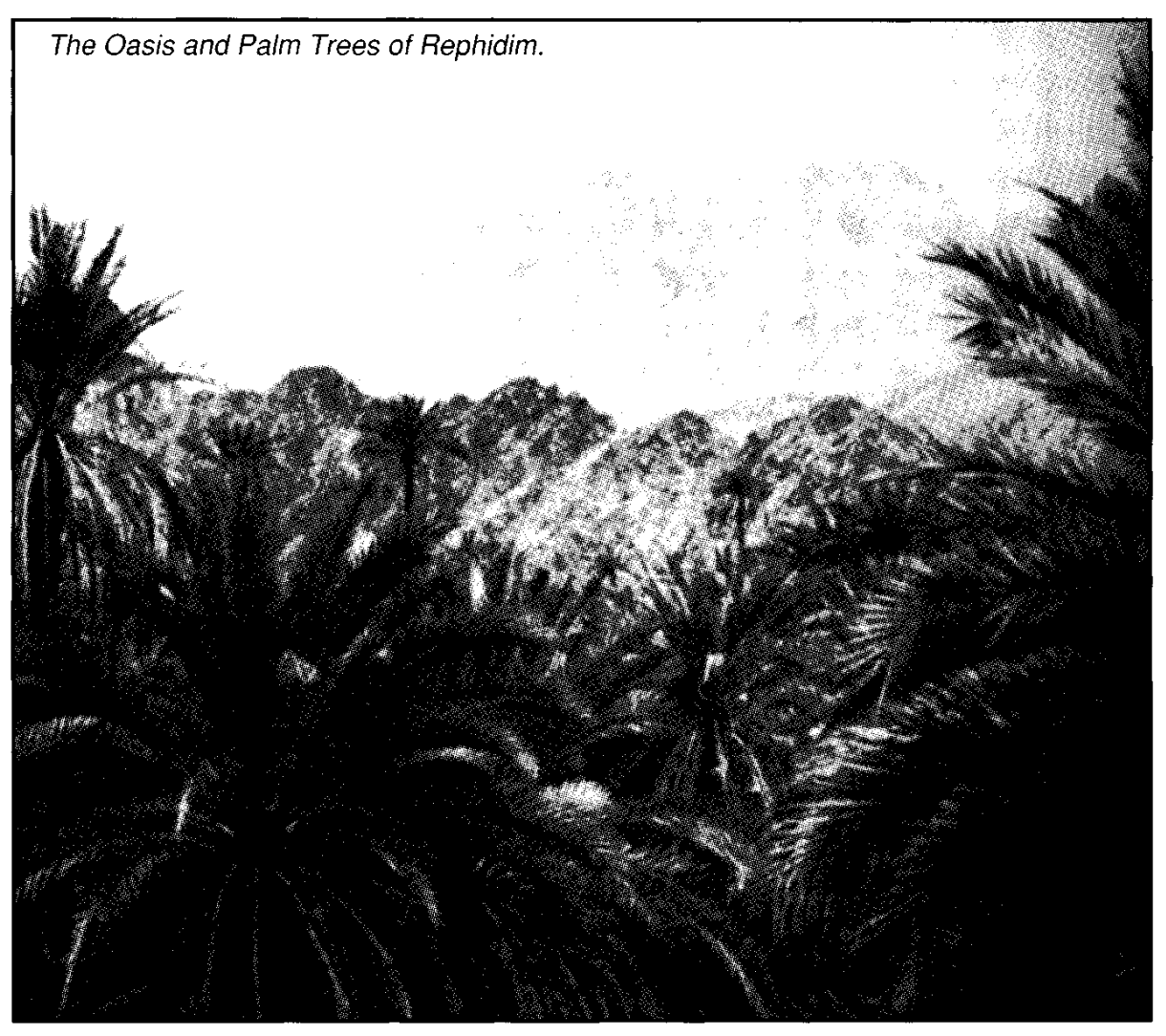
"And there was no water for the people to drink" — Rephidim is noted for its clusters of palm trees which extend for several kilometres, and are fed by subterraneous springs. Thus the Israelites would find every evidence of fertility, but no water, for it is hidden under the earth. Similarly the "living waters" are not discerned except by faith (Jn. 4:14).
VERSE 2
"Wherefore the people did chide with Moses, and said, Give us water that we may drink" — The word "chide" is rendered by Rotherham as "found fault." Their demand was quite unreasonable, failing to turn to Yahweh for assistance; its cause was lack of faith in Him.
"And Moses said unto them, Why chide ye with me? Wherefore do ye tempt Yahweh?" — Moses pointed out that the complaint of the people was not against him, but against Yahweh. The Israelites tempted Yahweh by limiting His ability to provide them with their needs. (Psa. 78:17-20, 40-42). It was their persistence in so doing that resulted in that generation perishing in the wilderness (Psa. 95:8-10; Heb. 3:8; 1Cor. 10:9). The Law legislated against such limiting of God's power (Deu. 6:16).
VERSE 3
"And the people thirsted there for water; and the people murmured against Moses, and said, Wherefore is this that thou hast brought us up out of Egypt, to kill us and our children and our cattle with thirst?" — See note on ch. 15:24 for the ten causes of murmuring against Moses. Compare the greater intensity of the accusation used on this occasion by the people, with their more moderate complaints on the two previous incidents recorded (chs. 15:24; 16:3). Becoming increasingly vocal, they now reach the point of open rebellion.
Their words show that though their flocks and herds must have been seriously depleted, they still retained some animals. These were doubtless kept for their milk, for Bedouins have been known to exist on milk alone for weeks. As well, animals were required for the approaching Passover celebrations. According to Jose-phus (Book 3:2:4) the flocks and herds of the Israelites were supplemented by the defeat of the Amalekites described in this chapter.
Water From The Smitten Rock - vv. 4-7.
Faced with the threat of rebellion on the part of the thirsty and despairing people, Moses again appeals to Yahweh, and is instructed to take his rod and smite a rock upon which the angel would stand, and sufficient water would be supplied. In consequence of the faithlessness of the people, the place is given the names of Massah and Meribah.
VERSE 4
"And Moses cried unto Yahweh, saying" — It was characteristic of Moses, in time of crisis, to instantly carry his problems to Yahweh (See Exo. 15:25; 32:30; Num. 11:2,11; 12:13; 14:13-19).
"What shall I do unto this people? They be almost ready to stone me" — This is the first, recorded reference in Scripture to death by stoning.
VERSE 5
"And Yahweh said unto Moses, Go on before the people, and take with thee of the elders of Israel" — The miracle is identified by Paul as a type of the sacrifice of Christ (1 Cor. 10:1-4). As such, each detail is significant. Moses is instructed to take some of the elders to act as witnesses, and leaving the people at Rephidim, continue to the region of Horeb.
The apostles of the Lord acted as his witnesses on behalf of the nation as a whole (Acts 1:8) and ultimately extended his teaching throughout the world.
"And thy rod wherewith thou smotest the river, take in thine hand, and go" — This rod was that which turned into a serpent (ch. 7:15), and not Aaron's rod which turned into a crocodile. It therefore can be typically identified with the serpent-flesh. The rod was used to turn the water of the Nile into blood, causing it to become undrinkable to the Egyptians (ch. 7:20-21): now in the hand of Moses the rod was about to supply water to satisfy the Israelites.
VERSE 6
"Behold, I will stand before thee there upon the rock in Horeb" — The angel who conversed with Moses was Yahweh's representative (ch. 23:20-21; Num. 12:8), and his appearance on the rock was an answer to the question of the people, "Is Yahweh among us or not?" v. 7). Horeb is some kilometres distant from Rephidim, so that Moses was required to separate himself at a distance from the people. There is to this day a rock (Tzur) in the area which is traditionally identified with the rock of the miracle. It is a vast block of red granite, 5 metres (15 ft) long, 3 metres (10 ft) broad, and 4 metres (12 ft) high, west of Mt. Horeb. The rock is pitted with holes and channels which, it is claimed, could only have been formed by the bursting out and running of a considerable quantity of water (The Treasury Of Scripture Knowledge). We observed this rock during the course of one of the Logos Tours of Bible Lands.
"And thou shalt smite the rock, and there shall come water out of it, that the people may drink" — It is described as gushing out in ample supply like a river (Psa. 78:15,20; 105:41; 114:8). The miracle is typical of the water of life supplied by the Lord when he was "smitten" by crucifixion (1 Cor. 10:4; John 4:10-14; 7:38). He is the "spiritual rock" from which comes the "spiritual drink." That "Rock" was smitten before the grace could flow forth to those whom God should call (Acts 15:14; Gal. 3:1).
"And Moses did so in the sight of the elders of Israel" — They were witnesses who could report it to the people, and so encourage them to walk towards the place from whence it could be obtained; though it would continue to flow down to where they were encamped.
VERSE 7
"And he called the name of the place Massah, and Meribah" — Massah signifies Proof and Meribah signifies Contention. The names were given to the site because the people found fault and through contention presumed upon Yah-weh to prove Himself. Both names commemorate the faithlessness of the Israelites in the incident recorded (see Deu. 6:16; 33:8; Psa. 81:7; Heb. 3:8). What expressive and beautiful names might have been given if the people, without fault-finding and faithlessness, had patiently awaited Yahweh's time to work.
"Because of the chiding of the children of Israel, and because they tempted Yahweh, saying, Is Yahweh among us, or not?" — As the Israelites under trial in the days of Moses questioned the fact of the divine providence, so they later rejected that the Lord Jesus was a manifestation of Yahweh, claiming that he uttered blasphemy when he acknowledged that he was the Christ, the Son of God (Mat. 26:63-64).
Victory Over Amalek — vv. 8-16.
About the same time as the miracle is performed at the Rock, the Amalekites strike at the children of Israel, attacking the "feeble" in the rear while they are faint and weary (Deu. 25:18). Since the attack takes place at Rephidim, it evidently first involves those who have not yet caught up with the main camp. Joshua is selected to organise Israel's defence to protect the people, whilst Moses, accompanied by Aaron and Hur, and with the rod of God in his hand, ascends the nearby hill overlooking the scene. As Amalek prevails against the forces of Israel in the valley below, Aaron and Hur assist Moses to maintain his vigil, by placing a stone under him for a seat, and supporting his arms until the close of the day. In consequence, Amalek is defeated, and the victory is Yahweh's. A declaration of total warfare is proclaimed by Yahweh against Amalek, and is written in a book to be read aloud to Joshua as a memorial. An altar is built commemorating the victory, and given the name of Yahweh-nissi, as a token of the oath of Yahweh to ultimately destroy Amalek completely from the earth.
VERSE 8
"Then came Amalek, and fought with Israel in Rephidim" — According to some commentators, Amalek signifies Warlike. Others, such as The Hebrew and English Bible Student's Concordance give its meaning as A Strangler of the People. Both have a formidable connotation. Amalek was a descendant of Esau (Gen. 36:16), and as such, is typically representative of the flesh in political manifestation (see Obadiah 16). According to Jose-phus, the army comprised a confederacy of powers. Balaam later described the tribe as "the first of the nations" (Num. 24:20) whose latter end "shall be that he perish for ever." The king of Amalek is given the name of Agag (Num. 24:7), though this is thought by some to be a title, such as Pharaoh. It is rendered "Gog" in the Sep-tuagint. If Josephus is to be accepted, Israel was attacked by a confederacy of nations headed by Gog, typifying the latter-day attack as described in Ezekiel 38. Rephidim, signifies Places of Rest, pointing forward to the "restful" state of the people in the land at that time (Eze. 38:1 1). The cowardly Amalekites swooped down upon the stragglers of Israel as they moved up the valley "faint and weary" (Deu. 25:17-19).
VERSE 9
"And Moses said unto Joshua" — This is the first mention of Joshua in the Bible. His name was originally Oshea, Salvation (Num. 13:16), but Moses called him Yahoshua (contracted in English to Joshua), meaning Yahweh's Salvation, or He Who Will Be Salvation. "Joshua" is the Hebrew form of "Jesus," and his name is so rendered in the N.T. (e.g. Heb. 4:8). Joshua is described as "the minister" of Moses (Exo. 24:13). He was the son of Nun (a name meaning Perpetuity) of the tribe of Ephraim. He had known slavery in Egypt, but is now elevated unto Commander-in-Chief of the Israelites, and in that capacity proved himself to be an outstanding soldier and strategist. Many a general has closely studied Joshua's conquest of Canaan and followed his strategy.
As a type of Christ's victory over sin (Heb. 2:24), Joshua's successful invasion of the Land of Promise made it possible for every man to obtain the heritage promised him, though it required individual initiative and effort to secure it (as it does in Christ — cp. Josh. 18:3; Phil. 2:12).
Joshua's victory over Amalek opened the door of further usefulness and responsibility to him. He is called the "servant of Moses" (Num. 1 1:28; Josh. 1:1), and as such manifested unswerving loyalty and devotion to Moses. Thus both Moses and Joshua together typify the ministry of the Lord Jesus at its first and second advents.
Joshua was chosen with eleven others, to search out the land of Canaan (Num. 13:4-16), and with Caleb presented a good and faithful report, in contrast to that of the other spies. The people rejected his report, and in consequence, were condemned to wander thirty-eight years in the wilderness without hope.
He is revealed as a saviour, leading the people into the land, and as a statesman, exercising patience and tact towards the people. His ability marked him out as successor of Moses, and he was filled with the spirit of God (Deu. 34:9), and motivated by His word (Josh. 1:8). He stood as an example of integrity and faithfulness to the people (Josh. 24:15) which they followed, for the nation continued to serve Yahweh all the days of the elders that outlived him (Josh. 24:31). His death, at 110 years of age, was deeply mourned, and his outstanding service nationally acknowledged.
"Choose us out men, and go out, fight with Amalek" — Joshua's army may have been armed with equipment from the drowned Egyptians (Exo. 14:30-31), but were untrained in military manoeuvers, being formerly a nation of slaves in Egypt. Therefore, under normal conditions, the Israelites would have been no match for the warlike Amalekites.
"To morrow I will stand on the top of the hill with the rod of God in mine hand" — The word for "hill" is gibah, "hillock." In ascending the hill, Moses would be able to overlook the fighting in the valley beneath.
Though Joshua's army may have had some weapons from the event at the Red Sea, the real weapon of victory was the rod in the hand of Moses which had already so devastatingly manifested Yahweh's power against the Egyptians (v. 5). Moses' use of the serpent rod represented the victory of prayer over the power of the serpent-nation of Amalek; so also through his sacrifice, the Lord Jesus Christ destroyed the sin-power in himself (see Heb. 2:14; 5:7-8).
VERSE 10
"So Joshua did as Moses had said to him, and fought with Amalek; and Moses, Aaron, and Hur went up to the top of the hill" — The presence of these three men in such a commanding position would have been encouraging to the warriors in the valley below. Their several names form an exhortation to faithful service, for they signify: Drawn Out, Enlightened, Made White or Splendid, expressing the purpose Yahweh had in view in bringing His people out of Egypt; they were "drawn out" through the Red Sea, "enlightened" at Sinai, and would be "made glorious" in the Promised Land. The positions in the nation of the three men on the hill represented the Law, the Priesthood, and the Kingship: all of which are now vested in the Lord Jesus Christ.
VERSE 11
"And it came to pass, when Moses held up his hand, that Israel prevailed" — Moses' outstretched hand displayed the serpent-rod, that witnessed to his power over the flesh. The fact that Israel prevailed only at such times as the hand of Moses was extended, demonstrates the truth of such statements as Psa. 20:7; 33:16-18, and Rom. 9:29, and teaches that victory in the battle of life does not rely upon personal prowess or fleshly power, but on Yahweh.
Moses, with his hand outstretched on the hill above the warring hosts, presented a picture of their leader in prayer, pleading on their behalf to God in heaven. Prayer is needed when the enemy attacks: it becomes more powerful with the support of others (cp. Rom. 15:30), seen at this time in Aaron and Hur; and it can result in ultimate victory.
But prayer to be effective requires personal endeavour, and therefore there was a blend of co-operative action in the labours of Joshua to that end, whilst his beloved leader gave himself to prayer on the hill above. Joshua fought in faith, and the actions of faith (1 John 5:4; 1 Cor. 15:57), with the fervency of prayer (Col. 4:2; Eph. 6:18; James 5:16-18) will ensure personal victory over worldly influences that would destroy us.
"And when he let down his hand, Amalek prevailed" — Through weariness induced by weakness of the flesh (Rom. 8:3) in view of the passing of time in the battle, Moses' hand dropped. When this happened the superior prowess of Amalek in the art of war became evident, and it prevailed. Yahweh gave the Israelites strength, vigour and courage whilst Moses interceded, and left them to themselves when the intercession ceased.
VERSE 12
"But Moses' hands were heavy" — Natural weariness got the better of Moses, and his hands began to droop. He probably held the rod alternately with one hand and the other, until both were so tired that he could hold them up no longer. Effective prayer needs effort, and the flesh tires. In that regard, the mediatorship of Moses (see Gal. 3:19) was not as effective as that of Christ. Like the apostles who fell asleep when set by their Lord to watch and pray, Moses' "spirit indeed was willing, but the flesh was weak" (Mat. 26:41). We are exhorted to "lift up the hands which hang down, and the feeble knees" (Heb. 12:12).
"And they took a stone, and put it under him, and he sat thereon" — The word "stone" is eben which is from a common root with the Hebrew word for "son" (ben) and signifies to build, as into a family house. Reference to the "stone of Israel," the Lord Jesus Christ, is found in Gen. 49:24; Psa. 118:22; Isa. 8:14; 28:16; Zech. 3:9 etc. Moses, great leader though he was, needed the support of such a stone: "for what the law could not do in that it was weak through the flesh, God [did] sending His own Son in the likeness of sinful flesh" (Rom. 8:3). It was faith and prayer that saved Israel that day Amalek attacked, and Moses on the hilltop illustrated that the Law could only succeed through such.
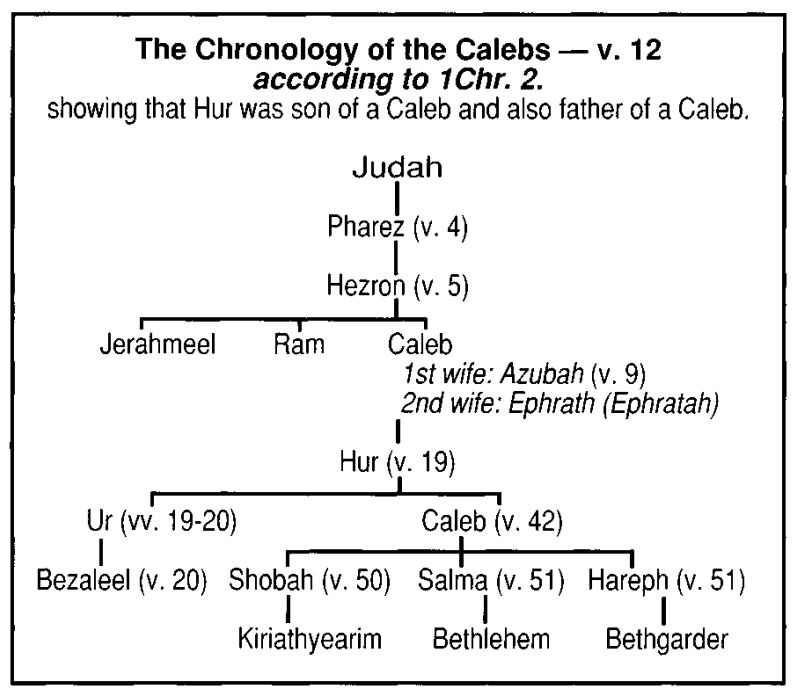
"And Aaron and Hur stayed up his hands, the one on the one side, and the other on the other side" — Hur was a prince of Judah. His name means Whiteness or Splendour. He was the son of a Caleb (not the man who later spied out the land with the twelve) by Ephratah, and therefore the great-grandfather of Beza-leel, the skilful artificer who supervised the building of the tabernacle. The trio on the hill, therefore, parabolised the purpose of God in Christ. They represented the priesthood and rulership of Israel supporting the Law which, through weakness of the flesh (Rom. 8:3), must rest upon the Stone.
"And his hands were steady until the going down of the sun" — Faith, prayer and action brought victory to Israel at the end of the day of warfare against the enemy. Similarly, the work of the greater mediator on behalf of his "warriors of faith" in the time of probation continues until the end.
VERSE 13
"And Joshua discomfited Amalek and his people" — The Septuagint has "all his people," which supports the note above, taken from Josephus, that Israel was attacked by a confederacy under Amalek.
"With the edge of the sword" — Similarly the "sword of the Spirit" (Heb. 4:12) is the equipment with which we faithfully combat the "sin which doth so easily beset us" (Heb. 12:2).
VERSE 14
"And Yahweh said unto Moses, Write this for a memorial in a book" — The Hebrew has the definite article "the book." Evidently a diary already existed, in which Moses entered events of interest. Now he is instructed to record in it the great victory of faith and prayer over Amalek, and the threat uttered against them. The record was to be for a memorial both as to available means of victory, as well as to the intention of Yahweh to blot out the name of Amalek. This latter work was entrusted to Saul, as Israel's king, but who failed to carry out the will of Yahweh (1 Sam. 15:3). It was, however, accomplished in the days of Hezekiah (1 Chr. 4:41-43).
Amalek represents the flesh in political manifestation, and is antitypically fulfilled in Gog as its latter-day chief. It is Christ who will occasion its final destruction.
Memorials are recorded, to be kept in mind, "throughout all generations" (Psa. 135:13). They are exclusive to Israel, causing Nehemiah to reject the advances of the Samaritans on the grounds that they had "no memorial" in Jerusalem.
Things recorded as Memorials include: [1] The Name of Yahweh (Exo. 3:15; Hos. 12:5); [2] The Passover (Exo. 12:14); [3] The deliverance from Egypt (Exo. 13:9); [4] The destruction of Amalek (Exo. 17:14); [5] The ephod stones (Exo. 28:12); [6] The breastplate of judgment (Exo. 28:29); [7] The redemption money (Exo. 30:16); [8] Yahweh's covenant (Exo. 34:27); [9] The blowing of trumpets (Lev. 23:24); [10] The offering of jealousy (Num. 5:15),18,24); [11) The frankincense on the shewbread (Lev. 24:7); [12] The silver trumpets (Num. 10:10); [13] The brazen censers (Num. 16:40); [14] The booty of war with the Midianites when Balaam was slain (Num. 31:54); [15] The stones of Jordan (Josh. 4:7); [16] The crowns of the righteous in the future temple (Zech.6:14); [17] Greatest of all, the memorial of Christ's offering (1 Cor. 11:24-25).
All these memorials were designed to be kept in remembrance: each of them has an important lesson to convey. The word "remembrance" used in relation to the tokens of the bread and wine, is from the Greek anamnesis, "memorial." The word signifies not a mere recalling of the mind to an historic fact or incident, but the awakening of the mind to the significance of what that incident is intended to spiritually teach.
"And rehearse it in the ears of Joshua" — The Hebrew siym rendered "rehearse" signifies "to put or place." It was to be impressed upon Joshua so that he should not forget; it was handed down to him as the successor of Moses, in order that there might be no agreement between Israel and Amalek.
There are many lessons to be learned from the attack of Amalek. It came suddenly and unexpectedly against the stragglers of the pilgrim-warriors in the wilderness. It was directed against an undefended rear of the nation, and launched against the feeble, the faint and weary (Deu. 25:15-18) who had become demoralised by murmuring (Exo. 17:1-5). True ecclesial shepherds will supervise their flocks, endeavouring to strengthen the feeble among them, protecting them from attack, educating them against complaining. Joshua needed to be reaffirmed concerning this, and reminded of these things, hence the reading of the Memorial to him.
"For I will utterly put out" — The divine expression conveys particularly emphasis. The sin-power of the flesh is to be destroyed in all His people as it was in the Lord by his sacrifice (Heb. 2:14). There is to be no compromise or allowance of the flesh in any respect (cp. Rom. 13:14).
"the remembrance of Amalek from under heaven" — The final defeat of Amalek was also predicted by Balaam (Num. 24:20), and was to be accomplished when Israel was in the land (Deu. 25:19). Though set the task, King Saul (as typical of Israel after the flesh) failed to accomplish it (1 Sam. 15:3, 22-23). The Amalekites attacked David at Ziklag (1 Sam. 30:1), and were defeated by him (v. 17). Later he conquered the nation of the Amalekites (2 Sam. 8:12), and it was finally destroyed in the days of Hezekiah (1 Chr. 4:43). King Agag (Num. 24:7) returns in the antisemitic Haman (Est. 3:1), and in Gog of the latter days (Eze. 38). The Amalekites delighted in war, and therefore typify those whom Christ as "Prince of peace" will destroy (Psa. 68:30; Rev. 11:18) in order to establish his realm of righteousness, the precursor of peace throughout the earth.
VERSE 15
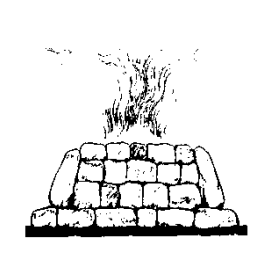
"And Moses built an altar" — Specific instructions were laid down for the building of altars (Exo. 20:24-25). If built of stone, as was usually the case, they must be constructed of unhewn stone, as representative of human nature shaped by God. This points forward to Christ our altar (Heb. 13:10). An altar, therefore, stood for God in sacrificial manifestation. The character of the Lord was divine, though his nature was human. Upon the Christ-altar, constructed by divine moulding out of the elements of flesh and atoned by sacrifice, we make our personal offerings of devotion for victories in life.
"And called the name of it Yahweh-nissi" — The name signifies He Who Shall Be Mine Ensign. Yahweh in sacrificial manifestation (the Lord Jesus Christ) is the "Ensign" to lead Israel to victory. Faced with the challenge of his own nature, Paul asked: "Who shall deliver me from this body of death?" In effect, he
replied "Yahweh-nissi!" — "I thank God, through Jesus Christ our Lord" (Rom. 7:24-25). Christ is set forth as a "leader and commander to the people" (Isa. 55:4). Only by drawing their strength from him can saints succeed in the battle of life. The power of the Word, supplemented by prayer, will strengthen and sustain them in
their walk. Whereas the man of the world thinks to succeed against his enemies by his own strength, means or ingenuity, the man of the spirit puts no confidence in his own ability, but relies upon the Yahweh-nissi Altar which can bring him victory (Phil. 3:3; 4:13). It is under that Ensign he elects to fight.
The Yahweh-nissi altar is also prophetic of the ultimate victory of the Spirit over the flesh in a national sense. As the confederacy under Agag was destroyed by divine means, so also will be that of the latter-day Gog. The antitypical Yahweh-nissi altar will destroy the power of flesh politically established, for it is a multitudinous altar comprising the Lord Jesus Christ and all in him. Thus Isaiah predicts: "All ye inhabitants of the world, and dwellers on the earth, see ye, when He [Yahweh] lifteth up an ensign [Heb. nes] on the mountains... In that day there shall be a root of Jesse that shall stand for an ensign [nes] of the people: to it shall the Gentiles seek, and his rest shall be glorious" (Isa. 18:3; 11:10). That will be the day of Yahweh's triumph in the earth. The serpent-power will be dealt a blow that shall ultimately prove fatal. And it will be administered "Not by [fleshly] army, nor by power, but by My spirit, saith Yahweh Sabaoth" (Zech. 4:6). See also Zech 9:16.
The use of the word nes (the root of the Hebrew nissi), can be further traced in Num. 21:8-9; Psa. 60:4; Isa. 49:22; 62:10 etc.
VERSE 16
"For He said, Because Yahweh hath sworn" — The literal Hebrew is "That a hand upon the throne of Yah" which Rotherham renders as "Because of a hand against the throne of Yah!" Gesenius gives it as "Surely the hand is on the banner of Yah," which the A.V. margin identifies as the "hand of Amalek." This suggests that in attacking Israel, Amalek had, as it were, lifted up his hand against the rule of God, against His throne destined to be established in Israel. The antisemitism of Gog will also vigorously oppose the reign of Christ on earth.
"That Yahweh will have war with Amalek from generation to generation" — This statement records Yahweh's unceasing hostility to fleshly institutions that are established in opposition to His rule. From generation to generation, warfare has continued against antitypical Amalek. But the day of final victory is at hand. Flesh everywhere will be subjected to the rule of Christ, and the national institutions of mankind overthrown. Men, at last, shall look with faith toward the living Yahweh-nissi Altar, acknowledging the Truth they have resisted so long. Yahweh shall be elevated in the earth, and His victory established through His Son in the sight of all mankind (Jer. 3:17).
Comments