CHAPTER TWENTY-THREE
INSTRUCTIONS CONCERNING ATTITUDES TOWARDS OTHERS: ON OBSERVANCE OF NATIONAL FEASTS: AND REGARDING THE CONQUEST OF CANAAN
The heart of the instructions of this chapter is the information given concerning the overshadowing presence and influence of the angels of heaven, and the authority they have been given in supervising YahweWs people (vv. 20-23). The people are called upon to recognise the reality of their invisible presence, to bear in mind that the final Judgment awaits them, and to recognise that their walk in faith will be successful if they scrupulously follow the instructions delivered unto them.
It can be summarized as [a] Seven laws of social ethics (vv. 1-9); [b] Six laws of religious worship (vv. 10-19); [c] Four laws of conquest (vv. 20-23). The first relate to [1] perjury, v. 1; [2] against following mere popular opinion, v. 2; [3] against favouring the poor because he is such, v. 3; [4] How love must be manifested towards an enemy, vv. 4-5; [5] against injustice, vv. 6-7; [6] against bribery, v. 8; [7] against oppression, v. 9.
Then follow laws relating to the sabbaths and annual festivals, vv. 10-19.
Finally, a statement regarding the angelic supervision of their proposed wars of conquest, vv. 20-33.
Seven Laws of Social Ethics — vv. 1-9.
In order to uphold the benefits of the divine law amongst the nation, Moses delivered certain principles to govern social contact.
VERSE 1
"Thou shalt not raise a false report" — The Ninth Commandment prohibited false witnessing (Exo. 20:16 and see Lev. 19:16; Psa. 15:3; 101:5; Pro. 10:18). Here the matter is taken further. The word "raise" is from the Hebrew nasa and signifies both "to receive" or "to repeat." The RV renders it as "take up" a report, hence not merely to originate such a thing, but to extend or repeat it. The Amplified Bible has: "You shall not repeat or raise a false report." What incalculable harm has been done by ignoring this law! How often has a matter with a semblance of truth been extended, perverted, altered, and then repeated to destroy a character! Such action is described as abominable in Yahweh's sight (Pro. 6:16-18). Let us strictly avoid it.
"Put not thine hand with the wicked to be an unrighteous witness" — Christ experienced the trial of an unrighteous witness. See it predicted (Psa. 35:11), and enacted (Mat. 26:59-61). Stephen (Acts 6:11), and Paul (2Tim. 4:14-17), together with others (IPet. 3:16; Rev. 12:10) received similar treatment.
VERSE 2
"Thou shalt not follow a multitude to do evil" — It is easy to do so, because the way of worldliness is a broad road, along which multitudes walk (Mat. 7:Π-Ι4). People do not like to be unpopular and therefore are reluctant to support an unpopular cause, preferring to follow the majority. Even a dead fish will float with the tide; but it requires a virile, active and healthy fish to swim against it! The man of God must manifest the independence of mind to seek Yahweh's counsel his a matters, and walk in His way irrespective as to the opinion of others (see how people can be swept along by a popular movement to evil and destruction — Gen. 6:1-3, 12; 7:1; 19:4; Exo. 32:1-5; Num. 14:1-10, 11, 15; 34:14; Mat. 27:24-26).
"Neither shalt thou speak in a cause to decline after many to wrest judgment" — Rotherham renders this difficult verse as: "Neither shalt thou answer in a quarrel so as to turn away after multitudes to deceive."
The tendency of flesh is to join a majority; the danger is that the majority may be supporting that which is wrong. It is possible for a person to speak in support of an issue merely to deceive others that he supports it, whereas he knows it to be wrong. It is difficult to stand against the tide of public opinion, but it is evil to imply support for a matter that one secretly opposes.
VERSE 3
"Neither shalt thou countenance a poor man in his cause" — Rotherham renders this: "Even a poor man thou shalt not prefer in his quarrel." Strict impartiality must be observed that truth may prevail (cp. Lev. 19:15). There is a tendency in flesh to support the underdog in certain circumstances, merely because he is such. This, too, is wrong. In all circumstances, it is Truth that should be supported, for Yahweh is "no respecter of persons" (Acts 10:34).
VERSE 4
"If thou meet thine enemy's ox or his ass going astray" — By "enemy" is meant a personal opponent, not a public enemy that has stood against the things of God. We are to overlook personal opposition, and to assist our "enemies" (Mat. 5:44).
See Deu. 23:6 for treatment of a national enemy.
"Thou shalt surely bring it back to him again" — The Law commanded consideration of one's enemy, teaching that it is necessary to overlook personal bias, and seek the good of others. The principle is that expressed by Paul in Rom. 5:8: "God commendeth His love toward us, in that, while we were yet sinners [and enemies — v. 10], Christ died for us."
The Law was consistent in this (see Deu. 22:1-4; Pro. 25:21). The statement, "thou shalt hate thine enemy" (Mat. 5:43) was not an injunction of the Law, but a Rabbinical interpretation of it (cp. v. 44; Luke 6:27-28; Rom. 12:17-21). Note the warning of Pro. 24:17-18 against rejoicing over an enemy's fall.
VERSE 5
"If thou see the ass of him that hateth thee, lying under his burden, and wouldest forbear to help him, thou shalt surely help with him" — It may go against the grain to help the animal of an enemy under such circumstances, and one might be induced to say, "Serves him right; he deserves what he is getting!" But the Law commanded that such an attitude be avoided, sternly put away, and a helping hand given to the animal. Such action would not only be an act of mercy toward a fallen beast, but would help to bring reconciliation to two Israelites, previously at variance with each other.
VERSE 6
"Thou shalt not wrest the judgment of thy poor in his cause" — As in v. 3,
there is a warning not to favour a poor man merely because he is poor, so there is provided another stern warning against oppressing him because he may lack the means to fight back. The scales of justice are to be held evenly; strict impartiality is to be exercised in all such decisions.
VERSE 7
"Keep thee far from a false matter" — Avoid such issues as much as possible,
otherwise you will bring upon yourself the vengeance of Him who will not justify the wicked.
"And the innocent and righteous slay thou not: for I will not justify the wicked" — The manifestation of divine vengeance against those who unjustly and violently oppose the innocent or the righteous will be very real (cp. James 5:4). In considering this, let it be borne in mind that it is possible to "slay" such people by word of mouth as much as by the sword (see Pro. 30:14).
VERSE 8
"And thou shalt take no gift" — The worst sin of a judge is to accept a bribe for the purpose of perverting justice. A suppliant then loses all confidence in law, whether divine or human. This is revealed in the practice of Eli's sons (ISam. 8:3), the lament of David (Psa. 26:10), the observation of Solomon (Pro. 17:23), the warning of Isaiah (Isa. 1:23, and the indictment of Micah (Mic. 3:9-11).
"For the gift blindeth the wise, and perverteth the words of the righteous" — The literal Hebrew is as the margin: "The gift blindeth the seeing." It causes the receiver to close his eyes to facts, so that the evidence of a righteous man is
warped and twisted by a corrupted judge.
VERSE 9
"Also thou shalt not oppress a stranger" — See note, ch. 22:21. On the contrary, the Law legislated that a stranger should be permitted to glean the fields of Israelites (Lev. 23:22; cp. Ruth 2:8), or, in cases of extreme poverty, assisted with the tithes that were taken up from the people (Deu. 26:12).
"For ye know the heart of a stranger, seeing ye were strangers in the land of Egypt" — They knew how a foreigner would appreciate kind actions, as they had known their need of such when in Egypt. Thus Israelites were taught to profit by their own experiences, and so to assist others. As members of a priestly nation, they were to act out of compassion towards those who were lonely and destitute (see Heb. 5:2).
The word "Egypt" is Mitzraiyim and signifies "oppressors."
Laws Concerning The Keeping Of Festivals — vv. 10-19.
The importance of setting aside time from normal avocations of life and devoting it exclusively to Yahweh is now emphasized. Israel is to celebrate not merely the sabbath day, but the sabbath year, in which the land is to rest for a whole year. This is now introduced for the first time, and is an ordinance not found among other nations. It may have appeared too drastic to an agricultural people, and, certainly, if they lacked faith, they would be hesitant to let a whole year pass by without cultivating the fruits of the ground. Faith would lead a godly people to look for a double increase the year before, but Israelites, like Gentile believers, often lacked such faith. Indeed, 2Chr. 36:21 can be interpreted as implying that it was neglected seventy times, or about half the time between the Exodus and the Captivity.
Three great annual festivals are listed as being obligatory upon Israelites to observe. They served to emphasize the status of Israel as a unique nation before Yahweh.
VERSE 10
"And six years thou shalt sow thy land, and shalt gather in the fruits thereof" — A spiritual lesson can be found behind this ordinance. The Lord likened the sowing of seed in a field to the preaching of the gospel (Mat. 13:1-9).
Six is the number of flesh, and the parable of the sabbath sets forth the opportunity of the field, representing mankind, to heed the gospel. 6,000 years is the time providentially designed for that purpose, after which ''the day of Yahweh" shall dawn: an epoch of 1,000 years (Mai. 4:2; 2Pet. 3:8-10). During the previous six thousand years, the gospel has been sown in the heart of flesh (the earth) with the object of gathering in a harvest unto Yahweh (James 1:18).
VERSE 11
"But the seventh year thou shalt let it rest and lie still" — During the seventh year, the people were to intermit their labours, and rely in faith upon Yahweh to supply the yield of harvest (Lev. 25:1-7). It foreshadowed the millennial sabbath of rest.
"That the poor of thy people may eat" — The sabbatical year was a period of solemn religious significance underlying the lessons of faith and dependence upon Yahweh. During the Feast of Tabernacles held that year, the Law was read in its entirety before the people (Deu. 31:10-11), reminding them of their responsibilities to God. By allowing the land to rest, the people were taught the principle of utter dependence upon Yahweh in receiving only that which He provided (Mat. 6:25-34); and in sharing it with the poor and the stranger they were taught the practical application of the law of kindness. The sabbatical year, therefore, emphasised the principles of Mat. 5:45-48, "The Father which is in heaven, maketh His sun to rise on the evil and on the good, and sendeth rain on the just and the unjust... Be ye therefore perfect (in thoughtful kindness to others), even as your Father which is in heaven is perfect." It is thought by some that the occasion of the disciples plucking the ears of corn (Mat. 12:1) took place during a sabbatical year.
"And what they leave the beasts of the field shall eat" — In Bible symbology the "beasts of the field" represent the unredeemed (cp. Acts 10:12). In the millennium, foreshadowed by the sabbatical year, they will be permitted to enjoy the food normally reserved for Israelites: the bread of life.
"In like manner thou shalt deal with thy vineyard and with thy oliveyard" —Corn, wine and oil were the main products of the field as far as the Israelites were concerned. In regard to the last two, there was no need of a yearly sowing of seed, but, nevertheless, the principle of the sabbatical year of rest still held good, and there was to be no pruning or cultivating of trees or vines. The whole land was to rest.
VERSE 12
"Six days thou shalt do thy work, and on the seventh thou shalt rest: that thine ox and thine ass may rest, and the son of thy handmaid, and the stranger, may be refreshed" — See comments on the Fourth Commandment (Exo. 16:23; 20:8-11). The sabbath law was to apply even during the sabbatical year. In the terms of the law as now expressed, its more merciful provisions are stressed: "That thine ox and thine ass may rest," and that others may be "refreshed."
VERSE 13
"And in all things that I have said unto you be circumspect" — The word is from the Hebrew shamar signifying "to hedge about, guard, observe," and thus implies to be particularly careful to observe all that is commanded, and to exercise extreme caution so as to allow nothing to hinder obedience to it.
"And make no mention of the name of other gods, neither let it be heard out of thy mouth" — To make mention of the names of other gods leads to thinking on them, and that, in turn, can lead to imitating their ways and even to bowing down before them in worship. This is so with any evil practice, leading Paul to warn against even the naming of certain things (Eph. 5:3). The increase of such evils in modern civilisation is due in large measure to the publicity given to them, inducing others to experiment in like manner. Among the modern forms of idolatry is that of "covetousness" (Col. 3:5). It was by thinking upon that god, so convenient to the human heart, that Israel failed in its sabbath observance (see Amos 8:5; Mal. 1:13), illustrating the importance of the command of this verse. Paul set forth the affirmative aspect of this command by writing: "Whatsoever things are true, honest, just, pure etc... think on these things" (Phil. 4:8). The more the mind is filled with the things of the Truth, the more it is likely to respond to such in action.
VERSE 14
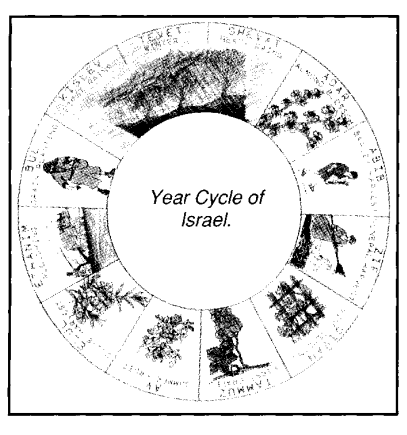
"Three times thou shalt keep a feast unto Me in the year" — The word "feast" is from the word hag and signifies a festival feast, and not merely a "feast" as we might understand the term. The festivals referred to were fl] the feast of Unleavened Bread; [2] the feast of Pentecost; [31 the feast of Tabernacles. Fuller details of these occasions are provided in Lev. 23 and Deu. 16. The Law demanded that all males present themselves at the appointed place on such occasions as representatives of the nation as a whole (Exo. 34:23; Deu. 16:16).
VERSE 15
"Thou shalt keep the feast of unleavened bread" — It commenced with the Passover, and continued for seven days. A "holy convocation" was held on the first and the last of the seven days (Lev. 23:7-8. For details also see Deu. 16:8.).
"Thou shalt eat unleavened bread seven days, as I commanded thee" — See note on ch. 12:15.
"In the time appointed of the month Abib" — "Abib" signifies In the ear as in ch. 9:31, and defines the beginning of spring. It was later referred to as "Nisan" (Neh. 2:1). The time appointed was the fourteenth day of the month (Exo. 12:18) when preparations for the festival were made, including the killing of the lamb. The festival proper commenced on the following day. On the first day of the week following the celebration of Passover (Lev. 23:10-14), a sheaf of new barley, representing the firstfruits of the expected harvest was waved before Yahweh foreshadowing the resurrection of the Lord.
"For in it thou earnest out from Egypt" — This moment of deliverance commenced a new beginning. It represented a separation from the previous way of life to one dedicated to Yahweh. It was recalled by Israelites at the beginning of spring each year.
"And none shall appear before Me empty)" — Religion must not be a matter of mere empty words, but must represent a practical sacrifice of gratitude to Yahweh: something of value offered for benefits received (cp Deu. 16:17; Pro. 3:9-10) in which a true worshipper expresses "thanks unto God for His unspeakable gift" (2Cor. 9:15). The principal gift of Yahweh to humanity is His Son (Eph. 4:7), who, as the sheaf of barley, became a token of the harvest to follow (James 1:18).
VERSE 16
"And the feast of harvest" — This is better known as the Feast of Pentecost, from pente, "fifty." Fifty days were to be numbered from the day of offering the barley sheaf, and on the fiftieth, the festival of harvest was celebrated. The main ceremony of the festival was the offering of two leavened loaves of the finest flour made out of the wheat just gathered in, and called the "firstfruits of the harvest."
In contradistinction to the barley sheaf which foreshadowed the Lord's offering, these two leavened loaves typified normal believers from the two great families of humanity: Israelite and Gentile. The celebration of Pentecost synchronised with the giving of the Law from Sinai (see notes, Lev. 23), which legislated on the behalf of the Israelites and the mixed multitude of Gentiles that came out of Egypt.
Significantly, the public proclamation of the gospel of the Kingdom in the name of Jesus Christ was also made on a Day of Pentecost (Acts 2), and resulted in an ingathering of both Jews and Gentiles (the two leavened loaves) to Christ Jesus.
"The firstfruits of thy labours, which thou hast sown in the field" — The sown harvest was gathered in by the time of Pentecost, and what remained to be collected was the produce of trees and vines. The two loaves offered on that day represented the firstfruits of that sown, and pointed forward to the present ingathering of the gospel call. See James 1:18; Rev. 14:4.
"And the feast of ingathering, which is in the end of the year" — This is elsewhere called the Feast of Tabernacles (see Lev. 23:39-43). It commenced on the fifteenth day of the seventh month (called Tisri), when the olives had been gathered in, and the vintage was completed. It commemorated the deliverance of Israel from Egypt and the entrance of the nation into the land, typified by the final ingathering of harvest. In Lev. 23:39 it is said to have been celebrated in the seventh month, whereas here the period is defined as "the end of the year."
The Israeli calendar recognises two "years:" a civil and a religious year. The civilyear commenced in the seventh month, whereas the religious year began in Abib, the first month of the religious year. See note Exo. 12:2.
"When thou hast gathered in thy labours out of the field" — The fulness of the harvest typified the completion of God's purpose with humanity when He shall be "all in all" (1 Cor. 15:28), and the labour of creation will be completed (Rev. 21:4).
VERSE 17
"Three times in the year all thy males shall appear before the Lord Yahweh" — The males were representative of the whole nation. See note Exo. 12:6. The requirements of the Law in compelling Israelites to so gather before Yahweh, emphasised the divine fellowship which became a great unifying factor in the nation. What a contrast to the Grecian Games of ancient times, or the Olympic Games of today, when nations send their representatives to compete together in an attempt to "unify" humanity. Instead of achieving this, the extreme competition engendered tends to divide them further apart. The calling of Israelites together for religious purposes will be extended to include all nations in the Age to come (Zech. 14:16).
The instruction of the Law commanded them to appear before ha-adon Yahweh, signifying: The Sovereign Ruler, Yahweh. The people assembled to pay their respects and demonstrate their allegiance to the Sovereign Ruler of the heavens (see Jud. 8:23), a very important addition to the family Name of Yahweh.
VERSE 18
"Thou shalt not offer the blood of My sacrifice with leavened bread" — The word "leavened" is from the Hebrew chametz, which signifies sour, and figuratively, to be harsh. It is translated "cruel," "dyed," "grieved," "leavened," "vinegar." Gesenius says that the word is used figuratively of the mind [a] to act violently, like the kindred word chamas which signifies violent, oppress, injure; [b] to be bitter as in Psa. 73:21. The word is translated several times as "vinegar" which was prohibited the Nazarite (Num. 6:3. See also Pro. 10:26; 25:20). Gesenius also draws attention to Ps. 69:21 where chametz is rendered "vinegar" and comments that it is suggestive of that "offered in cruelty to a thirsty man" and therefore is figuratively expressive of harshness, and lack of sympathy. In Amos 4:5 it is aligned with that which is gained by violence and wrong; and in Hos. 7:4 with the corrupting influence of spiritually depraved men. In ICor. 5:8, Paul aligns leaven with "malice and wickedness," and urges that all such be purged out.
Leaven was forbidden in all offerings to Yahweh made by fire (Lev. 2:11; 6:17). W. E. Vine notes: "Being bred of corruption and spreading through the mass of that in which it is mixed, and therefore symbolizing the pervasive character of evil, leaven was utterly inconsistent in offerings which typified the propitiatory sacrifice of Christ." It is used metaphorically of corrupt doctrine (Mat. 13:33), of error mixed with truth (Luke 13:21), as well as of corrupt practices (Mark 8:15).
"Neither shall the fat of My sacrifice remain until the morning" — This injunction has relationship to the Passover (Exo. 12:10) and to the peace offering (Lev. 7:15). Both concern the principle of fellowship with God. In connection with the Passover, other Israelites were invited to join a family in the celebration of the feast and so associate together in fellowship and communion. In the case of the offering of thanksgiving, the offerer could invite his friends and relations to gather with him for the purpose of consuming the meal, again expressive of fellowship. In either case, the idea was to draw others into mutual worship, whether it be to celebrate the deliverance indicated by the Passover, or the thanksgiving which was due to Yahweh. Thus the ordinance required the true worshipper to broadcast to others the principles of Deliverance and Thanksgiving.
VERSE 19
"The first of the firstfruits of thy land thou shalt bring into the house of Yahweh thy God" — Israelites were expected to get their priorities right, and to give unto Yahweh the pre-eminence due to His holy name. They were to give practical expression to this by presenting the firstfruits unto Him. In Num. 18:12 these are defined as "the best" of the products, and in the following verse, as the very first of the ripened products. See also Lev. 2:12; Deu. 26:2; Neh. 10:35; and particularly the words of Mai. 3:10. The principle of this law should be applied by believers today (see Pro. 3:9-10), in that they should give unto Yahweh the best of their time, their talents, and their resources.
The word "house" is from the Hebrew bayith and signifies a dwelling, and is here used in an anticipatory sense for the tabernacle, yet to be built.
"Thou shalt not seethe a kid in his mother's milk" — That which is designed for life (a mother's milk) must not become the cause of death! How often does the reverse become the case! Parents spoil their children by unwise over-indulgence, and so project them along a course of life that leads to anguish and death. This is equivalent to "seething a kid in his mother's milk."
It is highly significant that the personal laws in the Book of the Covenant (see Exo. 24:7) terminate with this remarkable law which is thrice repeated (see Exo. 34:26; Deu. 14:21). The overindulgence by children has been the sad cause of many lives being lost for the kingdom, including Eli's sons, Samuel's children (ISam. 3:13), Amnon, Absalom, Adonijah (1 Kings 1:6), and others. Let parents take heed. Modern child psychology which frowns upon any restraints being placed on children, and advocates granting them free expression, is an illustration of that which is prohibited by this law. See the warning of Pro. 19:18; 23:13-14; 29:15; ITim. 3:4, and learn to apply it in family life. In this age of over-indulgence to children, the scriptural principles of family control tend to be overlooked even by those who should know better.
Laws Concerning Angelic Supervision - vv. 20-33.
Angelic supervision of events is introduced as a very real feature of life. The name, and therefore the authority, of Yahweh is set forth as conferred on His angel into whose care the future of the nation has been placed. This angel must be obeyed because transgressions against his voice will not be pardoned. Therefore submission to his invisible presence will mean victory whereas disobedience will result in defeat. Guidelines for conduct are laid down, obedience to which will result in immediate blessings of a concrete nature. Israelites are to look beyond any difficulties that might face them, for Yahweh will send His fear among their enemies, causing them to be overthrown. In this section of the Law, the people were taught [a] obedience to the voice of Yahweh (vv. 20-22); [b] confidence in His promises (vv. 23-28); [c] trust in His provision (vv. 29-31); [d] separation from the Gentiles (vv. 32-33).
VERSE 20
"Behold I send an Angel before thee" — The angels are Yahweh's ministering spirits working on behalf of His people (Heb. 1:14), and it seems from passages such as Mat. 18:10 and Gen. 48:15-16, that the charge of saints is given into the care of specific angels. Reference to the angel who oversaw the affairs of Israel, is found again in Exo. 33:1-3, and in ch. 14:19 as supervising the cloud and fire that overshadowed Israel. In Isaiah 63:9, he is described as the "angel of Yahweh's presence." In Jos. 5:13-15, he is given the title of Captain of Yahweh's host. And in Dan. 10:21, his name is announced as Michael, and he is shown as foreshadowing the future status and work of the Lord (Dan. 12:1). In "going before" the people, the angel acted as a shepherd (Exo. 32:34; Psa. 78:52; 80:1).
"To keep thee in the way" — For a description of God's "way" see the note at Gen. 3:24; and for what is involved see the comment on Gen. 18:19.
"And to bring thee into the place which I have prepared" — Primarily the "place prepared" was the land of Canaan, but in the ultimate application of the phrase, it relates to an abiding place in the family of God. Thus Christ taught: "I go to prepare a place for you" (John 14:2).
VERSE 21
"Beware of him and obey his voice" — The word "beware" is the Hebrew shamar, which signifies to "hedge around, to guard, to exercise great care." The literal Hebrew is "Be careful from before him," thus, always bear in mind his presence, and so walk as though he is visibly in your sight.
"Provoke him not" — Unfortunately, Israel did provoke the angel as the representative of Yahweh (see Num. 14:11; Psa. 78:17, 40, 56), particularly by limiting the power of God (Psa. 78:41).
"For he will not pardon your transgressions" — See also the warning of Exo. 32:34, and the exhortation of Joshua (Josh. 24:19). The word "transgressions" suggests refusals to heed, and so "revolts." These would not be forgiven, and it was because of such that the generation which came out of Egypt perished in the wilderness. The angel would administer a law of retribution in which there was no forgiveness except through the Redeemer to come. This was designed to cause a true Israelite to seek for such a mediator (Gen. 3:15; Gal. 3:24).
"For My name is in him" — This statement denotes that the full authority of God, represented by the divine Name, rested upon the angel, and, therefore, that he acted accordingly. True Israelites comprise a people separated for the Name (Num. 6:27; Acts 15:14), which will be named upon them in its fulness at the coming of the Lord (Rev. 3:12). Christ both proclaimed and manifested that Name unto his disciples (John 17:6,26), for in him is found its fulness bodily (Col. 1:19; 2:9). We can similarly attain to this state in him (Eph. 3:19).
VERSE 22
"But if thou shalt indeed obey his voice, and do all that I speak" — "Obey" and "do" are repetitious words in Hebrew: "If hearkening thou dost hearken..." Such a repetition emphasizes a hearkening so as to obey.
"Then I will be an enemy unto thine enemies" — Conditional upon their obedience, Yahweh would act toward them as He promised to act toward Abraham (Gen. 12:3: Deu. 30:7), so that the Law endorsed the Covenant of Faith.
"And an adversary unto thine adversaries" — Under the conditions stated, Yahweh would enter the arena against the enemies of Israel. See the prophetic promise of Isa. 51:22-23.
VERSE 23
"For Mine Angel shall go before thee" — God's messenger of this verse types the Messenger of Yahweh promised through the prophet Malachi (Mai. 3:1).
"And bring thee in unto the Amor-ites, and the Hittites, and the Perizzites, and the Canaanites, and the Hivites, and the Jebusites" — See notes Exo. 13:5.
"And I will cut them off" — The reason being, not merely that they were Gentiles, but, because of their depraved actions. Their wickedness was not fully developed in the days of Abraham (Gen. 15:16), but now their polluting presence would endanger the moral integrity of the people, and therefore their future (see Num. 33:55; Josh. 23:13; Jud. 2:3).
VERSE 24
"Thou shalt not bow down to their gods, nor serve them, nor do after their works" — Associated with pagan worship were evil rites calculated to undermine the moral integrity of the people. Thus "their works" are associated with their worship.
"But thou shalt utterly overthrow them, and quite break down their images" — The Israelites were to ruthlessly destroy all pagan gods, irrespective as to their "cultural" value; they were to look upon the conquest of the land as a holy war.
"Images" were memorial pillars, which were to be torn from their bases and completely destroyed, so that "the memorial of them shall vanish."
VERSE 25
"And ye shall serve Yahweh your God" — The verb is from the Hebrew abad, the root of ebed, "bondservant." Having been delivered from the servitude of Egypt, the Israelites were not free to please themselves, but were to look upon themselves as slaves of Yahweh (cp. Rom. 6:16-23).
"And He shall bless thy bread, and thy water" — Material blessings would flow from obedience to the Law (Deu. 7:13).
"And I will take sickness away from the midst of thee" — In this statement Yahweh Ropheka spoke again to the people (see note on Exo. 15:26).
VERSE 26
"There shall nothing cast their young, nor be barren, in thy land" — The fulfilment of this promise would have rendered them rich in flocks and herds beyond any other nation, but unfortunately they did not fulfil the conditions (see Deu. 28:15-22).
"The number of thy days I will fulfil" — They would not suffer a premature death, but would fill out their appointed time. This is based upon observance of the Fifth Command. See Deu. 5:16 and contrast Psa. 55:23.
VERSE 27
"I will send My fear before thee" — See Deu. 2:25 where the promise was repeated and implemented. Balak (Num. 22:3), and the people of the land (Jos. 2:9-11) gave expression to the fear that fell upon them. On the other hand, Israel was exhorted to "fear not" (Deu. 1:17, 21, 29; Jos. 1:7-8).
Fear Not! is the keynote of Moses' last message as recorded in Deuteronomy (see Deu. 1:17, 19,21,29; 3:22,28 etc.).
"And will destroy all the people to whom thou shalt come, and I will make all thine enemies turn their backs unto thee" — For the fulfilment of this promise see Num. 21:3, 24, 35; 31:7; Jos. 8:20-24 etc. However, it was always conditional upon the obedience of the people (Deu. 28:1,7). Had their obedience been more thorough, the power of the Canaanites would have been completely destroyed, and the sufferings and servitude recorded in the book of Judges would not have taken place.
But the people did not carry out Yahweh's conditions nor His instructions to destroy (see Jud. 1:27, 29-30 etc.).
VERSE 28
"And I will send hornets before thee" — These "hornets" were designed to weaken the resistance of the Canaanites in the conquest of the land by the Israelites. But opinion is divided as to what is meant by the statement, and as to whether it should be interpreted literally or figuratively.
In regard to the former, there is no direct evidence as to swarms of hornets being used to drive out the Canaanites from before the Israelites, whilst figuratively, the term has been aligned with the Egyptians. It is said that the hornet was the badge of Thotmus m and his successors. The archaeologist Garstang claims that Thotmus (recognised as Egypt's greatest warrior) invaded the land of Canaan and overthrew Megiddo, following which a policy of devastation was maintained for sixty years, causing great fear throughout the land. The attack on Megiddo is dated 1479BC, but such dates should be treated with caution (see note, pp. 12-14). Thotmus in, however, reigned a considerable time before Joshua's entrance into the Land, whereas the statement of the verse before us implies something as yet to take place in the time of Moses.
There is a third explanation. The Hebrew tsirah, "hornet," comes from the root tsara, "to scourge," which is also rendered "leper." Tsirah, therefore, could be used for a scourge apart from hornets, perhaps to denote fear induced by plague, pestilence or anything that might sting or scourge the enemy, and so lower his powers of resistance. This could cause the hearts of such adversaries to melt in consternation and so pave the way for an Israelite victory (Jud. 2:10; 8:3; 10:12).
"Which shall drive out the Hivite, the Canaanite, and the Hittite from before thee" — The Hivites and Hittites evidently were foreigners who had settled in the Land, whereas the Canaanites were native to it. The Gibeonites were Hivites (see note Gen. 34:2).
VERSE 29
"I will not drive them out from before thee in one year; lest the land become desolate" — By this provision, Yahweh is revealed as both practical and purposeful, even in His judgments. He manifests patience, where we reveal impatience, and He sometimes bears long with people in order to bring about the best results. Man might consider this as "slackness" (2Pet. 3:9), but, in fact, it is "long-suffering" designed to obtain salvation for some (v. 15). The population of Canaan was permitted to remain that the land might be preserved in a fit state for Israel to inherit. In the same manner, man is subduing the earth today (Gen. 1:28), in preparation for the kingdom to come.
"And the beast of the field multiply against thee" — This could result from the sudden depopulation of the country, an example of which is recorded in 2Kings 17:25.
VERSE 30
"By little and little I will drive them out from before thee, until thou be increased, and inherit the land" — There was a gradual conquest of the Land as recorded in the books of Joshua and Judges.
VERSE 31
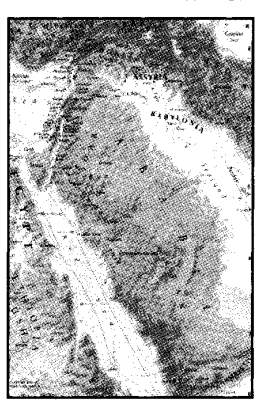
"And I will set thy bounds from the Red sea, even unto the sea of the Philistines" — This establishes the east and west boundaries of the land: from the Gulf of Eilat to the Mediterranean Ocean.
"And from the desert unto the river" —The word "river" is ha-nahar, a term that is applied to the Euphrates. These bounds mark the southern and northern borders, which territory was later occupied by David (1Kings 4:21).
"For I will deliver the inhabitants of the land into your hand; and thou shalt drive them out before thee" — Yahweh did His part, but Israel failed to fulfil its responsibility (see Jud. 1:21, 27-29, etc.).
VERSE 32
"Thou shalt make no covenant with them, nor with their gods" — Joshua, caught by guile, did enter into covenant with the Gibeonites (Jos. 9:14-15), demonstrating the extreme care that must be manifested in regard to Yahweh's instructions.
VERSE 33
"They shall not dwell in thy land" — Unfortu-nately, Israel permitted them to do this, so that ultimately they became a snare, leading to the downfall of the people of God.
"Lest they make thee sin against Me" — Yahweh, "knowing what is in man," exercised considerable care for His people, instructing them as a parent would his child. Unfortunately, long before they even reached the Land, the generation of Israelites to whom Moses delivered this warning, perished in the wilderness.
"For if thou serve their gods, it will surely be a snare unto thee" — This they did. See Jud. 2:3; Psa. 106:34-37.
Comments