A VERSE-BY-VERSE EXPOSITION OF THE SCRIPTURES
By Graeham E. Mansfield
—Additional comments by John Oilman
Produced by Publications
Publishers of Books and Magazines of Perpetual Interest
Box 220, Findon 5023, South Australia
THE ACTS OF THE APOSTLES
THE POWER OF THE GOSPEL UNTO SALVATION
FROM the outstanding work of one man — the Lord Jesus Christ — especially sent from God (Jn. 3:2; 10:36) to provide for the needs of humanity, many can obtain the means to salvation from the condition of sin and death which has fallen upon mankind. The obedient life, sacrificial death and dramatic resurrection of the Lord Jesus Christ, opened the way of reconciliation for men and women of faith and conviction to find peace and harmony with Yahweh.
In this, the power and drama of the work of Christ for salvation did not conclude with his resurrection from the grave and ascension into heaven. It continued in the apostolic activities that followed. Indeed, the record of the four gospels is complemented and completed in that of the Acts of the Apostles.
The Book of Acts not only records the complete conversion of his apostles, showing the value of the Lord's previous instruction and example to them, but it also documents the remarkable way by which the gospel of salvation found reception in the hearts of both Jew and Gentile, and laid the foundation for the establishment of ecclesial communities throughout the world.
It further records the divine answer to the prayer of the Lord Jesus Christ, uttered from the stake of sacrifice as he looked down upon the nation which had so cruelly rejected him. His prayer embraced those who were ignorant of the true nature of his crucifixion; those who had been led astray by their iniquitous leaders, to wickedly proclaim "Crucify him, crucify him" (Lk. 23:21). In an act of grace and godly response, the Lord petitioned: "Father, forgive them; for they know not what they do" (v. 34). The Father's answer to the prayer of the Son is revealed and developed in the Acts of the Apostles. Both co-operated through the newly-appointed "ministering spirits" manifested in the apostles, to bring the message of salvation to both Jew and Gentile, and to call from out of their ranks those who would become "a people prepared for the coming of the Lord" (Acts 15:14).
Yet, the book of Acts reveals the continuance of the principle of "enmity" established in the garden of Eden (Gen. 3:15). There was to be increasing hostility between the progress of the Truth and the opposition of those who were dominated by the "thinking of the flesh." So the record reveals that the brethren were first mocked (Acts 2:13), then ordered not to speak nor preach (ch. 4:18), were imprisoned (ch. 5:18), beaten (v. 40), stoned (ch. 7:59), and finally scattered by bitter opposition and persecution (ch. 26:10). Yet in all the trauma and anguish of bringing the Truth to the light of day in the first century, glorious examples of faithfulness and devotion were revealed. The tempestuous Peter became a trusted and caring apostle; Saul the persecutor, was transformed into the diligent and determined Paul; young, timid Timothy learned how to undertake the growing responsibilities of ecclesial service. It is therefore the New Testament logbook of faith in actions — a continuation of the record of the worthies of former ages, mentioned in Hebrews 11.
Though it concerns the work performed by the company of apostles and brethren immediately following the ascension of the Lord Jesus Christ, the greater responsibility falls on two outstanding characters: Peter and Paul. Both enthusiastic, energetic, dedicated messengers of the gospel, these faithful brethren laid the basis for the events which "turned the world upside down" — not only amongst the Jews by the hand of Peter, but throughout the pagan world by the hand of Paul. Yet, both brethren had backgrounds that some might consider inappropriate to such a high responsibility as to lead the presentation of the gospel in the first century. Peter is renowned for his contradictions and denial of the Master at his trial — a fact recorded in all four gospel accounts. By his own admission, Paul was a "blasphemer, and a persecutor, and injurious" (1 Tim. 1:13), whilst Luke mentions that Saul's vehement opposition against the disciples of the Lord (Acts 9:1) was so well known that his notoriety had extended even to Damascus (v. 13). Yet, the spirit of the Truth took hold of these two men, using them foremost in the work of divine invitation in order to call mankind to the power of the gospel. No wonder the apostle later testifies concerning "the exceeding greatness of His [God's] power to usward who believe, according to the working of His mighty power, which He wrought in Christ, when he raised him from the dead, and set him at His own right hand in the heavenly places" (Eph. 1:19-20). Therefore, in Peter and Paul, the principle of forgiveness and redemption is clearly illustrated. Further, from such testimonies we, who are of lesser character, can derive great joy and hope.
This, then, is the story of, and reason for, the Acts of the Apostles. It is the voice of Christ embodied in the actions of his appointed servants. It is the prayer of forgiveness, uttered from the cross, now finding fulfilment in changed hearts and transformed lives. The study of the dramatic narrative, and the compelling personalities, of the community of faithful brethren and sisters that introduced the gospel to the Gentiles, will reward the student with unique spiritual exhortations and practical examples by which the same qualities can be developed in our age that will see the close of Gentile times.
The Divine Offer of Forgiveness
As mentioned above, the prayer of the Lord Jesus Christ from the cross was answered in the work of the apostles sent first to the Jews and then to the Gentiles. The book of Acts records the completion of this project, in the great work accomplished especially by Peter and Paul, and for that reason its historical account concludes at chapter 28. Although the work of Paul continued beyond that recorded, it was not the purpose of the Spirit to merely give a historical account of what he accomplished. Therefore the book is not truly a narrative of the Acts of the Apostles so much, as a record of how Yahweh answered the prayer of His Son in the work of the apostles.
The Division of the Book
The book is divided into two sections. Firstly it records the divine offer to the Jews in the Land; then it continues to narrate the work of the apostles for the Jews in dispersion. There were similarly two headquarters from which this activity proceeded: firstly from Jerusalem; then from Antioch.
The two sections can be conveniently divided as follows:
To the Jews in the Land — Chs. 1-12
From Headquarters in Jerusalem.
The Apostles Prepared and Commissioned...................................................... ch. 1
Miracles and Witness by the Apostles; the Response by the People................ ch. 2
Miracle: the Lame Man Healed — Witness and Opposition........................... ch. 3
Miracle: the Shadow of Peter — Witness and Opposition .............................. ch. 4
Miracle: the Release from Prison — Witness and Opposition ........................ ch. 5
The Witness of Stephen..................................................................................... ch. 6
The Challenge of Stephen — Witness and Opposition..................................... ch. 7
From Headquarters in Antioch.
Witnessing to an Ethiopian Chancellor............................................................ ch. 8
Conversion of the Pharisee Saul ....................................................................... ch. 9
Conversion of the Roman Cornelius............................................................... ch. 10
The Gospel from Antioch; centre of the Truth ............................................... ch. 11
James killed; Peter delivered; Herod, as head of the nation is Judged........... ch. 12
To the Jews in Dispersion — chs. 13-28
Paul's First Journey.................................................................................. chs. 13-14
The Conference in Jerusalem ................................................................. ch. 15:1-35
The Second Journey of Paul.......................................................... chs. 15:36-18:23
The Powerful Preaching of Apollos in Corinth.................................... ch. 18:24-28
The Third Journey of Paul, and Final Rejection of the Jerusalem Jews chs. 19-22
Paul Witnesses Before the Sanhedrin ............................................................ ch. 23
Paul Witnesses Before Governor Felix .......................................................... ch. 24
Paul Witnesses Before Governor Festus ........................................................ ch. 25
Paul Witnesses Before King Agrippa.............................................................. ch. 26
Paul Witnesses on the Way to Rome............................................................... ch. 27
In Rome and the Final Rejection of the Jews ................................................ ch. 28
The Conclusion:
— The Divine Offer of Forgiveness and Salvation Rejected:
"When they agreed not among themselves, they departed after that Paul had spoken one word, Well spake the Holy Spirit by Esaias the prophet unto our fathers saying, Go unto this people, and say, Hearing ye shall hear, and shall not understand; and seeing ye shall see, and not perceive: For the heart of this people is waxed gross, and their ears are dull of hearing, and their eyes have they closed; lest they should see with their eyes, and hear with their ears, and understand with their heart, and should be converted, and I should heal them. Be it known therefore unto you, that the salvation of God is sent unto the Gentiles, and that they will hear it. And when he had said these words, the Jews departed, and had great reasoning among themselves. And Paul dwelt two whole years in his own hired house, and received all that came in unto him, preaching the kingdom of God, and teaching those things which concern the Lord Jesus Christ, with all confidence, no man forbidding him" (Acts 28:25-31).
Analysis
The Theme: Witnessing for Christ Summary of the Two Parts of the Book
Part One —chs. 1-12 Jerusalem established as the centre Peter is seen as the chief figure The message spreads to Samaria It is rejected by Jews of the land Peter is imprisoned Judgment comes on Herod
Part Two — chs. 13-28 Antioch becomes the centre of work Paul established as the chief figure The message spreads to Rome It is rejected by Jews in dispersion Paul is imprisoned Judgment comes on the Jews
A Parallel Between Peter and Paul
Peter's Ministry — chs. 1-12.
Ch. 2 Peter's first address
3 The lame man healed
8 Simon the Sorcerer
5 Influence of the shadow
8 Laying on of hands
Paul'S Ministry — chs. 13-28
Ch.
13 Paul's first address
14 A lame man is healed
13 Elymas the sorcerer
19 Influence of the handkerchiefs
19 Laying on of hands
14 Paul is worshipped
9 Tabitha is raised
20 Eutychus is raised
12 Peter is imprisoned
28 Paul is imprisoned

Thus the signs and wonders performed by Peter in Jerusalem, Judea and Samaria were repeated by Paul when he took the gospel to the uttermost parts of the earth.
The Book Analysed
Preparations for Preaching — chs. 1:1 to 2:4
Christ's Instruction and Commission to the Apostles................................ ch. 1:1-8
The Angelic Message of Promise and Hope................................................ vv. 9-1 I
Period of Prayer and Waiting in Jerusalem .............................................. vv. 12-14
Appointment of Matthias to the Apostleship............................................ vv. 15-26
Pentecostal Outpouring of the Holy Spirit ................................................ ch. 2:1 -4
Preaching in Jerusalem — chs. 2:5 to 7:60
The First Impression ................................................................................ ch. 2:5-13
The First Message...................................................................................... vv. 14-47
The First Opposition.................................................................... chs. 3:1 — 4:1-31
The First Love and Unity ....................................................................... ch. 4:32-37
The First Discipline................................................................................... ch. 5:1-16
The First Persecution ................................................................................. vv. 17-42
The First Organisation................................................................................ ch. 6:1-7
The First Martyr.............................................................................. chs. 6:8 — 7:60
Preaching in Judea and Samaria — ch. 8:1 -25
The Scattered Witnesses................................................................................. vv. 1-4
Samaria Receives the Word ........................................................................ vv. 5-25
To the Uttermost Parts of the Earth — chs. 8:26-28:31
• Towards Africa: ch. 8:26-40
Conversion of the Ethiopian .................................................................. ch. 8:26-40
• Towards Asia: chs. 9:1-16:5
Saul: The Instrument Found .................................................................... ch. 9:1-31
Peter: The Authority Confirmed by Miracle ............................................ vv. 32-43
A Door Opened to the Gentiles.............................................................. ch. 10:1-48
Preaching the Truth to Gentiles Defended by Peter .............................. ch. 11:1-18
The Gospel Spread Through Persecution................................................... vv. 19-30
Opposition of the Authorities Successfully Defied................................ ch. 12:1-24
Paul: the Instrument Commissioned ............................................ chs. 12:25—13:4
Paul: the Instrument Used ............................................................ chs. 13:5—14:28
The Council at Jerusalem ....................................................................... ch. 15:1-35
The Separation of Barnabas and Paul .......................................... chs. 15:36—16:5
• Towards Europe: chs. 16:6—18:17
The Call to Macedonia ........................................................................... ch. 16:6-13
Lydia and the Jailor at Philippi Converted................................................. vv. 14-40
Thessalonica, Berea, and Athens............................................................ ch. 17:1-34
At Corinth ............................................................................................... ch. 18:1-17
• In Asia: chs. 18:18—26:32
AtEphesus............................................................................................ vv. 18:18-21
Visiting Various Ecclesias..................................................................... vv. 18:22-23
Further Work at Ephesus ............................................................ chs. 18:24—19:41
Three Months in Greece ........................................................................... ch. 20:1-6
At Troas................................................................................................... ch. 20:7-12
Towards Jerusalem....................................................................... chs. 20:13—21:16
At Jerusalem................................................................................ chs. 21:17—23:30
Trials and Imprisonment at Caesarea.......................................... chs. 23:31—26:31
• In Europe: chs. 27-28
By ship to Italy............................................................................. chs. 27:1 —28:15
Trial and Imprisonment in Rome ......................................................... ch. 28:16-31
The Author
Although his name does not appear in the record of Acts, authorship is attributed to "the beloved physician," Luke. It is appropriate that this be so, for it is only Luke's gospel which notes the significant prayer of the Master for the forgiveness of those who crucified him (Lk. 23:34), and, again, it is Luke who records further evidence that the prayer was answered in the wonderful mercy of the Father. This is apparent from the opening words of the book which refer to "the former treatise" documenting the activities of the Lord Jesus, and indicate that the record of Acts is a continuation of Luke's gospel account.
Luke was a constant companion of the apostle Paul, and assisted him on the often difficult journeys that the apostle undertook in the cause of the Truth. Yet concerning him little is known; he is only mentioned three times in all the epistles. In Col. 4:14 he is referred to as "the beloved physician" — a term which obviously indicates the comfort that Paul enjoyed by his association. The apostle did not enjoy good health, and he had need of the assistance of someone with medical knowledge. Luke provided that need, and remained with him throughout the years. "Lucas" is found in Philemon 24, in a company of "fellow-labourers," indicating the support and encouragement that the great apostle sought and received from his companions. The third reference is in 2Tim. 4:11, recorded by Paul as he was facing execution at the hand of the Roman Emperor Nero: "Only Luke is with me. Take Mark, and bring him with thee: for he is profitable to me for the ministry. " The loneliness of his isolation in the prison of Rome, the sadness of the experience in being separated from his brethren and sisters, and the overwhelming desire to do what he could for "the ministry" absorbed his mind. But in those circumstances, he was comforted in that the faithful Luke remained his companion to the end.
Luke was a Gentile, and must have been financially independent, otherwise he could not have travelled with Paul as his friend and useful companion, without some means of support. It is probable that Luke learned the Truth from the apostle, and in affection and gratitude, took upon himself the medical care of the oft-afflicted Paul. As a physician, Luke was a man of learning and knowledge, a keen observer and faithful recorder of the journeys and addresses of the apostles. He was evidently commissioned by Theophilus to record his knowledge of the facts concerning Jesus Christ and his apostles (Lk. 1 :1-3; Acts 1:1-3). His gospel record is the most chronological and literary of the four; his record of the Acts takes into account the important aspects of the work as it developed from the ministry of Christ. It is said that "with his Greek mind he had a sense of form, a beautiful style — studied and elaborate."
Luke must have written his gospel and the record of Acts before the death of the apostle Paul; thus his writing can be dated no later than AD67; most likely being completed in about ad63 when the events described in Acts concluded. Luke evidently joined the group of the apostles about fifteen to twenty years earlier, introduced by the term "we" in Acts 16:10. Some believe him to be the "man of Macedonia" mentioned in Acts 16:9, for it is immediately at this point that the personal references predominate the record.
After this vision, Luke crossed the sea with Paul and witnessed the baptism of Lydia, the first European believer, at Philippi. It was at Philippi, too, that Luke appears to have rejoined Paul during the last months of the third journey (about ad57), which ended with Paul's removal in secrecy to Caesarea. At Caesarea, the apostle was allowed visitors during his two-year imprisonment, and Luke was almost certainly among them. It is possible that Luke used part of his time at, and around, Caesarea to collect material for his gospel, perhaps assisted through interviews with others and with Paul, who would have had time to discuss these matters with him. Certainly, however, this account recorded in Scripture was inspired, "as he was moved by the holy spirit" (2Pet. 1:20-21).
When Paul was sent to Rome, probably in ad59, Luke sailed with him, and recorded the remarkable experiences of the sea journey — a masterpiece of nautical description found in Acts 27.
Luke's qualifications for his great literary and historical works were manifold. He acquired an accurate knowledge of the events (Lk. 1:3), evidently gained from his long and close companionship with Paul, and his abundant opportunities of personal acquaintance with the other apostles. He had remarkable ability to chronicle and define the events in their important relationship to the work of Christ. Above and beyond all, however, he had the inspiration of the Spirit, by which divine authenticity is given to the purpose and benefit of the records he left for a faithful posterity. We can be most grateful to God for this picturesque and scriptural record of the work extended through His servants of the first century.
A tradition claims that following the death of his great friend, Luke retired to mainland Greece, where he died in Boeotia (the central plain), at the age of about eighty-four. But his work lives on, by the overriding principle of inspiration. We are greatly indebted to his meticulous character, obviously strengthened through his medical training, and developed by the influence of the Word. His two books provide much valuable information, and essential instruction. Together, they compromise a testimony to a great man of faith, and are able to develop spiritually-minded men and women who read his writings with keen desire, and learn the value of "repentance" and "restoration" — the two words that figure so prominently in his record of The Acts.
The Final Voices
The Lord's crucifixion concluded his saving mission to the generation that had heard the words of his forerunner, John Baptist. The Jews had been urged to repentance, but largely ignored or rejected the divine appeal. Yet, the mercy of Yahweh continued to be extended to those ignorant among them. The final appeal of the Master from the cross was a prayer for their spiritual illumination, as he cried: "Father, forgive them; for they know not what they do" (Lk. 23:34). It was a gracious declaration that the community had been led into the disgraceful action of rejecting their Messiah because a "veil of covering" was cast over them by the responsible leaders. His prayer was the reason for the work of the apostles commencing their ministry at Jerusalem (Acts 1:8).
Stephen's death, recorded in Acts 6-7, represented the national rejection ofthe divine appeal by the Jews at Jerusalem. Notice, that at the conclusion of his witness, he does not plead the ignorance of the people, but cries with a loud voice: "Lord, lay not this sin to their charge. And when he had said this, he fell asleep. "
Paul's final appeal to the Jews in dispersion, was sounded forth from the prison in Rome, the Gentile capital, and indicated the rejection of those in dispersion: "Be it known therefore unto you, that the salvation of God is sent unto the Gentiles, and that they will hear it" (Acts 28:28).
The book properly closes on that note.
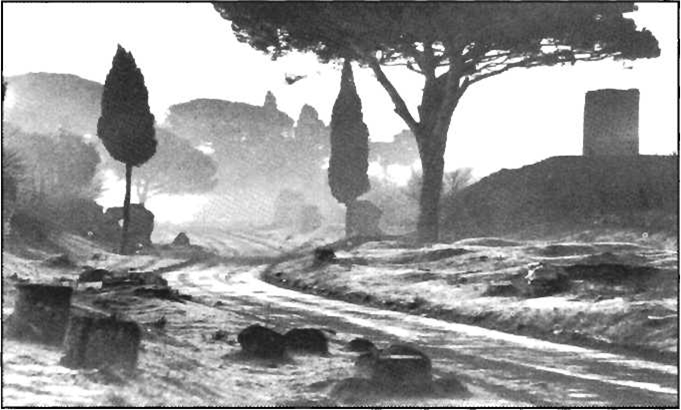
Luke's gripping, and often exciting narrative, appears to conclude on an odd note of abruptness. The closing words (ch. 28:30-31) do not appear to be the conclusion to such a compelling book; and one reading it for the first time, may well turn the page in anticipation of a continuation of the narrative. However, we misjudge the writer's ability and intention if we are disappointed at the sudden ending of the book. The apparent "abrupt" conclusion is intentional. Luke is simply telling his readers that his task had now been completed. Once the writer had come to the point where the great apostle had successfully brought the gospel of Christ to what was then the capital city of the Gentile world, his work, insofar as this narrative was concerned, was finished. Luke's mission as compiler of Acts of the Apostles had been completed. — J.U.
In early manuscripts, the book of Acts was named Acts of the Apostles. This was a more accurate definition of the contents of the book than the title it bears today in most versions. Were the book to be understood as representing The Acts of The Apostles, it would imply that it records all the acts performed or undertaken by all the apostles subsequent to Christ's ascension. But this would be incorrect, for the book records only some of the acts of some of the apostles. In fact, of the original number of the apostles, only three appear actively in Acts: Peter, James and John. The latter two are only mentioned; they do not feature to any extent of prominence. It may be truly said that the book primarily records the "acts" of Peter and Paul in bringing the Truth to the notice of their audiences.
Acts serves as a bridge between the gospel narratives and the epistles. Thus, Acts describes the beginnings of ecclesial life, showing how ecclesias must be "rooted and grounded" and built upon the solid foundation of the One True Gospel. Therefore, whilst Acts deals primarily with foundation and formation, the epistles go on to emphasise the need for continued building upon the basis of sound doctrine and sound practice.
Whilst the gospel was being proclaimed, first to the Jews, and afterwards to the Gentiles, it was the responsibility of those to whom it was preached to "hear" the saving message of the Word. The word "hear" is one of the key words in Acts. It first occurs in ch. 1:4, and altogether occurs 91 times throughout the book, appearing for the last time in its final section:"Be it known therefore unto you, that the salvation of God is sent unto the Gentiles, and that they will hear it" (ch. 28:28). The Greek word, akouoo, signifies "to hear, to perceive with the ears; to become informed, to learn by hearing, to understand..." It will be seen that this word has a far deeper range of meanings than merely to "hear" a sound. The implication of the word in its repetitive usage in Acts is: "To listen earnestly and with a desire to understand; then, to embrace that which has been learned with genuine conviction, and to manifest a changed way of life in harmony with the teaching of the gospel." Thus it indicates the intention to heed the message heard (as in Rev 1:3).
The exhortation to be seen in the significant usage of this word in Acts should not be dismissed as having application only to apostolic times. Whenever the Word is preached, whether to the stranger without, or to brethren within the Body, the Word should be heard and accepted in the spirit of the meaning of this word, akouoo. It is only when the Word is received into "honest and good hearts" that the Word will be "kept," resulting in the bringing forth of "fruit with patience," to the honour and glory of Yahweh (Lk. 8:15). — J.U.
Comments