[3] CONSECRATION ACCOMPLISHED
Chapters 18:1 to 24:18
The victory at Rephidim introduces a new phase to Israel. In the water of life supplied to the people from the smitten rock, and the power of the uplifted hands of prayer exhibited in the defeat of Amalek, they are shown the value of seeking Yahweh in truth. A parenthetical account of the visit of Jethro is inserted to illustrate the organisation of the tribes which have been brought to the Mount. Here Yahweh proclaims His covenant to Moses, and the people accept the terms. They are called to sanctify themselves, and then, through Moses the mediator, have certain laws set before them. At the conclusion of this instruction, Moses is called into the mount to formally receive the covenant at the hands of the angel.
CHAPTER EIGHTEEN JETHRO VISITS MOSES
This chapter is parenthetical, and historically should be placed between Numbers 10:10-11 because: [1] Here, the Israelites were not yet camped at Horeb (Exo. 19:1-2), but when Jethro visited Moses they were already there (Exo. 18:5); [2] According to Moses' own account, he complained of the heaviness of the responsibilities imposed on him after he conversed with Jethro (Exo. 18:13-26; Num. 11:10-17) as the people were about to leave Horeb (Deu. 1:9-18); [3] Jethro's visit took place after the Law had been given to the people (Exo. 18:16,19-20), which was after the people had encamped at Horeb. Evidently Moses decided to record these details regarding his family relationships before setting forth the lengthy details of the law and tabernacle that follow in chapters 20-40. This chapter, therefore, records the visit of Jethro and the uniting of Moses to his family. In the course of the visit, Moses proclaims the gospel to his father-in-law, which Jethro accepts as a way of life. He observes the heavy duties imposed on his son-in-law and makes sensible suggestions for the relief of these, which are then endorsed by God. The whole chapter reveals that it is legitimate to exercise common sense in the work of the Truth, providing any decisions made do not violate the express commands of God.
Moses' Family Re-united — vv. 1-6.
Jethro, the priest of Midian, hearing by indirect means what Yahweh has done for Moses and for Israel, visits his son-in law in company with Zipporah and her two sons.
VERSE 1
"When Jethro, the priest of Midian" — This introductory statement does not disclose when the visit took place, and we have already outlined the reasons for believing that this was after the tribes had reached Horeb and the Law had been given. Jethro is first introduced to us under the name of Reuel in Exo. 2:18 (for which see notes). In Antiquities, 2:9, Josephus calls him "Raguel, a priest, and one thought worthy by the people of the country, of great honour."
"Moses' father in law" — The word chathan signifies "to give one's daughter in marriage," "to join affinity," also has the signification of circumcising. When Zipporah determined to circumcise her son (Exo. 4:25), she evidently recognised the significance of the act, and its connection with the affinity it established between herself and her husband.
"Heard of all that God had done for Moses and for Israel His people, and that Yahweh had brought Israel out of Egypt" — The stubbornness of Pharaoh caused knowledge of the wonderful miracle of deliverance to be broadcast throughout the ancient world. Forty years later, Rahab recalled its significance (Josh, 2:10).
VERSE 2
"Then Jethro, Moses' father in law, took Zipporah, Moses' wife, after he had sent her back" — The fact of her return is not specifically noted, but can be inferred from the record of ch. 4:26-27. She evidently returned to Midian when Moses set off for Egypt in company with Aaron.
VERSE 3
"And her two sons" — Stephen notes that Moses begat two sons when he was "a stranger in the land of Midian." Midian signifies Contention, and in type, the two sons can represent the division of the Jewish nation between the southern kingdom of Judah and the northern kingdom of Israel. It is also significant that Christ has begotten two sons (Heb. 2:13) in the Jewish and Gentile ecclesias established in his name. The names of Moses' two sons provide an index to his state as a stranger in Midian.
"Of which the name of the one was Gershom; for he said, I have been an alien in a strange land" — Gershom signifies A stranger there.
VERSE 4
"And the name of the other was Eliezer; for the God of my father, said he, was mine help, and delivered me from the sword of Pharaoh" — Eliezer signifies My God is my help.
The names of these two sons epitomise the condition of the twofold division of Israel during their dispersion. Though Jewry has dwelt as an alien in strange lands, God has continued to be their help (cp. Rom. 9:29).
This second son of Moses was evidently the one circumcised as recorded in ch. 4:25, at a time when Moses was sent to separate the people from the sword of Pharaoh. His descendants became a numerous people (IChr. 23:15-17).
VERSE 5
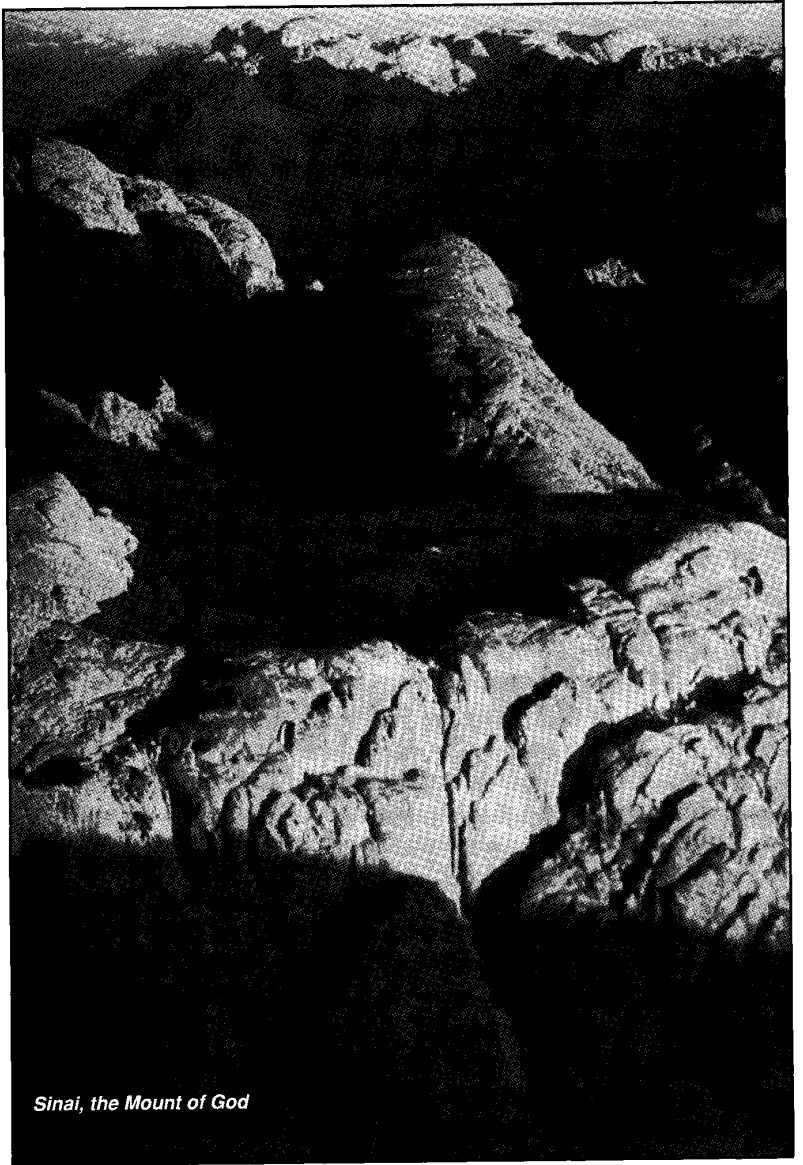
"And Jethro, Moses' father in law, came with his sons and his wife unto Moses into the wilderness, where he encamped at the mount of God" — The reference to the "mount of God," known as Horeb, implies that the events of this chapter are parenthetical, for in the narrative of the previous chapter, Israel had not reached that point. See introductory note to the chapter (ch. 19:1-2).
VERSE 6
"And he said unto Moses, I thy father in law Jethro am come unto thee, and thy wife, and her two sons with her" — Jethro evidently encamped a short distance from the Israelites, and sent this information to Moses by messenger.
Moses Proclaims The Gospel to Jethro - vv.7-12.
Moses extends a warm greeting to his father-in-law, and in explaining to him the miracle of Israel's deliverance, and the divine purpose in regard to the future of the nation, set before him the hope of Israel, and, in effect, preached to him the gospel. In joining with Moses in the sacrifices that were offered, Jethro endorsed his acceptance of the ''hope of Israel," and of Yahweh as his God.
VERSE 7
"And Moses went out to meet his father in law, and did obeisance, and kissed him; and they asked each other of their welfare" — With typical oriental politeness, and pleasing consideration for age and experience (Lev. 19:32; Pro. 16:31), Moses saluted his father-in-law warmly and with affection, as they both exchanged salutations.
"And they came into the tent" — Reference to the "encampment" of Moses at the mount of Horeb is indicated in v. 5.
VERSE 8
"And Moses told his father in law all that Yahweh had done unto Pharaoh and to the Egyptians for Israel's sake" — He would thus have told him of the Passover deliverance, the disastrous death of the firstborn suffered by Egypt, and the miracle of the national baptism in the Red Sea. In explaining that all this was done "for Israel's sake," he would expound to him the promises made to Abraham, Isaac and Israel.
"And all the travail that had come upon them by the way, and how Yahweh delivered them" — He thus disclosed the privileged status of Israel in the sight of the Almighty, by which the trauma of Egypt and the subsequent troubles that befell the nation were overcome.
VERSE 9
"And Jethro rejoiced for all the goodness which Yahweh had done to Israel, whom He had delivered out of the hand of the Egyptians" — The term "goodness of Yahweh" is used in a special relationship in Scripture, as particularly applying to the gospel. Paul uses it in that light in Rom. 11:22, "Behold therefore the goodness and severity of God: on them which fell, severity; but towards thee, goodness, if thou continue in His goodness." To "continue in His goodness," is to remain within the compass of the gospel call. The term is particularly expressive of God's benevolence toward man, revealed in His call. Thus the "goodness of Yahweh" was presented to Jethro (Exo. 18:9); made known to Moses (Exo. 33:19); promised to Hobab (Num. 10:29); hoped for by David (Psa. 27:13); proclaimed as the heritage of the elect (Psa. 65:4); reserved for the poor in spirit (Psa. 68:10); is made the subject of song and praise (Psa. 145:7); is manifested particularly towards Israel (Isa. 63:7), who are ultimately to be drawn to it (Jer. 31:12). Moreover, the saints are to be satiated with it (Jer. 31:14); the whole world is yet to witness it (Jer. 33:9), and it is to become a feature of millennial songs of victory (Zech. 9:17).
Paul taught that "the goodness of God leadeth to repentance" (Rom. 2:4), and this, as we shall see, was the case with Jethro who was induced by Moses' recital of these matters, to accept Yahweh as his God. For further information regarding this theme, see the article The Goodness of God by Brother Thomas in Faith In The Last Days.
VERSE 10
"And Jethro said, Blessed be Yahweh, who hath delivered you out of the hand of the Egyptians, and out of the hand of Pharaoh, who hath delivered the people from under the hand of the Egyptians" — The word barak translated "blessed," primarily means to "bow the knee," and thus to pay reverence. Jethro acknowledged that this should be done to Yahweh in view of His gracious benefits, and the very expressions he used witnessed that he accepted Moses' account of God's power. Jethro went even further in his subsequent statement (v. 11).
VERSE 11
"Now I know" — This implies a new knowledge for Jethro, causing him to convert to the Truth of Yahweh.
"That Yahweh is greater than all gods" — Thus endorsing the expression found in Moses' song of victory as the people were delivered from Egypt through the Red Sea (Exo. 15:18).
"For in the thing wherein they dealt proudly He was above them" — The phrase "he was above them" does not appear in the Hebrew, which reads "...indeed in the matter that they were insolent against them." The "they" relates to the Egyptians. Jethro acknowledged that Yahweh had manifested Himself as greater than all the gods of the nations, and particularly in relation to the manner in which He repaid the insolent harshness which the Egyptians had shown towards the Israelites.
"And Jethro, Moses' father in law, took a burnt offering and sacrifices for God" — In doing so, he endorsed Yahweh as his God, and applied himself to the sacrificial code of Yahweh.
"And Aaron came, and all the elders of Israel, to eat bread with Moses' father in law before God" — Moses, Aaron and the elders of Israel, formally accepted Jethro as a worshipper of the true God, and entered into fellowship with him. Moses invited Jethro to throw in his lot completely with Israel, and go with the people to the Land of Promise (Num. 10:29-32).
Moses Profits From Jethro's Advice - vv. 13-26.
During his stay with Moses, Jethro observes with astonishment the tremendous output of energy and work accomplished by his son-in-law. With his mind concentrated upon the great mission given into his care, lacking the time to search out officers to help, and perhaps doubtful of their ability to do so, Moses actually endangers the success of the work of Yah-weh by becoming too cluttered with unnecessary detail. He is accustomed to personally judge all matters of dispute among the nation, and this threatens to wear him out with work, and to discourage the people with impatience because of the long delays that ensue in consequence. Using good common sense, Jethro urges Moses to delegate his authority and to distribute the work among other trustworthy men. He calls upon him to seek God's guidance in this matter. Moses recognises the value of the suggestion and acts upon it to the wellbeing of both himself and the people.
VERSE 13
"And it came to pass on the morrow" — See introductory notes to the chapter that suggest that this chapter is not in chronological sequence, but occurred after the Law had been given.
"That Moses sat to judge the people" — Therefore he would expound the law as a prophet (ICor. 14:3) and bring unity and peace by wise judgment.
"And the people stood by Moses" — A crowd of complainants soon assembled, and kept Moses constantly employed in their matters.
"From the morning unto the evening" — This was not only wearing to Moses but also to the people, who had to manifest great patience for their case to be heard.
VERSE 15
"And Moses said unto his father-in-law, Because the people come unto me to enquire of God" — The people desired a decision that was God-endorsed, to seek His will in the practical issues of life, and Moses felt that such an important matter could be entrusted to nobody else.
VERSE 16
"When they have a matter, they come unto me" — This demanded certain qualifications. See Exo. 23:7; Deu. 17:8; 2Sam. 15:2-3.
"And I judge between one and another, and I do make them know the statutes of God, and His laws"— Therefore the Law with all its enactments and ordinances had been already given to Moses, so that he desired to instruct the people in them.
VERSE 17
"And Moses' father in law said unto him, The thing that thou doest is not good" — Because it was exhausting Moses and the people. It is a man's duty to have regard to his physical health, and not unnecessarily overtax his strength. Spiritual matters suffer when this is the case.
VERSE 18
"Thou wilt surely wear away, both thou, and this people that is with thee" — Jethro's shrewd observation and advice were quite valid. Moses did feel the strain, and sought God's guidance to relieve it (Num. 11:14-17; Deu. 1:9,12).
"For this thing is too heavy for thee; thou art not able to perform it thyself alone" — Common sense demanded that Moses seek some relief from the tiring and exacting labour, and the constant pressure from the people.
VERSE 19
"Hearken now unto my voice, I will give thee counsel, and God shall be with thee" — Jethro is confident that God would endorse the advice he is about to give Moses.
"Be thou for the people to God-ward, that thou mayest bring the causes unto God" — Jethro recognised the important duty of Moses in acting as mediator to the people, and recognised that such a duty could not be delegated: therefore Moses should continue in that capacity.
VERSE 20
"And thou shalt teach them ordinances and laws, and shalt shew them the way wherein they must walk, and the work that they must do" — Jethro not only acknowledged that there are duties that cannot be delegated, he also recognised that no duty can be deputized unless the one to whom it is to be given has been thoroughly educated in what is required. Those to be selected for positions of responsibility must have the necessary qualifications (see ITim. 3:1-6). Moreover, they must be men who will carry out their duties, and not merely enjoy the status of authority without exercising it in a practical way.
The three words "they must do" are reduced to one word in Hebrew: ya'asun, from asah "to do." The addition of the Hebrew letter nun at the end of the word is a letter of emphasis, indicating that they must do the work appointed them. That was a necessary factor in their appointment. They must work to make it a success. The statement took the obligation of "doing" from Moses, and placed it on those whom he would delegate for the work in hand, as much as to say, that they are the ones who should be doing, and Moses must insist upon them doing so. Jethro's reform envisages three changes:
[1] Moses should conserve his strength, whilst continuing to act as mediator (vv. 18-20);
[2] The people be taught the Law so as to know what to do themselves (v. 20);
[3] Lower and higher courts be set up for the convenience of different cases.
VERSE 21
"Moreover thou shalt provide out of all the people able men" — Jethro advised Moses to seek out men of ability. The word for "men" is enosh which usually relates to weak, mortal man. These "men of ability" are given the title of enosh because they are called to recognise the weakness of flesh and to seek the strength of God. See Deu. 16:18; 2Chr. 19:5-10; Acts 6:3; 2Tim. 2:2. Note the qualifications governing the selection of overseers, including the provision "apt to teach" (1 Tim. 3:2).
"Such as fear God" — Personal ability is not sufficient: it must be governed by reverence towards God. "He that ruleth over men must be just, ruling in the fear of God" (2Sam. 23:3; 2Chr. 19:9).
"Men of truth" — The word is emeth and signifies stability, trustworthiness, thus men of faith upon whom one can lean with confidence for help.
"Hating covetousness" — The R.V. renders this as "unjust gain" (see Deu. 16:19; ITim. 3:3; 6:9-11; 2Pet. 2:14-15; Col. 3:5; Eph. 5:5). Such men would not be inclined to pervert judgment for personal gain.
"And place such over them, to be rulers of thousands, and rulers of hundreds, rulers of fifties, and rulers of tens"— Jethro advocated the decimal system in the organisation of Israel. The men were to preside over higher and lower courts, each leader of a smaller group being responsible to the one above him. Persons not satisfied with a decision of the lower judge could then appeal to a higher. This meant that numerous decisions could be made without recourse to Moses. Whatever matter the decarch or ruler over ten could not decide, went to the pente-contarch or ruler over fifty, and thence, by degrees, to the hecatontarch, or ruler of one hundred, to the chiliarch, or ruler over one thousand — finally to Moses, and at length to Yahweh Himself.
Thus each magistrate had the care or inspection of only ten men; the decarch superintended ten private characters: the hecatontarch ten decarchs; and the chiliarch ten hecatontarchs. See also v. 24; Deu. 1:15; I Sam.8:12.
VERSE 22
"And let them judge the people at all seasons" — Apparently Moses had court days only occasionally, resulting in long, wearying hours when it did sit, and causing delays in cases being heard when it was not officiating (cp. v. 13). Jethro advocated continuous sittings of the courts.
"And it shall be, that every great matter they shall bring unto thee" — Examples of this are recorded in Lev. 24:11; Num. 15:33; 27:2; 36:1. See Moses' own instruction as to what should be done after his death (Deu. 17:8-9). Meanwhile, only important and difficult matters were to be submitted to him.
"But every small matter they shall judge: so shall it be easier for thyself, and they shall bear the burden with thee" — Shared problems and burdens are always much easier to bear (Gal. 6:2).
VERSE 23
"If thou shalt do this thing" —
Jethro was careful to recognise the authority of the man to whom he was speaking, and to leave the decision to Moses.
"And God command thee so" — Jethro also recognised the need of Yahweh to endorse such important arrangements. Such, indeed, was necessary in a theocracy such as Israel.
"Then thou shalt be able to endure, and all this people shall also go to their place in peace" — The plan suggested would be beneficial to both Moses and the people; but without some such organisation there was danger of Moses collapsing under the strain.
VERSE 24
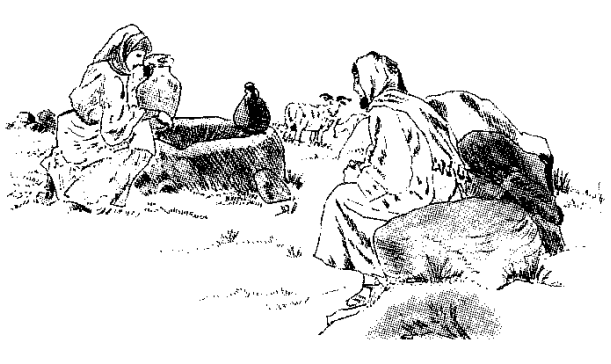
"So Moses hearkened to the voice of his father in law, and did all that he had said" — Moses put Jethro's plan into operation only after conferring with Yahweh (Deu. 1:9-15) and instructing the people accordingly. Indeed, after leaving Sinai further organisation was implemented (Num. 11:14). On that occasion, the people helped to select those so appointed, or agreed with their appointment (Deu. 1:13-16). The seventy thus selected were in addition to the gradations of office defined in the chapter before us (cp. Deu. 1:15).
VERSE 25
"And Moses chose able men out of all Israel, and made them heads over the people, rulers of thousands, rulers of hundreds, rulers of fifties, and rulers of tens" — In Deu. 1:9-18, Moses recounted the appointment of these judges, giving them the titles of '"captains" and "officers."
VERSE 26
"And they judged the people at all seasons; the hard causes they brought unto Moses, but every small matter they judged themselves" — By means of delegation the onerous task of Moses was lessened, and justice administered more rapidly. People had access to the magistrates at all times.
Jethro Leaves Moses — v. 27.
His mission completed, Jethro returns home.
VERSE 27
"And Moses let his father in law depart; and he went his way into his own land" — He returned home a changed man converted to the Truth and worshipping Yahweh. Further details of his family are recorded in Num. 10:29-32. The characteristics of this wise and helpful man, include the following:
He was religious (Exo. 2:16; 3:1; 18:10-1 1); hospitable (Exo. 2:20); a family man (Exo. 2:16; 3:1; 18:2); observant (Exo. 2:18; 18:14); successful in business (Exo. 3:1); co-operative (Exo. 2:21; 18:2-6); practical (Exo. 18:13-27); wise yet humble — he hearkened and accepted the gospel proclaimed to him by Moses (Exo. 18:8-9). These are attributes that all should attempt to emulate.
Comments