451. CHAPTER TWENTY-FOUR
CONFIRMATION OF THE COVENANT
The Ten Commandments form the basis of the Mosaic Covenant (Exo. 34:28; Deu. 4:13), whilst the judgments of Exodus 21:1 to ch. 23:33 comprise the Book Of The Covenant (Exo. 24:7). Upon this nucleus, the rest of the Law is built. Having agreed to the Covenant submitted (Exo. 19:7-8), the nation now has to officially and nationally ratify it in blood. For that purpose, representatives of the people are gathered together, an altar is erected, sacrifices are offered, the Book of the Covenant is read, and the people again proclaim their acceptance of it. So the ratification proceeds. Afterwards, Moses and the elders of the people, eat and drink, in confirmation of the covenant with the Elohim.
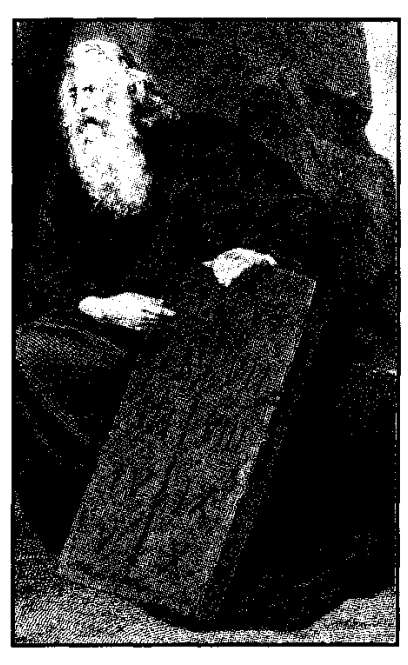
Moses and Joshua then leave the people and ascend into Horeb. From there they move further to Sinai into whose heights Moses alone ascends to remain for forty days and forty nights.
Moses Called to the Mount — vv. 1-2.
Moses receives instructions to conduct a special form of worship in order to endorse the acceptance of the covenant by the people.
VERSE 1
"And he said unto Moses, Come up unto Yahweh" — This does not mean into the mount, but closer to the foot of it where the theophany could be observed. See similar expressions in Exo. 19:13, 17.
"Thou, and Aaron, Nadab,and Abihu" — The names of these four men proclaim the purpose of Yahweh: Drawn out (Moses) to enlightenment (Aaron), through freedom of will (Nadab), unto the Father (Abihu). Nadab and Abihu were the elder sons of Aaron, and although the priesthood had not as yet been conferred upon the tribe of Levi, nor Aaron appointed to the position of high priest, Yahweh, with that prescience that is incidental to Him, foreknew what would happen, and so commenced to prepare for it by projecting Aaron to the forefront of the nation.
The first mention of Aaron is found in Exo. 4:14. Some give the meaning of his name as A Shining Light, or Enlightened (see The Hebrew And English Bible Students' Concordance). Both Moses and Aaron typed the Lord: the former, as shepherd, lawgiver and leader; the latter, as high priest. Aaron is called "the Levite" (Exo. 4:14), a significant title, for it signifies to join; to have fellowship with.
The general organisation of the nation can be summarised in the following manner: From the tribes there came the warriors; from Levi there came the workers; from the family of Aaron there came the worshippers.
Nadab and Abihu, the elder sons of Aaron, were later tragically destroyed by divine judgment because of their blasphemy (Lev. 10:1-2).
"And seventy of the elders of Israel" — These were elders of the tribes (Exo. 18:21) whom later, Yahweh chose to endow with His spirit (Num. 11:16-25). The selection of the seventy on this occasion, was carried on in the Sanhedrin, or special court of seventy elders, referred to in the N.T. In the terms of spiritual numerics, "70" is formed of: 10, the number of completeness, showing the whole, multiplied by 7, the number of the covenant. Thus it is representative of the complete covenant people.
So low had Israel sunk in the days of Ezekiel, that this order of men, called to represent the divine eldership, were discovered worshipping idols in their hearts (Eze. 8:9-11) — if not openly (v. 12).
Why should seventy men be chosen? Not merely because of the symbolic significance of the number mentioned above, but also because Israel was designed as a priestly nation (Exo. 19:6), ministering to mankind generally and so becoming the channel of Yahweh's goodness to all. In this regard "seventy" is the number of nations (see note, Exo. 15:27).
"And worship ye afar off — Note the difference of worship under Moses, and that in Christ. Whereas those represented by the former were "afar off," those in Christ are brought "nigh" (Eph. 2:13).
VERSE 2
"And Moses alone shall come near Yahweh" — This was to be after the seventy-four witnesses had eaten with the Elohim on the plain before Horeb (vv. 9-11). See note v. 12.
"But they shall not come nigh; neither shall the people go up with him" — They were to remain on the plain when Moses ascended into the mount.
The Covenant Endorsed by Blood - vv. 3-8.
The terms of the covenant are proclaimed to the people, after which the covenant is ratified with sacrificial blood. Once again the "Book of the Covenant" is read in the hearing of the people, and they agree to its terms. Accordingly, the people and the book are sprinkled with the blood of the covenant, which is then ratified by Yahweh.
VERSE 3
"And Moses came and told the people all the words of Yahweh, and all the judgments" — Moses was at the foot of Horeb when Yahweh spoke with him. This was after his third ascent and descent. At the conclusion of the instructions given, he returned to the people who had withdrawn far from the mount. Calling the leaders of the nation before him, he reminded them of the "words" of law that they had heard, and revealed to them the additional judgments that had been delivered exclusively to him. The "words" are the Ten Commandments (styled "ten words" in Deu. 4:13), and the "judgments" are those instructions recorded in Exo. 20:22-23:33. These comprised the nucleus of what is called The Book of the Covenant. It was first read to the people, and afterwards sprinkled with blood (Exo. 24:8; Heb. 9:18). Finally, it was extended to include the rest of the Law given to Moses, and was placed at the side of the ark, as a witness against the people (Deu. 31:24-30).
"And all the people answered with one voice" — They answered unanimously in the affirmative. Of course, there was no real choice in this. The alternative to embracing the covenant was death, for the people were surrounded by enemies, and dependent upon Yahweh for food and drink. Yahweh's covenant was a command (Deu. 4:13; Psa. 105:8), and the people were already under law (Exo. 15:25; 16:26-28).
"And said, All the words which Yahweh hath said will we do" — This was a repetition of their acceptance as previously given (Exo. 19:8).
VERSE 4
"And Moses wrote all the words of Yahweh" — This scroll became known as The Book of The Covenant (v. 7).
"And rose up early in the morning" — In type this pointed forward to the new millennial day to dawn (2Sam. 23:4), when the Christ-altar (Heb. 13:10) will be surrounded by a perfected Israel, with the twelve apostles as their rulers (Mat. 19:28).
"And builded an altar" — See note Exo. 20:24-26. The altar represented Yahweh in sacrificial manifestation as fulfilled in Christ (Heb. 13:10).
"Under the hill" - Under the shadow of Horeb: representative of divine Law. This was "magnified and made honourable" by the Lord Jesus (Isa. 42:21), and will be restored as the basis of national life in the age to come (Mal. 4:4; Isa. 2:2-4).
"And twelve pillars" — The Hebrew matstebah denotes "memorial stones" or "pillars," from a root signifying "to station, or place," i.e., in a position of prominence. In the symbolism of Moses' action, they represented the twelve rulers of the twelve tribes in the age to come (Mat. 19:28). One of those rulers of the future Age is styled a "pillar" in Gal. 2:9, and all the apostles were set up in positions of prominence, acting as "memorials" to the rest of the disciples (1Cor. 12:28; Eph. 4:11; 1Cor. 4:9). These twelve memorial stones formed the altar set up by Moses.
"According to the twelve tribes of Israel" — Pointing forward to the true Israel of God (Gal. 6:16). Moses' altar of twelve stones foreshadows the Christ-altar upon the foundation of the Israelitish hope (Eph. 2:12), with the apostles representing the twelve tribes (Mat. 19:28; Eph. 2:20; Rev. 21:12).
VERSE 5
"And he sent young men of the children of Israel" — These were the appointed priests referred to in Exo. 19:22. But who were they, seeing that Levi had not yet been selected as the priestly tribe? The answer is, the firstborn of each family in Israel who, according to the Melchizedek order of priesthood, acted in that capacity. Later, after Israel had sinned, the Levites were selected instead of the firstborn to act as priests (Num. 3:12; Exo. 32:26-29). The Melchizedek priesthood will be re-established in Christ. Accordingly, those in him, are constituted "the ecclesia of firstborns" (Heb. 12:23 Diaglott), "the firstfruits" of God (James 1:18; Rev. 14:4), and as such will be appointed to the royal priesthood of the Age to come (Rev. 5:9-10).
The "young men" therefore represented Israel as a "kingdom of priests" (Exo. 19:6; 1 Pet. 2:9).
"Which offered burnt offerings" — See Lev. 1 for the preparation of a burnt offering. Such a sacrifice represented the dedication of self, consumed by the divine fire (typifying the Spirit-Word).
"And sacrificed peace offerings of oxen unto Yahweh" — A "peace offering" (see Lev. 3) was expressive of fellowship with Yahweh: portion of the slain animal providing the means for the sacrificial feast that followed (Exo. 24:11; Lev. 7:15). Paul used this passage in Heb. 9:15-23 as a basis of his exposition of the Atonement and referred to the sacrifice as comprising "calves and goats" (Heb. 9:19).
The goat in sacrifice typified the waywardness of flesh, and was used for the sin offering (Lev. 16:15), whereas oxen represented the strength of offerers, given in dedication unto Yahweh.
In the covenant established as described, the two contracting parties are Yahweh and Israel. But as sinful flesh cannot approach the Creator without blood, He is represented in sacrificial manifestation as an altar.
But what do we mean by "without blood?" Blood represents life (Lev. 17:11), whilst blood shed in sacrifice and splashed on an altar, symbolises a life devoted to doing the will of Yahweh. Christ gave the perfect example of this, whereas lesser mortals can but strive to attain unto that state.
Let us remember, however, that no sacrifice is acceptable unto God if the offerer does not attempt to so dedicate his life, for the blood shed is but a token of this. Accordingly, Paul concludes "without shedding of blood is no remission" (Heb. 9:22). Without an attempt on our part to conquer the flesh (represented by the shed blood in its application to us) there is no forgiveness of sins. We must achieve something in this respect ourselves, as well as identify with the sacrifice of Christ.
VERSE 6
"And Moses took half of the blood, and put it in basons" — The word denotes "cups" as in Lk. 22:17. Half of the blood was reserved for the book and the people so as to unite them with Yahweh, represented by the altar.
"And half of the blood he sprinkled on the altar" — The altar represents Christ (Heb. 13:10). He was first physically cleansed by his own offering (Heb. 13:20; John 17:19; Exo. 29:36), and as such is in a position to cleanse, through forgiveness, those who come unto God through him (cp. Exo. 29:37). The efficacy of his offering has extended throughout the ages, reaching backwards as well as forward (Heb. 9:15). This was illustrated by Moses' action at this time. Paul comments: "When Moses had spoken every precept to all the people according to the law, he took the blood of calves and of goats with water, and scarlet wool, and hyssop, and sprinkled both the book, and all the people, saying, This is the blood of the covenant which God hath enjoined unto you" (Heb. 9:19-20).
Nothing is said in Exodus of the water, scarlet wool and hyssop, and therefore, for a complete picture of what took place on that significant day, and its important symbolic meaning, they must be added to the account as given by Moses.
Water was added to the blood to delay coagulation which otherwise would take place quickly and cause it to become useless for sprinkling. It therefore extended the time of the efficacy of the blood as a token of sacrifice which is an important feature of "the blood of Christ" (see Heb. 9:14-15). In view of Paul's words, note the highly significant features of the ceremony conducted by Moses:
- The book written: Instruction is the basis of the covenant.
- The altar built at the dawn of a new day: Hope through forgiveness.
- Goats sacrificed: Recognition of sin.
- Burnt offerings made: Dedication of self.
- Peace offerings made: Fellowship with Yahweh.
- Blood and water: The efficacy of the sacrifice extended.
- Book read to the people: Individual endorsement of its requirements.
- Blood sprinkled with hyssop: God manifestation under trial. See note Exo. 12:22.
- Scarlet wool: Flesh sacrificed.
- Altar, book, and people sprinkled with blood: Christ, the Truth and believers united in dedication through repudiation of the flesh.
VERSE 7
"And he took the book of the covenant" — This constituted the Ten Commandments and the judgments, as recorded in Exo. 20-23.
"And read in the audience of the people" — Moses read the book in the ears of the people, or the seventy representatives of the nations (v. 7), before partaking of the sacrificial meal in company with the Elohim (v. 11). Likewise, the Lord exhorted the apostles before the Memorials (John 13:14-21). See Paul's comment (Heb. 9:19).
"And they said, All that Yahweh hath said will we do, and be obedient" — They enunciated this three times (Exo. 19:8; 24:3; 24:7). Christ also was compelled to submit to three trials before his death, but remained obedient to his Father's will. After the Lord's discourse, the apostles likewise declared that they would be obedient (Mark 14:29, 31).
VERSE 8
"And Moses took the blood, and sprinkled it on the people" — He sprinkled the blood on the representatives of the people: the seventy elders separated for that purpose (v. 1). This was the first covenant made with Israel, and it was sealed with the blood of animal sacrifices. The second, or new covenant as initiated by the Lord, replaced the old and was sealed with his blood (Heb. 8:6-9; 9:14). If the old covenant required the obedience of the people to the will of Yahweh, no less is expected of those who enter into the new covenant (Rom. 2:13-15; Heb. 10:28-31).
"And said, Behold the blood of the covenant, which Yahweh hath made with you concerning all these words" — The word "covenant" is from the Hebrew berith, derived from a root signifying to cut or divide, and hence to slay so as to eat (see notes Gen. 15:10). It does not, of itself, signify a mutual undertaking between two parties, but it does bind the one entering into such a covenant to fulfil his part of it. A covenant established upon the shedding of blood is for life, and demonstrates that those entering into such an undertaking will be held accountable to it. Hence the solemn significance of Moses' words said on this occasion. Similar words, were used by the Lord Jesus when laying down the terms of his covenant with the disciples (Luke 22:20).
To "behold the blood" is to recognise the significance of the memorials represented thereby.
The Glory of Yahweh Manifested - vv.9-11.
The covenant having been ratified by the unanimous acceptance of the people (as the apostles did that of the Lord as representatives of all believers — cp. John 17:19-20), Moses proceeds to carry out the instructions given him in respect to Aaron, Nadab, Abihu and the elders which he had received (vv. 1-2). Leading them to the foot of Horeb, they receive a vision of divine glory which symbolises the principles of God's reign on earth. They then enter into fellowship with the Elohim by mutually partaking of a sacrificial feast: the whole of which points forward to events yet to happen at the consummation of the purpose of Yahweh in the earth.
VERSE 9
"Then went up Moses, and Aaron, Nadab, and Abihu, and seventy of the elders of Israel" — They moved up to the foot of Horeb. See notes v. 1.
VERSE 10
"And they saw the God of Israel" — They saw the Elohim of Israel, but not the angel upon whom Yahweh had superimposed His name (Exo. 23:20-21), for it is stated that "Moses alone shall come near Yahweh" (v. 2). In fact, Moses saw the "similitude of Yahweh" (Num. 12:8) for no mortal has looked upon Him directly (1Tim. 6:16).
In this symbolic portrayal of divine glory, the "Elohim of Israel" represented those "mighty ones of Israel" who, in the Age to come, shall be made "equal unto the angels" (Luke 20:36), and will take over the administrative work that the angels perform at present (Heb. 2:5). In symbol, the assembled elders of Israel, at the foot of Horeb, saw that which was invisible but which was nevertheless real, as is the presence of angels at the present-day memorial meetings of the brethren: (Mat. 18:10, 20; Luke 15:10).
"And there was under his feet" — The personal pronoun is in the singular number although related to the plural term Elohim. Though the term Elohim denotes a company of mighty ones, each member acts in complete unity and co-operation with all others.
"As it were a paved work of a sapphire stone" — The term "paved work" is from the Hebrew libnah signifying "whiteness," and by implication, transparency. The word "sapphire" is from a root denoting to engrave, to write, pointing to the impress of the Word of God. The sapphire is a blue stone, and being connected with the word libnah, suggests the glorious, transparent blue of heaven in its clearness. Blue was used in the Law to emphasise the heavenly origin of things (see Num. 15:38; Deu. 22:12). In the breastplate of the high priest the sapphire represented the tribe of Simeon whose name signifies Hearing (Exo. 28:18), but in the Apocalypse (cp. Rev. 21:19 with 7:5) it represents Reuben, signifying See a Son! Thus the use of the stone represents a transformation from hearing to seeing.
In witnessing this theophany of the Elohim of Israel enthroned above such a pavement, Moses and the leaders saw a similar vision as that of the cherubim later revealed to Ezekiel, for the same description is given (see Eze. 1:26). It symbolised the "new heavens and the new earth" that Yahweh intends to establish upon the earth (Isa. 65:17-18; 66:22). It set forth before the leaders of the people the hope of their calling, and the destiny that Yahweh had in mind for them in drawing them out of Egypt: namely, to establish a perfect realm on earth.
"And as it were the body of heaven in his clearness" — This statement emphasises the heavenly nature of the divine governance, the new political heavens and earth in which "dwelleth righteousness" (2Pet. 3:13).
VERSE 11
"And upon the nobles of the children of Israel" — In the symbolic vision of the kingdom thus presented, the "nobles of Israel" at the foot of Horeb, represent those who shall constitute the king-priests of the Age to come (see Isa. 41:9-14; Rev. 5:9-10).
"He laid not his hand" — This represents divine acceptance, ultimately to be experienced by the righteous at the Judgment Seat of Christ.
"Also they saw God" — In the Elohim they saw the manifestation of the Father. See the promise of Mat. 5:8; Rev. 22:4.
"And did eat and drink" — They partook of a sacrificial feast with the Elohim. A similar promise was made to the apostles by the Lord (Mat. 26:29). As Melchizedek prepared bread and wine for Abraham following his defeat of the confederacy from the north (Gen. 14:18), so shall Christ, as the antitypical Melchizedek, in the Age to come, for his victorious associates (Isa. 25:6-7).
Therefore, the vision of glory revealed to the elders of Israel, symbolised the consummation of the divine purpose as far as the nation was concerned. They were shown "the joy set before them" (Heb. 12:2), and thereby given an incentive to carry out the will of Yahweh in action.
Moses Ascends The Mount To Receive The Covenant — vv. 12-18.
Moses is commanded to ascend Mount Horeb once more, and does so for the fifth time. On this occasion, he takes Joshua with him, and they move towards the eminence of Sinai. They see the mount encompassed with the glory of Yahweh in cloud and devouring fire, and for six days they await further instructions as to what they should do. On the seventh day Moses is commanded to ascend Mount Sinai. Leaving Joshua at the foot of the mount, he does so. The cloud receives him out of the sight of his waiting companion, and he remains there in the mount for forty days and forty nights.
VERSE 12
"And Yahweh said unto Moses, Come up to Me into the mount, and be there" — This is the fifth ascent of Moses. On this occasion, however, it is to be for a protracted stay suggested by the additional clause "and be there."
"And I will give thee tables of stone" — The Ten Commandments were inscribed on tablets of stone (Exo. 31:18; Deu. 5:22). These tables were provided by the hand of the angel (Exo. 32:16) but were later broken at the time of the rebellion of Israel in the matter of the golden calf (v. 19); the second tablets were hewn by Moses himself (see ch. 34:1).
"And a law, and commandments which I have written" — The Hebrew has the definite article: "the law, and the commandments which I have written." The law and the commandments were all summarised in the Decalogue already proclaimed to the people (Exo. 20:1-17), and which now were to be given to Moses, inscribed on stone by the angel himself.
"That thou mayest teach them" — It is important that the Word should be taught, for it is of little value in the absence of such study. See the need for a "teaching priest" (2Chr. 15:3; Jer. 32:33; Mal. 2:6-7).
VERSE 13
"And Moses rose up, and his minister Joshua" — This title of sharath, an attendant, is here applied to Joshua for the first time, indicating the status to which he was rising. Moses had used him earlier to lead Israel against the Amalekites ( Exo. 17:9-13), and was to bring him more and more into prominence, until, finally, he became his successor.
The name Joshua is here used by anticipation, as he did not receive it until he was sent by Moses to explore the land of Canaan; formerly he was named Oshea (Num. 13:8), but Moses renamed him Yahoshua (v. 16). Joshua was evidently one of the seventy elders selected to represent Israel (Exo. 24:1).
"And Moses went up into the mount of God" — With Joshua, Moses ascended Mount Horeb, styled The Mount of God.
VERSE 14
"And he said unto the elders, Tarry here for us, until we come again unto you" — Moses' ascent into the mount typed the Lord's ascent into heaven. Significantly, the Lord also admonished: "Occupy till I come" (Luke 19:13).
"And behold, Aaron and Hur are with you" — These two leaders assisted Moses previously (see Exo. 17:10), and are now appointed to assume responsibility in his absence.
"If any man have any matters to do, let him come unto them" — Moses' instructions in this regard, should have prepared the people for his lengthy stay in the mount, so that they were without excuse in their subsequent faithlessness and wilful worship of the golden calf.
VERSE 15
"And Moses went up into the mount" — Accompanied by Joshua, Moses ascended Mount Horeb in the sight of the elders watching from below. The Lord Jesus was similarly watched ascending to heaven by his disciples (Acts 1:9).
"And a cloud covered the mount" — When he ascended to the top of Horeb, he and Joshua would see the higher peak of Sinai in the distance. They perceived that its peak was clothed in cloud. The Hebrew is ha-anan, the cloud. See Acts 1:9.
VERSE 16
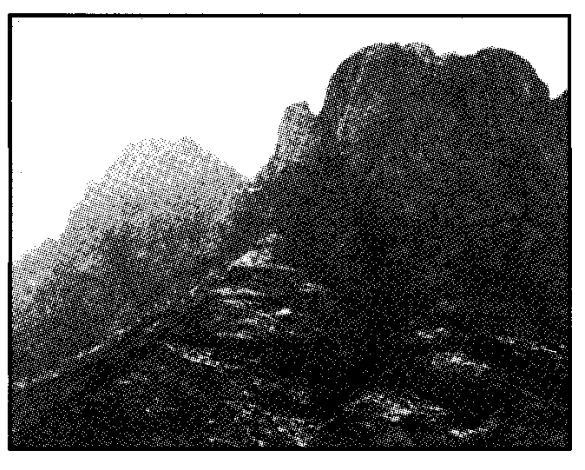
"And the glory of Yahweh abode upon mount Sinai" — The cloud was exceedingly luminous. See note Exo. 16:10. Mount Sinai is about five kilometres (3 mis) distant from mount Horeb, and in relationship to that peak, represented the Most Holy as against the Holy Place.
"And the cloud covered it six days" — The glory was veiled for six days, a delay that gave Moses time to prepare for his approach to the angel manifesting the name and glory of Yahweh. The period prefigures the six thousand years of history during which the divine glory has been veiled, awaiting its full manifestation at the coming of the Lord at the seventh millennium (cp. 1Tim. 6:14-16).
"And the seventh day He called unto Moses out of the midst of the cloud" — The divine glory at the Lord's return will be apocalypsed in a cloud of resurrected and glorified witnesses (see Rev. 1:7; Mat. 24:30). On this occasion, Moses was summoned to approach closer.
VERSE 17
"And the sight of the glory of Yahweh was like devouring fire on the top of the mount" — A devouring fire is one that consumes or destroys. The purpose of the Law was to destroy the lusts of the flesh that are contrary to God, and to purify the people for the kingdom. The fire of divine scrutiny at the Judgment Seat will complete the process (see 1Cor. 3:13, 15). It will perfect faith, for gold, which is the symbol of faith (1Pet. 1:7), can never be destroyed; it can only be purified by fire. Therefore God still remains as a "consuming fire" (Heb. 12:28-29), and will manifest Himself as such against the world of the ungodly at the coming of the Lord (2Thes. 1:8; 2Pet. 3:12).
Meanwhile, Moses' experience in the mount must have reminded him of the "great sight" he had witnessed some years earlier at Horeb, when a bush was encompassed with fire, but not consumed (Exo. 3:2). Accordingly, among his last words, he exhorted Israel to seek "the good willof Him that dwelt in the bush" (Deu. 33:16). Those who do so may be purified by trial, but will never be destroyed by "the devouring fire."
"In the eyes of the children of Israel" — The glory of Yahweh which was centred particularly on Mount Sinai was diffused over the whole area, so that the children of Israel, at the foot of Horeb, could see the glow of the devouring fire. This filled them with fear and perhaps contributed to some of them claiming that Moses had been destroyed in the mount.
VERSE 18
"And Moses went into the midst of the cloud" — The cloud veiled the peak of Sinai, which represented the Most Holy before the tabernacle. Joshua, who was left at the foot of the mount, saw the cloud "receive him out of his sight" (Acts 1:9 portrays the antitype).
"And gat him up into the mount" — Moses ascended into the mount, to the very presence of the angel upon whom was named the name of Yahweh.
"And Moses was in the mount forty days and forty nights" — Moses observed a complete fast, without eating or drinking for forty days (Deu. 9:9-17). It was the first of three such fasts recorded in the scripture (cp. Deu. 10:10; Exo. 34:28). Both Elijah (1 Kings 19:8), and the Lord (Mat. 4:2) did likewise. Fasts were designed to prepare the mind for particular approaches unto Yahweh; but such a fast as this required special strength, by divine provision, to endure it.
Comments