___________________
405. GENESIS - Chapter 30
COMPETITION IN THE HOUSEHOLD OF LABAN
First there is competition between the two wives of Jacob; and then there is competition between the two shepherds. Continuingbarren, Rachel gives her maid to Jacob, and two sons are born. Leah then gives Zilpah to Jacob, and she also bears two sons. Leah then lures her husband from Rachel with the mandrakes found by Reuben and becomes the mother of two more sons. Finally the desperate Rachel bears Joseph. Jacob then seeks to depart, but is detained by Laban. The two shepherds agree on the terms of employ, which are overshadowed by God to the advantage of Jacob.
Birth of Dan and Naphtali, sons of Bilhah — vv. 1-8
Made desperate by the fruitfulness of Leah, Rachel pleads for children, but continuing barren, she offers Bilhah to Jacob, who bears him two sons.
VERSE 1
"And when Rachel saw that she bare Jacob no children, Rachel envied her sister" — The state of Rachel in view of Leah's fruitfulness, becomes similar to that of Sarah towards Hagar. Her earnest desire for children may not be understood by us today; but then it was considered a disgrace to an Israelitish woman, not to bear children. The fundamental basis of true worship was the covenant made in Eden relating to "the seed of the woman," and it was the ambition of every mother to contribute to that end (1 Tim. 2:15). Thus children were considered as "an heritage from Yahweh" (Psa. 127:3), and Rachel's lack of such reflected upon her relationship with God. We believe that there is much more to the recording of the experiences of Leah and Rachel in that regard, than merely the record of personal jealousy and mutual striving one against the other. The two wives of the patriarch typically represent the two covenants with which Israel, as a nation, was associated: the Mosaic and the Abrahamic, with their mutually antagonistic principles of law versus grace and faith. The former is more prolific of fruit than the latter, for those under it are compelled to observe its commands. Thus "the barren" is set forth as typical of the Abrahamic covenant of grace and faith (Isa. 54:1-5), and experience has revealed that it is much more difficult to bear fruit of such than it is when one is commanded by law.
"And said unto Jacob, Give me children, or else I die" — Rachel complained that unless she could bear fruit she was no better than a dead woman! That is true of Israel under grace. She must produce fruit to the glory of Yahweh, or die (see John 15:2, 8,16; Rom. 6:21-22; Gal. 5:22). Nevertheless, at this stage, Rachel asked in the wrong direction. She should have sought the help of Yahweh. She learned that lesson, and subsequently sought the help of God with pleasing results (v. 22). The fruit that we should produce to the glory of the Father, does not come from the compulsion of law, nor through self-will, but through the inworking of Yahweh (see Phil. 2:13; Isa. 43:7; 60:21).
VERSE 2
"And Jacob's anger was kindled against Rachel" — He had just cause for his anger, for Rachel's outburst had wrongfully imputed blame on him. She had to learn the lesson of faith.
"And he said, Am I in God's stead, Who hath withheld from thee the fruit of the womb?" — Jacob directed Rachel to the Source of such blessings (Psa. 127), and she, submissive to his exhortation, heeded the advice (see Gen. 30:6).
VERSE 3
"And she said, Behold my maid Bilhah" — Her name signifies Bashful, Modest. Later, Reuben was guilty of immorality with her.
If we see in her a type of the preaching of the Word by those who acted as hand-maidens to grace and faith, this defilement foreshadows that which took place as far as the early Ecclesias are concerned in relation to the apostasy. This, significantly, developed out of an incestuous union of the fruits of the law and of grace, as set forth in Acts 15:1-3. The Apostles acted as a handmaid to grace. See John 17:20.
"Go in unto her; and she shall bear upon my knees" — She shall have children which I may claim as my own, and nurse them upon my knees, lavishing upon them my love. The statement "she shall bear upon my knees' seems to be a reference to an ancient ceremony of adoption. In normal marriage, it was customary to place a newly-born child upon the father's knees, as indicative of parenthood (Job 3:12), and from this there seems to have developed a form of adoption to which Rachel gave expression. Thus the children of Joseph were intimately embraced by Jacob drawing them between his knees (Gen. 48:10-12), as an act of adoption, identifying them as his own. Again, the children of Machir, who was the son of a concubine (1 Chron. 7:14) are described as being "born upon Joseph's knees" (Gen. 50:23), or legitimised by him as his descendants.
"That I may also have children by her" — The literal Hebrew is, "/ also may be built from her.'1 This is made even more significant, by the adverb also. It suggests that Rachel was asking for two things : (1) that Bilhah might have children that she could partly claim as her own; (2) that in addition (indicated by the word also) she might herself commence to bear through this means. Whether or not Rachel's latter statement suggests that she might herself commence to bear through Jacob taking Bilhah to wife, modern psychology and experience go to show that the adoption of a child by an apparently barren woman often results in her bearing.
Notice the words that Rachel used, as expressed literally in the Hebrew (see margin of the A.V.). Parenthood was considered by the Hebrews as the building of a house or a household. The Apostle likened the ecclesia to the "house of God" (Heb. 3:6), a house of living stones (1 Pet. 2:5). Paul taught: "We are labourers together with God; ye are God's husbandry, ye are God's building" (1 Cor. 3:9). Like Bilhah to Rachel, we individually can co-operate in building or in strengthening the house of God, on behalf of the Bride of Christ.
VERSE 5
"And Bilhah conceived, and bare Jacob a son" — Proving conclusively that Jacob was not to blame for the barrenness of Rachel.
VERSE 6
"And Rachel said, God hath judged me, and hath also heard my voice, and hath given me a son" — The word diyn rendered judged signifies to judge as an umpire, or to plead the cause. Rachel claimed that God had vindicated her in that He had blessed her with a son through Bilhah. Jacob had accused her of neglecting prayer, but, in fact, she saw the birth of Dan as a vindication of her prayers. Therefore she happily told him that "God hath also heard my voice."
"Therefore she called his name Dan" — Dan (signifying judging) is from the same Hebrew verb translated judged, and therefore implies vindication or justification. Notice how in this verse, Rachel proclaimed the purpose of grace: "God hath judged me": sin condemned; "He hath heard my voice": the pleading of prayer; "He hath given me a son": providing the means of vindication. Add to this her statement of v. 8 and the purpose of grace is completed: "With God's help I will wrestle and prevail!"
VERSE 8
"And Rachel said, With great wrestlings have I wrestled with my sister, and I have prevailed" — The literal rendition of the words are as in the margin: "with wrestlings of God have I wrestled." The word "great" is the Hebrew word Elohim, elsewhere rendered God. Rachel had made her problem a matter of prayer, and now recognised a divine blessing in the birth of the two sons whom she could claim as her own. She had submitted in humility to doing her part in yielding her place to her maid Bilhah, but even so, she acknowledged that she was indebted to God for the blessing of the children. As Rachel thus wrestled for children, so the Bride of Christ has done likewise through the instrumentality of its handmaidens, individual saints; as Rachel wrestled successfully through the help of God, so the faithful must wrestle with sin's flesh (Rom. 7:23), the strength of which is revealed by the Law (Rom. 7:7-11). Rachel's problem had been aggravated by Leah's success, so that in the absence of children she felt herself to be no better than a dead woman (v. 1). Antitypically, the strength of the law, and its curse upon those who could not live up to its requirements, brought a person consciously under the reality of death (Rom. 7:9). Like Rachel they were caused to lament: "Give me children (the fruit of the Spirit, Gal. 5:22), or else I die" (Gen. 30:1). To obtain that fruit, believers have to wrestle against the flesh; and this will only be successful through the aid of God.
"And she called his name Naphtali" — This name signifies "to wrestle" and speaks of the continuing struggle Rachel faced in her desire to fulfil her anticipations.
Birth of Gad and Asher by Zilpah, Leah's Maid — Vv. 9-13
The partial triumph of Rachel aroused the jealousy of Leah, who, having left off bearing, followed her sister's recourse in giving her maid to Jacob. The births of Gad and Asher followed. The appearance of these children added to the complexity of Jacob's household, for what gave happiness to one wife aroused the enmity and jealousy of the other. The antitype is revealed in the preaching of the Gospel that aroused the enmity and hostility of Israel under the law. Paul commented: "Salvation is come unto the Gentiles for to provoke them to jealousy" (Rom. 11:11).
VERSE 9
"When Leah saw that she had left bearing, she took Zilpah her maid, and gave her Jacob to wife" — If Rachel is to be adversely criticised for using this expedient to obtain children, how much more should Leah, for already she had twice as many children as Rachel.
VERSE 11
"And Leah said, A troop cometh" — The word "troop" is gad in Hebrew, and signifies fortune, not troop. It suggests an expression of triumph, as though Leah exclaimed: "Good fortune!" Gad was the name of a Babylonish deity which presided over matters of chance. In Isaiah 65:11, Israel is condemned for "preparing a table for that troop", or Gad, as the margin indicates. Leah's exclamation, therefore, suggests that she had not lost all her heathen ideas, which is true of Israel after the flesh (cp. Hos. 2:17).
However, by a play upon words, Jacob appears to have given a different slant to the meaning of this son's name. In his blessing upon Gad (Gen. 49:19) he declared: "Gad, a troop shall overcome him: but he shall overcome at the last." In this statement Gad, troop and overcome are all related words, revealing subtle differences. "Gad" is as seen above; but the word "troop" is not gad which is used by Leah in the verse before us, but is gedud and signifies a warlike throng (see R.V. mg). The word "overcome" is the verbal root (guwd) from whence the noun gad is derived, and signifies to crowd upon, to press upon, to attack. From this it would appear that Jacob amended Leah's explanation of the word from Good Fortune as expressed by her, to one signifying a company of warriors who, though temporarily overcome, would ultimately prevail.
"And she called his name Gad" — Gad signifies Fortune, as suggested above, but this meaning of the name was amended by Jacob to signify a company of warriors who though experiencing reverses would ultimately prevail.
VERSE 12
"And Zilpah Leah's maid bare Jacob a second son" — Zilpah's name signifies fragrant dropping as of myrrh. Her two sons: Gad, a company of warriors (to use Jacob's definition), and Asher, blessed, suggest the combination: a company of warriors who shall be blessed. Her name, in conjunction with those of her two sons, suggests the droppings of myrrh, the fragrance of true sacrifice under the law (Song 5:5).
VERSE 13
"And Leah said, Happy am I" — The literal Hebrew is as the margin: "In my happiness am I". She rejoiced in the numerous progeny with which she was blessed in contrast to Rachel.
"For the daughters will call me blessed: and she called his name Asher" — The word "blessed " signifies "happy" and is frequently used in Scripture. The first Psalm reveals the proper basis for true happiness, or blessedness: walking in the ways of righteousness. Yahweh made mankind for happiness (Deut. 33:24; Psa. 144:15), and everybody craves for this state, desiring to avoid all thoughts of misery. But so perverse is the human heart, that it seeks for happiness where it cannot be found. Happiness can be obtained even now (1 Tim. 4:8), but its full fruits will be tasted in the future age, when the ultimate triumph of the righteous will be openly manifested. Leah saw a condition of happiness, in her prosperous state as far as children were concerned, and in her triumph over Rachel, and so named this son Asher, Blessed, or Happy.
Birth of Issachar, Zebulun, Dinah (Leah) — Vv. 14-21.
Leah experiences a further triumph. Hiring Jacob with mandrakes gathered by Reuben, she becomes the mother of two more sons, and so complete was her triumph that she was confident that thenceforth her husband would dwell with her. The birth of a daughter, Dinah, adds a final touch to her triumph.
VERSE 14
"And Reuben went" — At this time, a mere child, perhaps six to eight years of age.
"In the days of wheat harvest" — Approximately May, i.e. late Spring in Israel.
"And found mandrakes in the field, and brought them unto his mother Leah" — The Hebrew dudaim, translated mandrakes signifies love plant, from dod, to boil, to love. They are apples of the mandragora, an herb resembling belladonna, with a root like a carrot, and possessing white and reddish blossoms of a sweet smell. It bears yellow, odoriferous apples which ripen in May and June.

These berries were highly prized as having magical ability to induce fertility. Reuben took them in all innocence to his mother. See the reference in Song 7:13.
"Then Rachel said to Leah, Give me, I pray thee, of thy son's mandrakes" — When Rachel saw the mandrakes, in desperation, she yielded to the temptation to obtain them as a cure of her barrenness. To her it seemed as though God was indifferent to her need, and that prayer did not prevail in her case. In this she made a mistake, but it is an error into which many fall in time of desperate need when, seemingly, prayer does not provide a solution.
VERSE 15
"And she said unto her, Is it a small matter that thou hast taken my husband?" — Leah accused Rachel of being the cause of the alienation of Jacob's affections towards her. That was not the case as the record clearly shows that Jacob always had a greater love for Rachel than for Leah. In the narrative, Leah represents the Mosaic covenant, whilst Rachel represents the Abrahamic covenant confirmed in Christ. A Godly man might exclaim: "O how love I Thy law!" but certainly his love for faith and grace, principles of the Abrahamic covenant, is greater. Love for law should not alienate love for faith and grace.
"And wouldest thou take away my son's mandrakes also?" — Leah's anger shows the value that she set on the mandrakes. Both sisters were moved by the same superstition, as all too often, are those who embrace the covenants of Yahweh.
"And Rachel said, Therefore he shall lie with thee tonight for thy son's mandrakes" — This sordid bargain did not do credit to either of the women. Though the Law is holy, just, and good; and though the Abrahamic covenant is designed to righteousness, those associated therewith frequently permit the flesh to dominate them. That was the case now with Leah and Rachel.
VERSE 16
"And Jacob came out of the field in the evening, and Leah went out to meet him, and said, Thou must come in unto me; for surely I have hired thee with my son's mandrakes. And he lay with her that night" — Leah had the best of the bargain. She was willing to let the mandrakes go if she could have her husband to herself.
VERSE 17
"And God hearkened unto Leah, and she conceived, and bare Jacob the fifth son" — She gave herself to prayer, and by her action revealed to Rachel that "children are an heritage of Yahweh" (Psa. 127:3). The Law illustrated the principle of faith (cp. Rom. 10:6-8), and thus pointed the way to those under grace (Gal. 3:24). It is significant, that the last three children of Leah all point to the future, as the first four sons emphasised the past teaching of the law. The names of the last three children were Issachar: reward; Zebulun: dwell; Dinah: judgment. The law which has condemned Israel in the past, will, under Christ, provide a basis for the nation's acceptance in the future (Rom.11:25-27; Mai. 4:6). Thus educated by the Law that shall go forth out of Zion (Isa. 2:3), Israel shall receive its reward, and will be caused to dwell with Christ after judgment has purified it.
VERSE 18
"And Leah said, God hath given me my hire" — The word "hire" (sakar) forms the latter part of the name she gave her son.
"Because I have given my maiden to my husband" — Leah saw the birth of this son as a reward from God for unselfishly giving her maiden to Jacob to wife, the object apparently being, not merely that Zilpah should bear, but her own fertility should be increased thereby. See note on v. 3.
"And she called his name Issachar" — This word is compounded of yesh, is, and sakar, wages, from a root signifying satisfaction, or compensation for work done. Issachar, therefore, signifies, there is a reward. Israel under the law, in common with all mankind, will discover that truth in the age to come (Psa. 58:11).
VERSE 20
"And Leah said, God hath endued me with a good dowry" — On their marriage, Jacob had brought her no dowry, for he had none to bestow; and since then she had lived in the shadow of her more greatly loved sister. But now, having presented him with six sons, she felt confident that she had replaced Rachel in his affections.
"Now will my husband dwell with me" — The Hebrew zabal, according to Gesenius, does not merely signify to be in association together, but involves the idea of conjugal intercourse. Leah believed that her success in child-bearing: the number of sons she had born to Jacob, would ensure that he would now dwell with her as he had previously with Rachel.
"Because I have born him six sons" — The number of flesh, speaking of natural Israel.
"And she called his name Zebulun" — The name signifies a dwelling, or cohabitation, dwelling with another. That will be the case of Israel in the age to come, for the nation will dwell with Christ.
VERSE 21
"And afterwards she bare a daughter, and called her name Dinah" — Dinah is the feminine form of Dan, and signifies Judgment. The names of Leah's seven children, therefore, proclaim the Gospel message which is inherent in the Law, thus: Reuben: See a son; Simeon: Hear him; Levi: Join him; Judah: Praise him; Issachar: He will reward you; Zebulun: By dwelling with you; Dinah: After judgment.
Birth of Joseph (Rachel) — Vv. 22-24
At last Rachel has the inestimable joy of bearing a son to Jacob. The mandrakes fail, but prayer succeeds. God hearkens to her, and opens her womb, and Joseph, the greatest beloved of all Jacob's sons, is born.
VERSE 22
"And God remembered Rachel" — The fullness of time had come for her to have a son. See Gal. 4:4. Vv. 22-23 emphasise the divine power being exhibited in this incident. It was God, not the will of the flesh, who determined the appropriate time for the manifestations of Rachel's seed.
"And God hearkened to her, and opened her womb" — Rachel had given herself to prayer, and she found that it was effective. At first she had turned in petulance to her husband (v.l), but this had only made him angry, and she had found the help of man to fail. Superstition had proved ineffectual, but faith had prevailed.
VERSE 23
"And she conceived, and bare a son; and said, God hath taken away my reproach" — Great was the joy and delight of Rachel. In the modern world this is difficult to comprehend, but in Israel barrenness was considered a mark of reproach. Compare Hannah's song of rejoicing recorded in 1 Sam. 2:1-10.
VERSE 24
"And she called his name Joseph; and said" — This name is the future tense of the verb yasaph, signifying He shall add. It expressed Rachel's conviction that she would bear another son besides Joseph. Joseph typed Christ in taking away the reproach of his mother (cp. Gal. 4:26), and of increasing the seed of promise (Isa. 53:10).
"Yahweh shall add to me another son" — The covenant name, or, rather, its equivalent (see Exod. 6:3), was used by Rachel in her prophecy. The significance of Joseph's name (sig: He shall add) points forward to that of Benjamin (sig. Son of the Right Hand). The former is expressive of the first advent of the Lord, when he provided a sacrifice to take away the reproach of the people; the second points to the future advent, when many shall be added to the Son of His right hand. But how did Rachel know of the coming of this further son? By the same means that we can anticipate the Lord's future advent: by heeding the revelation of Yahweh. The promise of a further son must have been told her by God; thus the use of the covenant name in this verse.
There is a wonderful lesson conveyed in the names of these children of Jacob in the order of their birth. Reuben: See a son; Simeon: Hear him; Levi: Join him; Judah: Praise him; Dan: He shall judge; Naphtali: After wrestling; Gad: And a victorious company; Asher: Of blessed ones; Issachar: Shall receive their, reward; Zebulun: And shall dwell with him; Dinah: For the judgment; Joseph: Shall find an increase; Benjamin: To the Son of His right hand.
Jacob Bargains For Laban's Flocks — Vv. 25-36.
To Jacob, the birth of Joseph, born to him by the only wife of his choice, seems to set the seal on his sojourn in Mesopotamia. He desires to leave to return to the Land of Promise. Laban however, is reluctant to let him go, for he has benefited greatly through the service rendered by his son-in-law. He suggests that Jacob appoint the wages that he should pay him. Jacob makes a suggestion, which, in the natural course of things, would give him only a small return for his toils, and Laban eagerly accepts it.
VERSE 25
"It came to pass, when Rachel had born Joseph" — At what age was Jacob at this time? There is a chronological puzzle associated with the events of Jacob's life. Jacob was 97 years of age when he left Laban (See Chronikon Hebraikon p. 12), and as he told his father-in-law that he had served him twenty years (Gen. 31:41), it is assessed that he was 77 years of age when he left home in search of a wife. At that rate, assuming he worked seven years for Leah, his first son would not have been born before he was 85, and as he served six years for Laban's cattle (Gen. 31:41), it would mean that all the events recorded in the chapter before us would have taken place within the compass of seven years. This is an impossibility, for Leah had seven children, as well as a period when "she left off bearing" and gave Zilpah to Jacob (Gen. 30:9). What is the solution? When we consider Jacob's words in Genesis 31:38, we learn that he was forty years with Laban, and not twenty as is generally thought. Therefore, he was fifty-seven when he left Beersheba, and had been with Laban some thirty-three to thirty-four years at this point of time.
There is also a typical significance to the words of this verse. The birth of Joseph foreshadows the first advent of the Lord; at that time, 1900 years ago, Jewry was desirous of the restoration of the Kingdom (cp. Luke 2:38).
"That Jacob said unto Laban, Send me away" — Rebekah had promised Jacob that she would send him word as to when he should return, but, apparently, he had not heard from his mother. Her death is not recorded in Scripture, but she may have died shortly after he left home. Now, after a lapse of some thirty-three years, and in the absence of news from home, he was desirous of returning thither.
VERSE 26
"Give me my wives and my children, for whom I have served thee, and let me go: for thou knowest my service which I have done thee" — Jacob could discern, or could sense, that Laban was reluctant to let him go, and therefore appealed on the grounds of the labour and service he had rendered him.
VERSE 27
"And Laban said, unto him, I pray thee, if I have found favour in thine eyes, tarry" — Note the suave politeness of this man of the flesh. He had benefited greatly from the presence of Jacob who, as a member of the family, had rendered service above that which is normal (cp. Gen. 31:6,38-40), and without wages.
Bible Chronology From the Birth of Abram to the Exodus
Years Date
Abram born......................................................................................................... bc 2008
Abram enters the land (Gen. 12:4)....................................................... 75 bc 2083
Abram (85) marries Hagar (Gen. 16:3)................................................ 10 bc 2093
Ishmael born (Gen. 16:16)................................................................... 1 bc 2094
Isaac born (Abram 100, Sarah 90 —Gen. 17:17)................................ 14 bc 2108
Isaac weaned (?).................................................................................. 5 bc 2113
Death of Sarah (127 — Gen. 23:1,2)................................................... 32
(Abraham 137; Isaac 37)...................................................................... bc 2145
Isaac marries Rebekah (40 — Gen. 25:20).......................................... 3
(Abraham 140)..................................................................................... bc 2148
Esau and Jacob born (Gen. 25:26)....................................................... 20
(Abraham 160; Isaac 60)...................................................................... bc 2168
Death of Abraham (Gen. 25:7)............................................................. 15 bc 2183
Esau marries (40 — Gen. 26:34).......................................................... 25 bc 2208
Jacob leaves home (57 — Gen. 29)..................................................... 17
(Isaac 117; Ishmael 130)..................................................................................... bc 2225
Esau visits Ishmael (Gen. 28:9)........................................................... ?
This was after Jacob left. As Ishmael died at the age of 137 when Jacob was about 63-64, the latter must have left home before he was 77 as usually computed.
Ishmael dies (137 — Gen. 25:17)........................................................ 7 bc 2232
Jacob with Laban (40 years — Gen. 31:38-41)................................... 33
(Jacob 97; Isaac 151; Joseph 6)............................................................ bc 2265
Joseph hated (17 —Gen. 37:2)............................................................ 11
(Jacob 108; Isaac 168)......................................................................... bc 2276
Death of Isaac (180 — Gen. 35:28)..................................................... 12
(Jacob 120; Joseph 29)......................................................................... bc 2288
Joseph before Pharaoh (30 — Gen. 41:46).......................................... I bc 2289
Years of plenty (7 — Gen. 41:47)........................................................ 7 BC 2296
Jacob comes into Egypt (130 — Gen. 45:28)...................................... 2
(Joseph — 39)...................................................................................... bc 2298
Death of Jacob (147 — Gen. 47:28).................................................... 17
(Joseph — 56)...................................................................................... bc 2315
Death of Joseph (110 — Gen. 50:26)................................................... 54 bc 2369
Note:
At the end of two years' famine (Gen. 45:6), Joseph, having appeared before Pharaoh at the age of 30, and having lived through seven years of plenty, would have been 39-40 (Gen. 41:46), whilst Jacob was 130 (Gen. 47:9).
Joseph was thus born when Jacob was 90-91, and this took place just prior to the six years that Jacob served Laban for his cattle (Gen. 30:25). If he had been only 14 years with Laban to that time, it would mean that he had left home to seek a wife when he was about 76-77!
On that computation, assuming he had worked 7 years for Leah, his first son would not have been born before he was 85. At that rate, Judah, the fourth son, could have been born before he was 88, and would have been only 42 when the events of Gen. 38 took place.
A further difficulty arises in regard to the age of Ishmael, for Esau visited him to seek the hand of his daughter in marriage after Jacob had left home, though Ishmael died when Jacob was 63.
If Jacob had no son until he was 85, and if Joseph was born when he was 90, he had 11 sons and Dinah in five years!
The alternative suggestion, which solves all the above problems, is that he left home when he was 57 years of age, and that he was with Laban for forty years, and not twenty.
What then of Jacob's own statement that he was "twenty years" with Laban (Gen. 31:38)? The answer is that Jacob speaks of two periods of twenty years (cp. vv. 38,41). The first period he assisted him as a friend; the other twenty years he served as a covenant servant (cp. the different expressions used: "I have been with thee": v. 38; "I served thee": v. 41). Therefore he was with Laban for forty years, the period of probation.
"For I have learned by experience that Yahweh hath blessed me for thy sake" — Laban's statement is significant. It indicates that he has some conception of the divine covenants of promise to the patriarchs (Gen. 12:3), implying that Jacob had explained them to him. But, with serpent-like philosophy, Laban set out to dissuade Jacob from fulfilling his obligation to God to return to the land of promise. Why should Moses represent Laban as using the covenant name of God seeing that it had not then been revealed? Jacob had evidently explained to him that the God of Bethel, Whom he worshipped, was a Power (el) Who would reveal Himself in a seed as promised (Gen. 28:14). This principle of "He who will be" (or Yahweh) could well be used by Laban to describe the God of Jacob even though the Name had not been then adopted by Deity as such. Thus El Shaddai, the God of the patriarchs (Exod. 6:3), could be identified as He who will fulfil the promises, He who will manifest Himself in a seed, and He who will bless all nations. In view of this prophetic promise of future manifestation, the normal Hebrew verb of hayah (will be) could have been used in the third person, singular number, and with the masculine pronoun to describe God, long before the divine name was given at the bush (Exod. 3:14): a usage that Moses, under divine inspiration in recording these things, most appropriately identified as Yahweh, as in this case. For though the Name of Yahweh had not then been revealed (Exod. 6:3), the principles of the Name were well known from the beginning. In fact, they were incorporated in the Edenic covenant of promise (Gen. 3:15).
VERSE 28
"And he said, Appoint me thy wages, and I will give it" — This was a proposition that the avaricious and covetous Laban had previously made to Jacob to his great personal advantage (Gen. 29:15). He then had learned that Jacob was so deeply in love with his daughter as to agree to render seven years of hard labour (cp. Ch. 31:40) to win her hand — which, by trickery, the wily Syrian had been able to extend to fourteen years.
VERSE 29
"And he said unto him, Thou knowest how I have served thee, and how thy cattle was with me" — Jacob's labour was a testimony to his integrity, his conscientiousness, and his skill (Gen. 31:6,38-40). He had proved to be "a faithful and wise servant" (Matt. 24:45), fulfilling in that regard, the kind of service advocated by the Word (Eph. 6:5-8; Col. 3:22-25; Tit. 2:9-10), and that, "not only to the good and gentle, but also to the froward" such as Laban (1 Pet. 2:15,18).
VERSE 30
"For it was little which thou hadst before I came, and it is now increased unto a multitude" — Jacob clearly stated the facts to Laban, showing that he had benefited by Jacob's presence. This is the case with those who help the people of God, for God has promised that He will bless those who so do (Gen. 12:3). The thoughtful Jacob could well see this as a vindication of God's promise to him (see Gen. 28:15). The word "increased" is literally broken forth in Hebrew (see margin), suggesting a sudden and unexpected increase in flocks and herds.
"And Yahweh hath blessed thee since my coming" — The literal Hebrew has at my foot, rather than at my coming. The Berkerley Version renders "Yahweh has blessed you at my footsteps". Jacob honestly and openly explained two factors to Laban. First: that his success was due to Yahweh and not to his personal skill; second: that Yahweh had overshadowed all that he had done to cause it to prosper. This was both an explanation and a warning to Laban. Jacob plainly told his father-in-law that every step he had taken regarding the flocks and herds had prospered, and therefore, whatever he did would continue to prosper. If Laban had considered this fact a little more, he may have hesitated before entering into the subsequent agreement, which would benefit Jacob at the expense of himself, but like most covetous men, he doubtless believed that he would be equal to any such contingency.
"And now when shall I provide for mine own house also?" — Jacob was a practical man of faith. He was not blind to his family responsibilities whilst serving God; in fact, he saw the faithful carrying out of such duties as a form of service. This is consistent with the requirements of Yahweh as expressed throughout the Word. Paul sums the matter up: "But if any provide not for his own, and specially for those of his own house, he hath denied the faith, and is worse than an infidel" (1 Tim. 5:8).
VERSE 31
"And he said, What shall I give thee?" — Laban knew that it was to his advantage to retain the services of Jacob.
"And Jacob said, Thou shalt not give me anything; if thou wilt do this thing for me, I will again feed and keep thy flock" — Jacob would work without wages on certain conditions. Jacob's answer must have pleased the covetous Laban.
VERSE 32
"I will pass through all thy flock today, removing from thence all the speckled and spotted cattle, and all the brown cattle among the sheep, and the spotted and speckled among the goats" — The term "cattle" is from the Hebrew seh and signifies a young animal. The R.V. renders it as one: "removing from thence every speckled and spotted one". Since, in the Middle East, sheep are normally white, and goats black, the number of such animals in Laban's flocks would be few.
"And of such shall be my hire" — Laban could hardly believe his ears. Not only would the number of such animals be few, but they were the least esteemed among the flock. Is this a parable of the disciples of the Lord, separated from the world, and described as his "little flock" who were set aside to receive the Kingdom (Luke 12:32) being the least esteemed of mankind (1 Cor. 1:26-29)?
VERSE 33
"So shall my righteousness answer for me in time to come, when it shall come for my hire before thy face: everyone that is speckled and spotted among the goats, and brown among the sheep, that shall be counted stolen with me" —In the statement of this verse, Jacob gave Laban fair warning that he expected to profit from the transaction to such an extent that he may be accused of dishonesty. He knew the man he was dealing with, and so stated the matter plainly. The RSV renders "righteousness" as honesty.
VERSE 34
"And Laban said, Behold, I would it might be according to thy word" —Laban enthusiastically agreed with the proposal. He probably rubbed his hands with glee at such an offer. Under normal conditions, Jacob's chances of increasing his wealth were meagre, but, as we shall see, they were not left to normal conditions.
VERSE 35
"And he removed that day the he goats that were ringstraked and spotted, and all the she goats that were speckled and spotted, and every one that had some white in it, and all the brown among the sheep, and gave them into the hand of his sons" — Who did this? The grammatical construction of the verse shows that it was Laban! It constituted another act of deception. He did this secretly before Jacob could go through the flocks, and so removed the smallest possible chance of success to his nephew, as he imagined. He sent them far away (v. 36), and so deceived Jacob, as he later complained (Gen. 31:7). Laban, having robbed Jacob of the natural means of increase, forced him to use the strategem described in v. 37.
VERSE 36
"And he set three days' journey betwixt himself and Jacob" — This shows clearly that it was Laban who separated the speckled and ringstraked animals, and not Jacob. Three is the symbol of completeness, so that there was complete severance of these animals from the main flocks which now Jacob tended.
"And Jacob fed the rest of Laban's flocks" — He faithfully kept his side of the bargain, even though Laban had misappropriated the animals he had agreed that Jacob could have.
Jacob's Increasing Prosperity— Vv. 37-43
It is claimed that the methods adopted by Jacob as now described are deceitful, superstitious and unscientific. Though it is acknowledged that the methods Jacob used would not of themselves produce the results recorded, we shall show that his action was typical and God-directed. Later, Jacob acknowledges that he was God-instructed and God-blessed in that which he did and received (Gen. 31:9-13). God overlooked his affairs, so that in spite of the avaricious greed of his father-in-law, Laban's flock ultimately became attached to that of Jacob. In this there seems to be a foreshadowing of the preaching of the Gospel to the Gentiles, for it is designed to call sinners (the speckled and spotted) to repentance (Matt. 9:13), separating the imperfect and bringing them under the shepherding of men of faith. Even the time-setting of this type was correct for it was after the birth of Joseph, pointing forward to the first advent of the Lord.
VERSE 37
"And Jacob took him rods of green poplar" — Theword "poplar" is Libneh in Hebrew. It is from a common root with the word Laban and signifies the white tree. The word is used in relation to the deceptive white of leprosy, and the pure white of righteousness. Whereas Laban stood for the former, the preaching of the Gospel draws men to the latter. Frequently, flesh cannot discern the difference between one and the other.
The word libneh occurs again in Hos. 4:13, which the R.V. margin renders as "storax." Though the Storax is a shrub, it often attains a height of twenty feet. Its leaves are white in appearance on the lower surface, and it bears a wealth of large white blossoms. Thus in its leaves, its blossom and its general appearance, it can be described as the white tree. Jacob displayed this before the animals of Laban's flock, probably typing the call of the Truth to the Gentiles, which is essentially, a call to righteousness, symbolised by the colour of white.
"And of the hazel" — The Hebrew word is Luz, the Luz of Gen. 28:19, the original name of Bethel. The name of this tree, doubtless, would take Jacob's mind back to Bethel, and the covenant of promise there given him. This, likewise, is a prominent feature of the Gospel when it is paraded before those who are invited to participate therein, and so become one of Christ's "little flock."
"And chesnut tree" — The Hebrew is Armoun from aram signifying to make bare. It is identified as the Plane tree, a tree with a tall and stately trunk, possessing smooth bark. The Septuagint and R.V. both render as Plane tree. A scratch in the bark of this tree will at once reveal a white streak. It often attains a height of 100 feet, with a diameter at its base of from six to ten feet. The periodic peeling of the bark reveals the smooth, white interior trunk. The root word is used in both a good sense and a bad sense for cleverness, craftiness, or prudence.
The White Poplar owes its name to the whitish-grey bark and to the white woolly lower face of its leaves. Some believe that this is the Libneh tree referred to as the "Green Poplar" of v. 37.
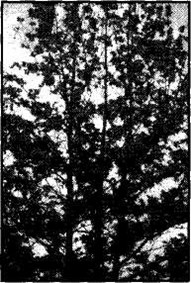
The Luz tree translated as the "Hazel" in Gen. 28:19 is considered to be the almond tree.
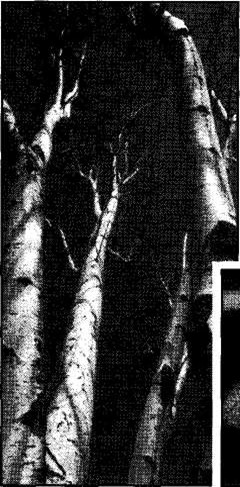
The Plane Tree (translated as Chestnut tree in v. 37) is fairly common in Northern Israel and is especially conspicious in forests. Generally decidious the leaves are covered with sharp and readily removable hairs, harmful to the sin and eyes.
In the three trees selected, Jacob typically set before the flock the principles of righteousness (poplar), the promise of Luz (hazel), and the need to bare oneself to God (chesnut). The narrative shows that portion of the flock of Laban revealed the influence of this, showing up their imperfections, and also drawing them to the hope of Israel.
"And pilled white strakes in them" — The rods were peeled in such a way that streaks of white appeared in them. This was evidently done spirally, so that the rods appeared parti-coloured.
"And made the white appear which was in the rods" — A cut down tree is often used to symbolise the cross (1 Pet. 2:24; Deut. 21:23; Exod. 15:25). As Jacob cut down the rods from each tree, and placarded them before the flock of Laban, so Christ was placarded or clearly "set before" the Gentiles by those who proclaimed him unto them (Gal. 3:1). And this caused "the white to appear" which was in the rods, or, in the case of the Lord, the righteousness of Yahweh was manifested in flesh.
VERSE 38
"And he set the rods which he had pilled before the flocks in the gutters in the watering troughs" — This is better spelt as peeled. The peeling caused their inward character to be revealed.
"When the flocks came to drink, that they should conceive when they came to drink" — They saw the rods, drank of the water, and conceived to bring forth fruit. Believers see the righteousness of Christ displayed on the tree, drink deeply of the water of life, and conceive to bring forth fruit to the glory of the Father.
VERSE 39
"And the flocks conceived before the rods, and brought forth cattle ring-straked, speckled, and spotted" — The offspring produced, reflected the influence of the rods. The Truth reveals our imperfections, and induces in us a measure of righteousness.
Actually, though these animals had external imperfections, they were better than Laban's flocks which did not (cp. v. 41). This, likewise, is the influence of the truth upon those of the world who are drawn to Christ in contrast with those who rest in their own righteousness (Cp. Rom. 10:3).
VERSE 40
"And Jacob did separate the lambs" — He separated from the main body of the flock the speckled lambs procured by the foregoing artifice. The application to the type is obvious. When a "lamb" has been brought to the birth through the water of baptism, there is a need to separate it from the world.
"Set the faces of the flocks toward the ringstraked, and all the brown in the flock of Laban" — Thus he made the speckled lambs serve the same purpose as the peeled rods. The attention of the flock was directed towards them as an example to follow! This, likewise, is in accordance with the type.
"And he put his own flocks by themselves, and put them not unto Laban's cattle" — He did this so that the reverse effect would not follow, and the sheep revert to type, producing offspring of a uniform colour. Complete separation from the world is required of all "lambs" in the flock of God, or, otherwise, they will revert to their previous condition (2 Pet. 2:20-22).
VERSE 41
"And it came to pass, whensoever the stronger cattle did conceive, that Jacob laid the rods before the eyes of the cattle in the gutters, that they might conceive among the rods" — Rotherham renders this: "Whensoever the stronger of the flocks were in heat that Jacob set the rods before the eyes of the flocks, in the channels, that the females might be in heat among the rods." The Hebrew for "stronger" is mekushor and signifies bound together, compact, and therefore more vigorous. Jacob took care to do this with the early matings, as the rams would select the ewes of their choice; leaving later matings, when the first vigor has assuaged, for Laban's flocks.
VERSE 42
"But when the cattle were feeble, he put them not in" — Notice that it does not say, "the feeble among the cattle," but when "the cattle were feeble," supporting the comment on v. 41. It seems to imply a late mating with the result of a feebler lamb. Naturally, the rams would mate with the more vigorous ewes first, and only with the less vigorous ones later. The expression, therefore, seems to imply an early and a late mating. Jacob used his artifice during the earlier matings, but not during the later ones.
"So the feebler were Laban's and the stronger Jacob's" — There was nothing unfair in what Jacob did, for he had given due warning to Laban when he was engaged for the work of shepherding (cp. Vv. 29-30). Nor, as a good shepherd, did he put much store on the stratagem he used to bring results; he looked to Yahweh for that (cp. Ch. 31:10-12).
VERSE 43
"And the man increased exceedingly" — Previously Laban had increased possessions through his shepherding (v. 30). This prosperity was indicative of the Divine blessing.
"And had much cattle, and maidservants, and menservants" — As his flocks and herds increased, so he added those to his household who could care for them.
"And camels, and asses" — Cp. As Leah and Rachel later observed (Ch. 31:14-16), God had taken from their father, wealth that really belonged to Jacob and his wives.
Comments